Yellow Fan Care (Spathularia flavida)

Yellow Fan

About Yellow Fan

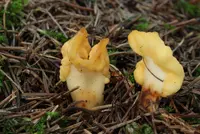
Yellow fan (Spathularia flavida) is a small, club-like fungus rather than a leafy plant. It forms bright yellow, spoon-shaped fruiting bodies that appear in clusters on soil or decaying wood.

This species is native to cool, coniferous forests in North America, Europe, and parts of Asia, often emerging after rainy periods. Its growth is strongly tied to natural forest conditions, which makes it challenging to cultivate at home.

Those who want to care for Yellow Fan should know it prefers consistently moist, cool environments and undisturbed, well-drained forest-type soil rich in organic matter.

Main Plant Requirements

Care Difficulty

Hard Care

Light Preference

Partial Shade

Water Requirements

Keep Soil Moist

Temperature Preference

Cool Climate

Hardiness Zone

Unknown

Soil Texture

Loamy, Silty, Organic-rich

Soil pH

Acidic (5.5–6.5)

Soil Drainage

Moist but well-drained

Fertilization

Minimal (feed rarely)

Get Personalized Care Plan

Scan your plant to receive care tips personalized for your specific plant

Available on iOS and Android

How to Care for the Yellow Fan

This fungus prefers cool, moist forest light rather than direct, open sun.

  • Provide bright, dappled shade or light filtered through trees, with 1–3 hours of soft morning sun at most.
  • Avoid strong midday and afternoon sun, which can dry the substrate quickly and cause fruiting bodies to shrivel or discolor.
  • In summer, maintain shade as deciduous canopy thins; Yellow Fan often fruits where ground stays consistently shaded and humus-rich.

Moist, humus-rich soil is essential for reliable fruiting of this woodland fungus.

  • Aim for evenly moist conditions, letting only the top 1–2 cm of the forest floor or substrate begin to dry before re-wetting.
  • Use a loose, well-drained, organic-rich substrate so excess water drains away and does not create stagnant, anaerobic conditions.
  • Reduce supplemental moisture in cooler seasons, and watch for signs of overwatering such as persistent surface slime or foul odor, versus wrinkled, brittle fruiting bodies from dryness.

This species fruits best in cool, moist conditions typical of temperate forests.

  • Optimal fruiting temperatures are around 50–65°F (10–18°C), with stable moisture levels supporting consistent development of the clubs.
  • Spathularia flavida tolerates down to about 32°F (0°C) but fruiting bodies may be damaged by hard frosts below this point.
  • Heat above 75°F (24°C) with dry air reduces fruiting; during hot spells, cooler, shaded microsites and mulch help moderate soil temperature.

This fungus is not usually humidity-sensitive in outdoor garden conditions.

This fungus needs a moist, loose, well-drained substrate rich in decaying organic matter.

  • Use a fibrous, humus-rich mix mimicking forest litter, such as shredded leaf mold with some fine bark and coarse sand.
  • Aim for slightly acidic to neutral conditions, roughly pH 5.5–7.0, avoiding strongly alkaline amendments like heavy lime applications.
  • Keep the substrate evenly moist but never waterlogged, since saturated conditions limit oxygen and can suppress fruiting of Spathularia flavida.
  • Incorporate coarse particles (grit or coarse sand) to improve aeration and prevent compaction in outdoor beds or experimental trays.

This species is poorly suited to long-term container cultivation and is usually not grown in pots.

This fungus-like Yellow Fan organism does not benefit from routine fertilization in naturalistic garden or woodland settings.

Spathularia flavida does not require structured pruning, as it is a small, ephemeral fungus-like organism rather than a traditional garden plant.

This species is not suited to typical container culture, so focus on careful site establishment rather than routine repotting.

  • Transplant only when establishing a new shaded, moist, well-drained bed that mimics its natural woodland habitat.
  • Avoid disturbing existing clumps; the organism relies on soil fungi networks that react poorly to disruption.
  • If moving substrate, transfer a generous plug of surrounding soil to preserve associated microorganisms.
  • Keep the soil evenly moist after transplanting attempts and avoid compaction to limit root-zone stress.

Practical home propagation of Spathularia flavida is unreliable, as it depends on complex fungal life cycles and soil partnerships.

This cold-hardy woodland fungus requires no special winter care in temperate climates.

Care Tips

Substrate hygiene

Remove decaying needles, leaves, and old fruiting bodies from around the colony after each flush to limit mold competition and help maintain a clean, aerated surface layer for growing Yellow Fan.

Mycelium-friendly disturbance

When foraging or inspecting, cut fruiting bodies at the base instead of pulling them out, so the underground mycelium remains intact and can continue to fruit in future seasons.

Moisture buffering layer

In plantation or garden settings, maintain a thin, loose layer of conifer needles or very fine bark over the soil so the substrate stays evenly moist without becoming compacted or waterlogged.

Targeted site inoculation

If establishing new patches, introduce spawn or colonized substrate only under compatible conifers in cool, moist microsites and avoid mixing it deep into the soil, which can slow establishment.

Minimal traffic zones

Mark and keep foot traffic off known fruiting spots so the upper soil and litter layer are not compacted, which supports better gas exchange and healthier mycelial growth.

Common Pests and Diseases

Mycena parasitism

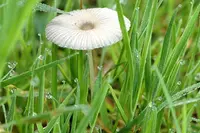
This disease involves small Mycena mushrooms colonizing and slowly consuming the fruiting bodies, leading to collapse and discoloration. Symptoms include softening, bleaching, and visible tiny caps emerging from or around the yellow clubs.

Solution

Carefully remove and discard affected fruiting bodies and surrounding debris to reduce inoculum, and avoid disturbing or compacting the substrate so competing fungi remain balanced. In cultivation, maintain moderate moisture and strong airflow, and avoid overrich, constantly wet organic layers that favor aggressive secondary fungi.

Mucor mold

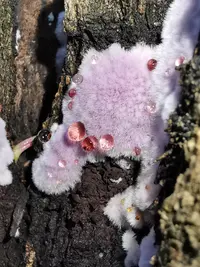
This disease is caused by fast-growing Mucor molds that quickly overrun the gelatinous tissues of the fruiting bodies in overly wet conditions. Symptoms include a cottony gray or white growth that rapidly covers and collapses the yellow fans.

Solution

Remove and dispose of any mold-covered tissue immediately and thin nearby organic material to improve drying. In culture or garden beds, reduce watering, increase ventilation, and avoid standing water to keep the surface just moist, not saturated.

Slugs and snails

These pests feed on the tender, gelatinous fruiting bodies, leaving ragged edges, missing sections, and slime trails. Damage often appears overnight and can completely remove young clusters.

Solution

Hand-pick slugs and snails at dusk or after rain, and use physical barriers such as copper tape or coarse grit around cultivated patches. In managed settings, limit dense groundcover and excess mulch that provide daytime hiding places, and use iron phosphate bait if grazing pressure is high.

Fungus gnat larvae

These insects develop in very moist, decomposing organic matter and can burrow through the base of fruiting bodies, causing collapse from below. Symptoms include wilting or detaching clubs and visible small maggots in the substrate when disturbed.

Solution

Allow the surface layer of the substrate to dry slightly between waterings and improve drainage so it is damp rather than waterlogged. In contained or indoor culture, use yellow sticky traps for adults and, if populations build, apply a biological control such as Bacillus thuringiensis israelensis (Bti) to the substrate following label directions.

Interesting Facts

Fan-shaped fungus

This species forms small, bright yellow, fan- or spatula-shaped fruiting bodies that emerge in tight clusters on the forest floor, giving rise to its common name yellow fan.

Conifer forest specialist

It typically appears on the ground of coniferous forests, often in mossy or needle-rich soil, and is considered saprobic, meaning it helps decompose organic litter from trees.

Short-lived fruiting bodies

The soft, fleshy fruiting bodies are relatively short-lived and often deteriorate quickly, so sightings in the wild tend to be brief and strongly tied to suitable moisture and temperature conditions.

Botan icon

Did you know?

The genus Spathularia, including Spathularia flavida, is of taxonomic interest because its unusual spatula-shaped fruiting bodies and microscopic features have led to multiple revisions in its classification within the Helotiales, highlighting how morphology alone can be misleading in fungal systematics.

FAQs about Yellow Fan

This fungus is generally considered inedible. It has a tough, gelatinous texture and low culinary value. Field identification is difficult, and confusion with other species is possible, so consumption is not recommended.

Grow Healthy Plants with Botan Care

Keep your plants happy and healthy with plant identification, disease detection, and easy care guidance.

Botan plant care app — identify plants on mobile

Explore More Plants