Edge Containment
Install a shallow root barrier or metal/plastic edging 10–15 cm deep to keep spreading rhizomes from invading lawns or beds you want to keep clear.


Rose-of-Sharon, Hypericum calycinum, is a low, spreading shrub often used as a groundcover. It forms dense mats of semi-evergreen foliage that help suppress weeds and stabilize soil.
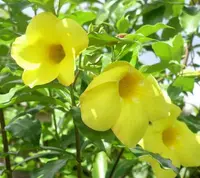
The plant is known for its large, bright yellow flowers with prominent stamens, produced over a long blooming period in warm months. It is native to parts of southeastern Europe and southwest Asia but is widely grown in temperate landscapes.
This shrub is valued for its toughness, tolerance of poor soils, and ability to handle some drought once established. Understanding how to care for Rose-of-Sharon starts with placing it in a sunny to lightly shaded spot with well-drained soil.

Care Difficulty
Easy Care

Light Preference
Full Sun

Water Requirements
Moderate Water

Temperature Preference
Cold Hardy

Hardiness Zone
5–9

Soil Texture
Sandy, Loamy, Clay

Soil pH
Acidic (5.5–6.5), Slightly acidic (6.5–7.0)

Soil Drainage
Well-drained

Fertilization
Minimal (feed rarely)
Scan your plant to receive care tips personalized for your specific plant
Available on iOS and Android
This low shrub thrives outdoors in sun but tolerates a range of light conditions.
This groundcover prefers consistent but not excessive soil moisture once established.
This hardy shrub adapts to a wide range of outdoor temperatures in many temperate climates.
Hypericum calycinum tolerates a wide humidity range and usually does not need special humidity management outdoors or in typical household conditions.
This species prefers loose, well-drained soil and adapts to a range of garden conditions if extremes are avoided.
This groundcover can be grown in containers if the pot supports its spreading, shallow-rooted habit.
Hypericum calycinum benefits from light, consistent feeding during the active growing season in average garden soil.
Hypericum calycinum responds well to periodic pruning that maintains a dense, flowering groundcover.
This groundcover is usually grown in beds, so management focuses more on transplanting and controlling spread than on frequent repotting.
Hypericum calycinum is commonly propagated to extend groundcover or fill gaps in planting beds.
This shrub is cold hardy in much of the US and usually needs only modest winter care in the ground.

Plant Health Check
Not sure what's wrong with your plant? Check your plant's health inside the app.
In mild climates this species often keeps much of its foliage through winter, behaving as semi-evergreen rather than fully deciduous, which makes it valuable for year-round groundcover structure.
Its creeping stems readily form adventitious roots wherever they touch soil, allowing the plant to spread into dense, stabilizing mats that are often used to control erosion on banks and slopes.
The large golden flowers are dominated visually by hundreds of long stamens that form a conspicuous tuft, a floral trait that strongly attracts pollinating insects such as bees and hoverflies.

Molecular and morphological studies place this species in section Ascyreia within the Hypericum genus, and it has been used as a reference taxon in research on the evolution of floral structures and chromosome numbers in the St. John’s wort group.
This species spreads by underground rhizomes and can form dense mats over time. In small gardens, use edging, root barriers, or containers, and remove unwanted shoots regularly to prevent it from overtaking nearby plantings.
Keep your plants happy and healthy with plant identification, disease detection, and easy care guidance.