Use fresh substrate
Prepare new sterile substrate for each cultivation cycle and never reuse old logs, chips, or sawdust, as this greatly reduces contamination pressure from competing fungi and bacteria when growing Hypholoma acutum.

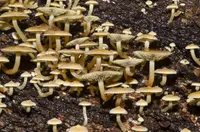
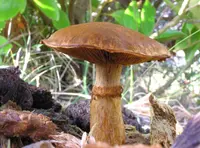
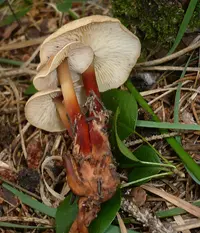
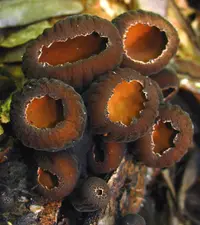
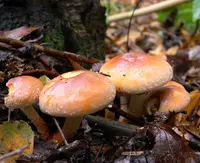
Hypholoma acutum is a small saprophytic mushroom that grows on decaying wood rather than in pots or garden beds. It forms clustered caps on rotting logs, stumps, or buried wood, often in moist forested areas.
This species is typically found in temperate regions, where it appears seasonally in cool, damp conditions. Its natural dependence on dead wood and specific moisture levels makes it challenging to cultivate intentionally.
For those studying or attempting to care for Hypholoma acutum in controlled conditions, stable humidity, consistent moisture, and access to suitable woody substrates are essential environmental factors.

Care Difficulty
Moderate Care

Light Preference
Partial Shade

Water Requirements
Regular Water

Temperature Preference
Warm Climate

Hardiness Zone
Unknown

Soil Texture
Loamy, Organic-rich

Soil pH
Acidic (5.5–6.5)

Soil Drainage
Moist but well-drained

Fertilization
Minimal (feed rarely)
Scan your plant to receive care tips personalized for your specific plant
Available on iOS and Android
This wood-inhabiting fungus prefers cool, shaded forest conditions with only brief direct sun.
Moist, never soggy wood is critical for good colonization and fruiting.
This species favors cool to mild conditions and is sensitive to both hard frost and strong heat.
This species does not have specific humidity needs and generally tolerates typical outdoor humidity levels.
Hypholoma acutum develops best in consistently moist, well-drained, organic-rich substrate.
This species is not well suited to container growing except for specialized fungal cultivation setups.
This wood-decaying fungus usually obtains enough nutrients from its substrate, so added fertilizer is rarely necessary for Hypholoma acutum.
As a mushroom-forming fungus, this species does not require pruning in the way vascular plants do.
This fungus is not conventionally repotted but may be moved only when managing its substrate in culture or cultivation setups.
This species is typically propagated by mycelial transfer rather than by conventional plant methods.
In natural habitats, this fungus usually withstands local winter conditions without targeted intervention.

Plant Health Check
Not sure what's wrong with your plant? Check your plant's health inside the app.
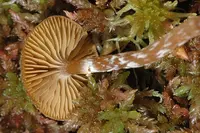
This species produces a purple-brown spore print, which helps distinguish it from some similar yellow-gilled or pale-spored woodland fungi.
It typically fruits on or near decaying wood, especially in coniferous forests, indicating a strong association with decomposing woody debris rather than soil alone.
The mushrooms often appear in tight clusters, with numerous slender stems arising from a shared base, a growth pattern that can help separate it from more solitary woodland species.
This is a small woodland mushroom with limited study and uncertain edibility. It should be treated as inedible. Never eat wild fungi unless identified as safe by a qualified mycologist familiar with local species.
Keep your plants happy and healthy with plant identification, disease detection, and easy care guidance.