Prepare sterile substrate
Use pressure-sterilized hardwood sawdust or a sawdust–grain mix in autoclavable bags to reduce competing fungi and bacteria before inoculation, which is critical for reliably growing Hypholoma australianum.

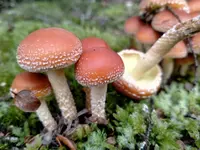
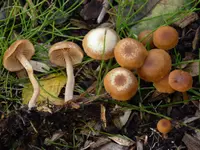
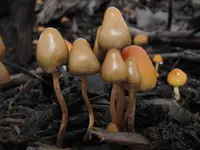
Hypholoma australianum is a small saprophytic fungus, not a leafy houseplant. It forms clusters of slender stems topped with rounded to bell-shaped caps, often in earthy tones. The fruiting bodies usually appear on decaying wood or very rich organic debris.
This species is known from Australia, where it helps break down dead plant material in forests and woodland edges. It is not commonly cultivated, and conditions must closely match its natural cool, moist, shaded habitats. For those studying how to care for Hypholoma australianum, understanding its need for consistently damp substrates and decomposing wood is more important than typical soil or pot culture considerations.

Care Difficulty
Moderate Care

Light Preference
Partial Shade

Water Requirements
Keep Soil Moist

Temperature Preference
Cool Climate

Hardiness Zone
Unknown

Soil Texture
Loamy, Silty, Organic-rich

Soil pH
Acidic (5.5–6.5)

Soil Drainage
Moist but well-drained

Fertilization
Minimal (feed rarely)
Scan your plant to receive care tips personalized for your specific plant
Available on iOS and Android
This wood-inhabiting fungus prefers cool, shaded forest conditions rather than strong open sun.
This fungus requires consistently moist, but not waterlogged, woody substrate to develop healthy fruiting bodies.
This species fruits best in cool, mild conditions typical of temperate forests.
This species requires consistently moist, high-humidity conditions rather than dry indoor air.
Hypholoma australianum grows best on moist, well-aerated, organic-rich substrates rather than standard potting soil.
This fungus is suitable for container cultivation when grown in trays, buckets, or tubs designed for mushroom production.
This wood-decaying fungus normally gains nutrients from its substrate and does not need additional fertilizer in garden or indoor culture.
As a fungus producing short-lived fruiting clusters, this species does not require any true pruning in cultivation.
Cultivation focuses on moving colonized substrate rather than repotting Hypholoma australianum like a typical plant.
This fungus is usually propagated through spores or mycelium rather than by vegetative plant methods.
Outdoor colonies in suitable climates are generally cold tolerant and demand minimal specific winter care.

Plant Health Check
Not sure what's wrong with your plant? Check your plant's health inside the app.
This species is currently poorly documented in the scientific literature, and its placement within the Hypholoma genus is based mainly on limited collections from Australia rather than on detailed molecular studies.
Available records indicate that this fungus has been described from Australia, where it appears to be associated with native habitats rather than being a widespread, globally reported species.
There is very little peer‑reviewed information on its exact substrate preferences, seasonality, or ecological role, so most mycologists treat it as a data‑deficient taxon rather than a well‑characterized species.
This species is not recommended for consumption. Identification of small brown mushrooms is difficult, and closely related species can be toxic. Treat it as a non-edible fungus and avoid tasting or using it as food.
Keep your plants happy and healthy with plant identification, disease detection, and easy care guidance.