Sulphur Tuft Identification (Hypholoma fasciculare)

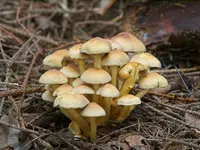
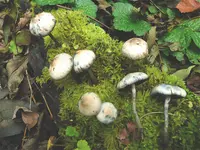
Recognize Sulphur Tuft by its dense clusters of small caps on a shared base, usually with slender stems packed tightly together. Caps are about 1–2 inches (2.5–5 cm) wide.

Check the gills: they are crowded and attached to the stem, a strong first-pass feature for this species.

Hypholoma fasciculare Identification

Check Your Plant ID

Take a photo and use Botan to confirm your plant identification.

Clear images work best. Avoid photos taken too close or too far away

  • 1 free identification
  • No sign-up
  • 30,000+ plants in database

Check the mushroom’s cluster form, cap shape, gills, and stem details.

  • Grows in dense, tight clusters rather than singly, with many stems arising together from one point.
  • Caps are small, about 1-2 inches (2.5-5 cm) across, rounded to broadly convex with smooth margins.
  • Cap centers are deeper orange-brown, while the outer parts are more sulfur yellow.
  • Gills are crowded and attached to the stem, showing a greenish-yellow to olive tone.
  • Stems are slender and yellowish, often darker toward the base, and usually lack a ring.

Use several features together, especially the clustered growth, yellow caps, and olive-toned gills.

Hypholoma fasciculare shows clear visual shifts as its clustered fruit bodies expand and age.

  • Young plant: Very young fruit bodies appear as tight buttonlike clusters, with rounded caps and short stems still partly hidden by neighboring mushrooms.
  • Mature plant: As they expand, caps become broadly convex to flatter, often crowded in dense tufts about 2-5 inches (5-13 cm) across.
  • Fruiting stage: At full development, the gills change from yellow to greenish and then darker, while stems stay slender and the tufted growth form remains obvious.

Sulphur Tuft is most noticeable from late summer through fall, when dense clusters of sulfur-yellow caps appear on stumps, buried wood, and logs. This fruiting period creates the clearest seasonal identification clue. In colder months, fruiting may continue into winter during mild spells, so fresh clusters can still be visible when many other woodland mushrooms are scarce. Outside fruiting periods, the species is usually not identifiable from a distance.

Several clustered wood-growing mushrooms can be mistaken for Sulphur Tuft.

funeral bell(Galerina marginata)

Both fruit in dense clusters on wood and can look yellow-brown. Funeral bell usually has a clearer ring on the stem and lacks the greenish gills typical of young Sulphur Tuft.

brick cap(Hypholoma lateritium)

Another clustered wood-rotting Hypholoma with similar size and habit. Brick cap shows brick-red to reddish brown caps and paler yellow gills, not the sulfur-yellow cap with darker center.

woodtuft brittlestem(Psathyrella piluliformis)

Often forms crowded tufts on stumps like Sulphur Tuft. Caps are more honey-brown to tan, stems are more fragile, and gills turn dark brown to blackish without green tones.

Hypholoma fasciculare is native across much of Europe and Asia and is also widely recorded in North America. It is most often found in deciduous and mixed woodland, growing in tight clusters on decaying wood, stumps, buried roots, and fallen logs. Habitat is a strong identification clue. A dense tuft on dead wood, especially in forests rather than open grassland, helps separate it from some superficially similar small yellow mushrooms that grow from soil.

  • Toxic if eaten: The fruiting body is poisonous to humans and pets if ingested. It can cause significant gastrointestinal poisoning.
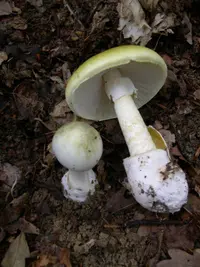
  • Misidentification risk: This mushroom can be confused with edible cluster-forming species. One key check is the gills: Hypholoma fasciculare develops greenish to olive-gray gills, unlike the cinnamon-brown gills of many similar edible look-alikes.

Confirm the Species with Botan

Upload a photo to compare key details and get help identifying or confirming what you found.

FAQ

The best field mark is the crowded cluster of sulfur-yellow caps with darker orange-brown centers, paired with gills that turn olive green to grayish purple-brown as spores mature. That combination is central to identifying Sulphur Tuft.

More Plant Identification Guides

Identify First. Learn What Comes Next.

Use Botan to identify it from a photo, then see species-specific plant details, care information, and common problems.

Botan app identifying a plant from a photo
How to Winterize Your Garden in 6 Steps

5 min read · 28 Sept 2026

How to Winterize Your Garden in 6 Steps

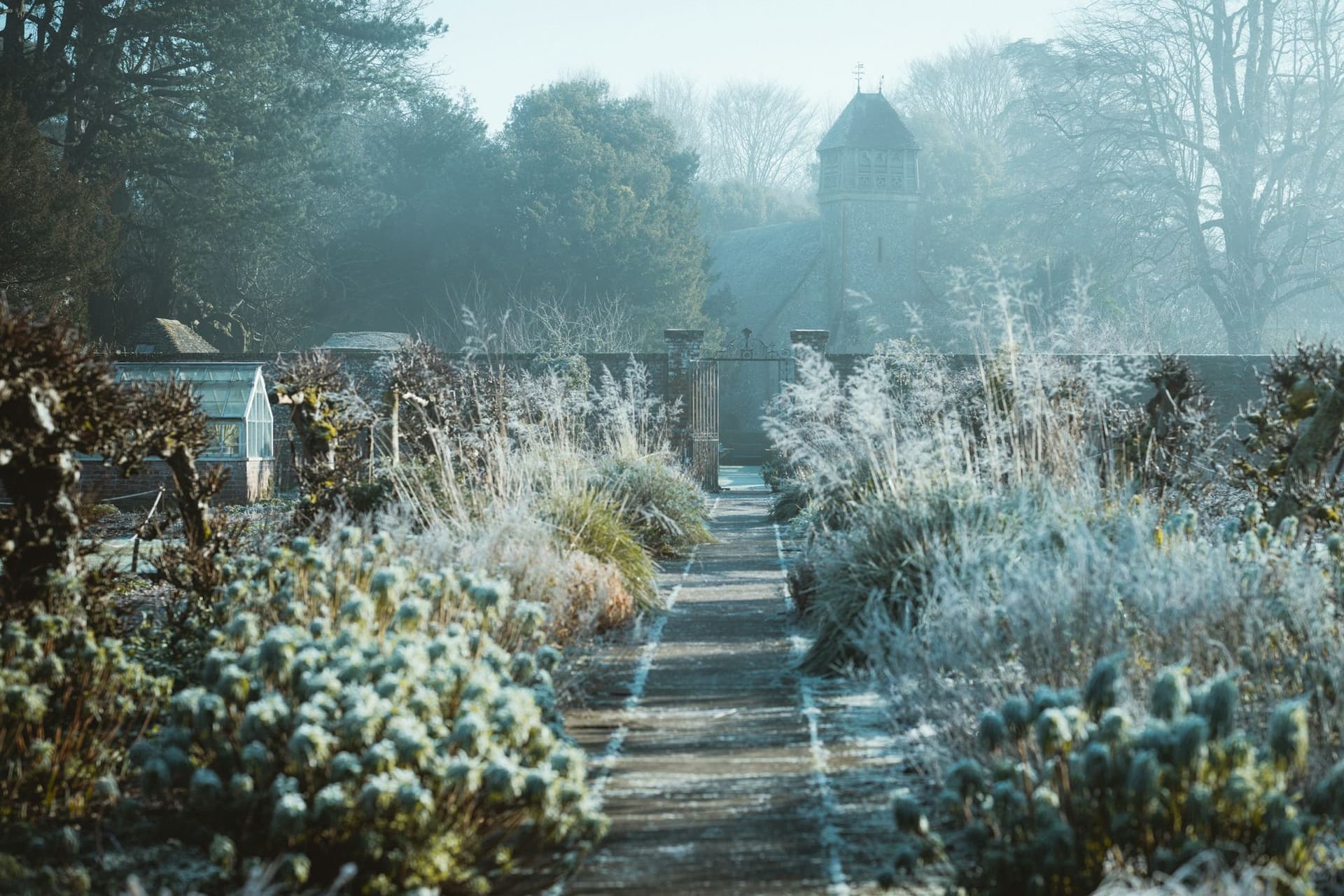
Learn how to prepare your garden for winter with a practical six-step checklist covering cleanup, tender plant care, watering, mulching, winter protection, and winterizing equipment and containers.

Plant Care
How to Winterize Your Garden in 6 Steps
How to Bottom Water Plants: Complete Guide

6 min read · 13 Jul 2026

How to Bottom Water Plants: Complete Guide

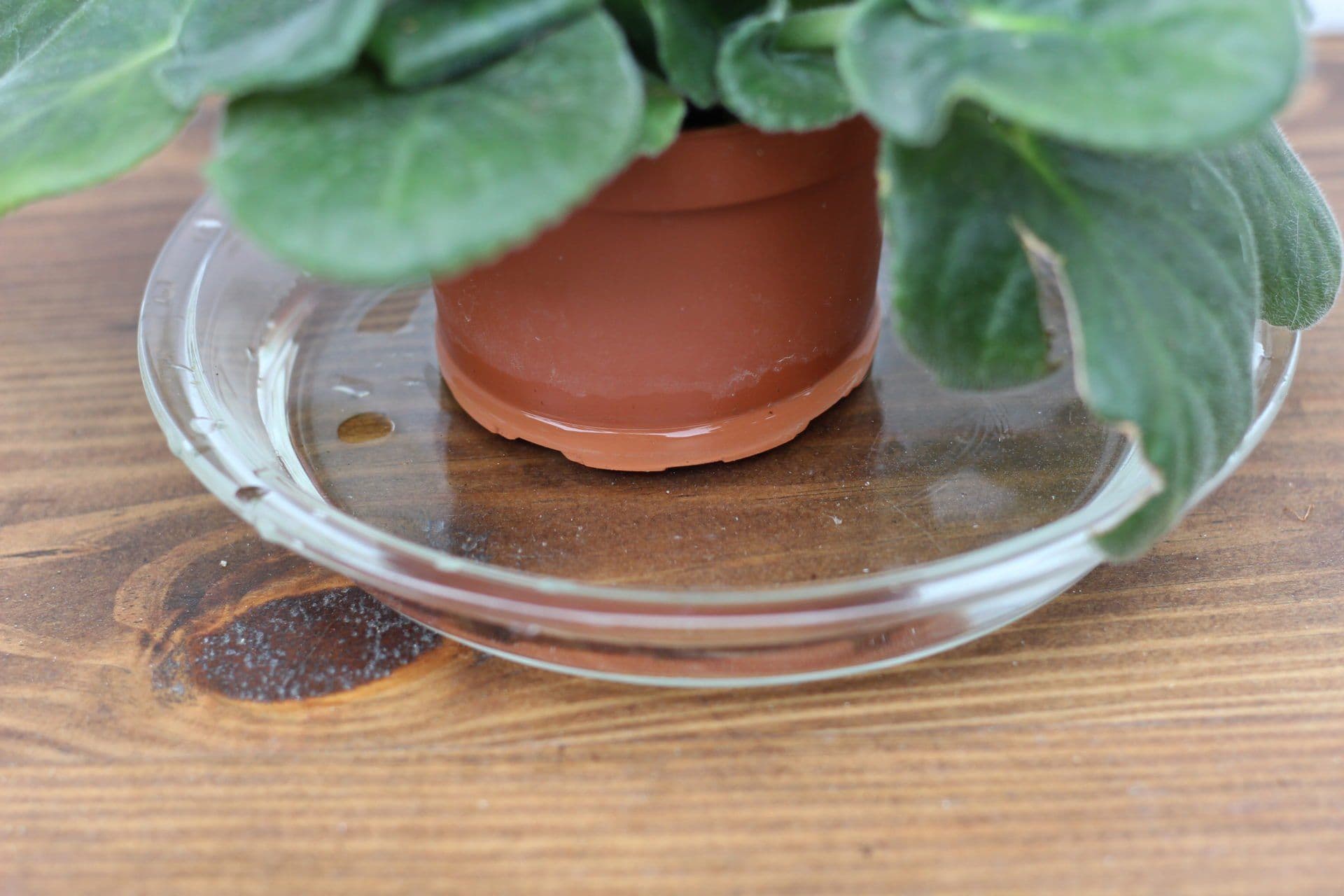
Bottom watering helps soil absorb moisture evenly and keeps foliage dry, reducing the risk of missed dry spots or root problems. Place the pot in a tray of water for a short time, then let it drain well.

Plant Care
How to Bottom Water Plants: Complete Guide
Top 5 Best Indoor Plants for Air Quality

5 min read · 11 Sept 2026

Top 5 Best Indoor Plants for Air Quality

Indoor plants can make a room feel fresher thanks to their air-purifying qualities. Here are 5 of the most suitable choices for your routine and living space.

Plant Recommendations
Top 5 Best Indoor Plants for Air Quality