snakeskin brownie Care (Hypholoma marginatum)

snakeskin brownie

About snakeskin brownie

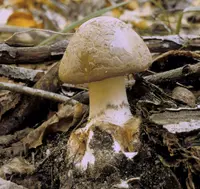
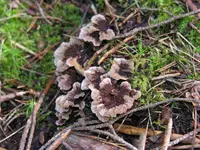
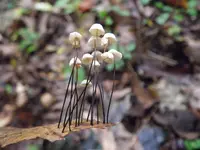
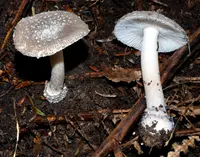
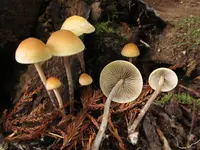
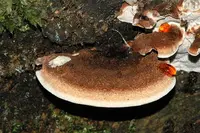
Snakeskin brownie, Hypholoma marginatum, is a small woodland mushroom rather than a typical houseplant. It forms tight clusters of brownish caps with darker, snakeskin-like patterns and slender stems. The fruiting bodies are short-lived and appear mainly in cool, damp seasons.

This species is most often found in coniferous and mixed forests in temperate regions, growing on decaying wood, stumps, or buried roots. It is not commonly cultivated, so care for snakeskin brownie focuses on recreating moist, shaded, well-ventilated conditions with plenty of rotting wood as a substrate.

Because it depends on decomposing wood and specific forest-like conditions, it is considered challenging for beginners to maintain in controlled environments.

Main Plant Requirements

Care Difficulty

Moderate Care

Light Preference

Partial Shade

Water Requirements

Keep Soil Moist

Temperature Preference

Cool Climate

Hardiness Zone

Unknown

Soil Texture

Loamy, Organic-rich

Soil pH

Acidic (5.5–6.5)

Soil Drainage

Moist but well-drained

Fertilization

Minimal (feed rarely)

Get Personalized Care Plan

Scan your plant to receive care tips personalized for your specific plant

Available on iOS and Android

How to Care for the snakeskin brownie

Hypholoma marginatum prefers cool, shaded woodland-type light to form healthy fruiting bodies.

  • Provide bright shade or dappled light, such as beneath deciduous trees, with no more than 1–2 hours of weak morning sun and no direct afternoon sun.
  • Avoid full sun, which quickly overheats and dries the substrate, causing the snakeskin brownie caps to crack, fade, or abort before maturing.
  • In summer, increase shade cover or leaf litter; in cooler seasons, slightly more indirect light is acceptable as long as the substrate stays moist.

Hypholoma marginatum needs consistently moist, never waterlogged, substrate to develop stable mycelium and fruiting clusters.

  • Maintain evenly damp woody or compost-rich substrate; when the top 2–3 cm feel just barely moist rather than wet, gently rehydrate with fine spray or slow soaking.
  • Ensure excellent drainage around logs or beds so water can drain within 1–2 hours, preventing stagnant pockets and sour, anaerobic smells that indicate overwatering.
  • Watch for shriveling caps and dry, brittle mycelial mats as signs of underwatering, and for slimy, foul-smelling patches or collapsing stems as signs of excess moisture.

This fungus fruits best in cool to mild conditions with stable, moderate temperature swings between day and night.

  • Aim for an active growth and fruiting range of 50–68°F (10–20°C), which reflects typical cool woodland conditions where mycelium remains vigorous.
  • Protect colonies from hard frost below 28°F (-2°C) by adding extra leaf litter or mulch, and expect slowed or paused activity below 40°F (4°C).
  • In hot weather above 77–82°F (25–28°C), add shade and increase surface moisture, since sustained heat and drying winds can halt fruiting and damage developing clusters.

This fungus prefers consistently moist, cool air rather than very dry conditions.

  • Aim for 60–80% humidity, mimicking damp woodland air where snakeskin brownie naturally fruits.
  • Frequent dry central heating can slow or prevent fruiting, leading to shriveled caps and cracked margins.
  • Increase humidity locally with open trays of wet perlite or frequent fine misting around, but not directly on, developing clusters.

This saprophytic fungus needs a moist, airy, organic substrate rather than standard potting soil.

  • Use loose, organic-rich material such as a mix of hardwood chips, partially decomposed leaf litter, and a small amount of peat-free compost.
  • Ensure very high drainage so the substrate stays moist but never waterlogged, which encourages competing molds and anaerobic bacteria.
  • Keep pH slightly acidic to neutral (about 5.5–7.0), avoiding strongly alkaline media that can inhibit Hypholoma marginatum mycelial growth.
  • Improve aeration by layering coarse wood chips at the base and avoiding fine, compacting materials like heavy clay or dense garden soil.

This species can be grown in containers if the setup imitates a stable, moist woodland substrate.

  • Choose a wide, shallow tub to spread substrate horizontally, which supports more extensive mycelial colonization and fruiting points.
  • Use a rigid plastic or thick wood-sided container that retains moisture while still allowing side ventilation holes above substrate level.
  • Elevate the container slightly off the ground so any drainage holes clear freely, preventing stagnant, spore-laden water from accumulating underneath.

Hypholoma marginatum in natural or woodland-style settings generally needs no fertilizer if grown in rich, undisturbed soil.

Hypholoma marginatum does not benefit from true pruning, but limited cleanup can support hygiene around fruiting sites.

  • Time any cleanup for late fall or after main fruiting flushes finish, so spore release is not interrupted.
  • Remove only obviously rotten, damaged, or moldy substrate and spent clusters to reduce competing fungi and pests.
  • Use clean gloves or a sanitized knife to cut away material at the base without disturbing underlying mycelium.
  • Avoid reshaping colonized wood or soil; maintaining stable habitat structure supports consistent fruiting.

This fungus is usually established outdoors on wood or soil, so care focuses on gentle transplanting of colonized material rather than frequent repotting.

  • Consider transplanting only when growth slows, substrate is exhausted, or the colonized log is breaking down completely.
  • Plan moves for cool, moist weather in spring or fall to limit desiccation and heat stress on mycelium.
  • Lift and transfer intact clumps of colonized wood or substrate, disturbing the white mycelial network as little as possible.
  • Rebury or place the material at the same depth and shade level, then water lightly to settle air gaps without waterlogging.

Propagation of Hypholoma marginatum is specialized and usually left to experienced growers or researchers rather than casual gardeners.

In most temperate climates this woodland fungus is naturally cold hardy and needs no special winter care beyond basic habitat stability.

Care Tips

Substrate rotation

Rotate or slightly rake the top 1–2 cm of the fruiting substrate between flushes to expose fresh surfaces to air and remove spent, compacted material that can harbor mold or bacteria.

Targeted patch feeding

After a heavy flush, spot-apply a thin layer of fresh, fully pasteurized substrate only where the mycelium remains strongest, so resources are focused on productive zones instead of refeeding the entire tray.

Airflow zoning

Create gentle cross-ventilation at shelf height using a small fan pointed away from the trays so carbon dioxide can disperse from the caps without drying the substrate surface.

Moisture shields

Use clean perforated plastic domes or loose-fitting humidity tents over trays to maintain a stable microclimate while still allowing gas exchange, adjusting the number and size of holes if caps show signs of excess moisture or drying.

Crop timing records

Keep simple records of inoculation date, colonization time, first pinning, and flush intervals to identify the most productive temperature and humidity ranges for growing snakeskin brownie in your specific setup.

Common Pests and Diseases

Fungal gnats

This pest is attracted to constantly damp, organic-rich substrate and lays eggs that develop into larvae feeding on decaying mycelium and compost. Symptoms include small black flies around trays or bags and fine larval tunnels in the substrate surface.

Solution

Allow the top layer of the substrate to dry slightly between irrigations, improve drainage, and use fine mesh or breathable covers over colonizing blocks. Sticky traps help reduce adult numbers, and a biological control such as Bacillus thuringiensis israelensis (Bti) in irrigation water can target larvae without harming the fungus.

Mite contamination

These insects, often mushroom or grain mites, feed on developing mycelium and fruiting bodies, slowing colonization and deforming caps. Symptoms include patchy mycelium, dusty-looking moving specks on the substrate, and pitted or scarred mushroom surfaces.

Solution

Discard heavily infested blocks and clean the growing area thoroughly, removing spilled grain and debris. Reduce humidity on resting surfaces, use clean, filtered air, and in persistent cases introduce predatory mites compatible with Hypholoma marginatum care rather than broad-spectrum chemicals.

Green mold (Trichoderma)

This disease is a common competitor in mushroom culture, appearing first as fast-growing white mycelium that quickly turns bright to dark green. Symptoms include stalled Hypholoma mycelium, sour or sharp odors, and dense green patches on grain or bulk substrate.

Solution

Remove and discard contaminated bags or trays immediately to prevent spore spread, and do not open them in the grow room. Review sterilization or pasteurization times, lower spore load by deep-cleaning surfaces and tools, and improve fresh-air exchange to favor the main culture over contaminants.

Bacterial blotch

This disease is caused by bacteria thriving on overly wet caps and poorly ventilated conditions, leading to slimy, discolored spots on the mushroom surface. Symptoms include yellow to brown lesions, a greasy film, and soft tissue where water has stood on caps.

Solution

Reduce direct misting onto caps, focusing moisture on the substrate instead, and increase air circulation so surfaces dry between cycles. Remove and discard blotched fruiting bodies, disinfect tools and surfaces, and avoid handling mushrooms with wet or dirty hands.

Interesting Facts

Distinctive spore print

This species produces a purplish-brown spore print, a key diagnostic feature that helps differentiate it from some similar yellow- or rust-spored wood-inhabiting mushrooms.

Wood-decaying specialist

It is a saprotrophic fungus that decomposes dead conifer wood, playing an important role in nutrient cycling in temperate and boreal forests.

Bitter, inedible flesh

The fruiting bodies are known for their distinctly bitter taste, which, together with their uncertain toxicity status, leads mycologists to classify them as inedible.

FAQs about snakeskin brownie

This species is generally regarded as inedible and potentially poisonous due to upsetting the gastrointestinal tract. Identification of small brown mushrooms is difficult, and confusion with dangerous look-alikes is common, so it should not be collected for food.

Grow Healthy Plants with Botan Care

Keep your plants happy and healthy with plant identification, disease detection, and easy care guidance.

Botan plant care app — identify plants on mobile

Explore More Plants