willow gloves Care (Hypocreopsis lichenoides)

willow gloves

About willow gloves

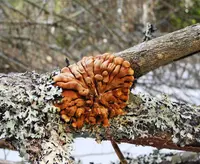
Willow gloves (Hypocreopsis lichenoides) is a fungus-like ascomycete that forms dense, glove-shaped crusts on dead or dying twigs, especially of willow and other shrubs. Its surface often mimics lichen, with irregular fingers or pads tightly hugging the bark.

This species is naturally scattered and uncommon, mainly found in cool, moist woodland or wetland edges in parts of Europe and some temperate regions. It depends on specific host wood and stable humidity, which makes it challenging to cultivate and limits practical attempts to care for willow gloves.

In nature it favors shaded, consistently damp, well-ventilated microhabitats on decaying branches, rather than typical garden soil or pot culture.

Main Plant Requirements

Care Difficulty

Hard Care

Light Preference

Shade

Water Requirements

Keep Soil Moist

Temperature Preference

Cool Climate

Hardiness Zone

Unknown

Soil Texture

Peaty, Organic-rich

Soil pH

Acidic (5.5–6.5)

Soil Drainage

Moist but well-drained

Fertilization

Minimal (feed rarely)

Get Personalized Care Plan

Scan your plant to receive care tips personalized for your specific plant

Available on iOS and Android

How to Care for the willow gloves

This fungus-like organism naturally thrives in shaded, cool woodland settings with very limited direct sun.

  • Provide dappled or filtered light under trees, avoiding more than 0.5–1 hour of weak early-morning sun and no direct midday or afternoon sun.
  • Site willow gloves on the shaded side of logs, branches, or stumps where canopies block at least 80–90% of direct light year-round.
  • Watch for fading or crisping of fruiting bodies as a sign of excessive sun exposure; move or increase shade if this appears, especially in late spring and summer.

This species grows on decaying wood in consistently moist, not waterlogged, woodland conditions.

  • Aim for wood that feels evenly moist but not dripping; if the surface dries to 2–3 mm and begins to look dull, increase ambient moisture or misting around the substrate.
  • Ensure excellent drainage around the log or branch so free water runs off within a few minutes, reducing the risk of rot and anaerobic conditions that can damage Hypocreopsis lichenoides.
  • During hot, dry periods, raise local humidity with more frequent, light misting and mulch around the log, while in cool, damp seasons reduce added water if the wood stays moist for several days.

This organism is adapted to cool, temperate woodland climates with moderate seasonal variation.

  • Optimal growth usually occurs around 45–65°F (7–18°C), with steady, cool conditions supporting more stable fruiting on decaying branches and logs.
  • It typically tolerates about 32°F (0°C) for short periods but prolonged hard frost below 25°F (−4°C) can damage exposed tissue on host wood surfaces.
  • Heat above 77–82°F (25–28°C), especially when combined with dry air, may cause shrinkage or sudden disappearance of fruiting bodies, so favor shaded, ventilated, cooler microsites in summer.

This fungus prefers consistently moist, humid conditions close to those found on decaying, shaded wood.

  • Aim for 70–90% humidity by keeping the substrate and surrounding air moist but not waterlogged.
  • It tolerates brief dips to 50–60% humidity, but prolonged dry air causes shriveling and pale, brittle fruiting bodies.
  • Signs of humidity stress include cracking or rapid collapse of the pads; increase humidity with frequent fine misting around willow gloves and by covering the log with a loose humidity tent.

In cultivation, this wood-inhabiting species is best supported on a substrate that mimics decaying, organic-rich forest material rather than typical garden soil.

  • Use a loose, fibrous mix with high organic content, such as well-rotted hardwood chips blended with leaf mold or composted bark.
  • Ensure rapid drainage so water passes through within seconds, preventing standing water that can lead to anaerobic, oxygen-poor conditions.
  • Maintain a slightly acidic to neutral environment (pH 5.5–7.0) by avoiding lime-rich amendments and favoring leaf-based composts.
  • Improve aeration and structure by mixing in coarse pieces (5–15 mm) of wood chips or bark, and avoid dense, fine-textured potting media.

This species can be maintained in containers only when grown on suitable woody substrate rather than standard potting media.

  • Select a wide, low container to stabilize the colonized wood pieces and prevent tipping as the substrate becomes uneven.
  • Raise the wood above the base of the pot on small inert spacers so excess water drains away and airflow reaches the underside.
  • Choose a non-porous pot material if the environment is dry, as it slows evaporation from the substrate and helps maintain a consistently humid microclimate around the wood.

This fungus-like organism grows on woody hosts and usually needs no direct fertilization when left in natural conditions.

Hypocreopsis lichenoides does not need structured pruning, but minimal hygiene trimming can keep host branches tidy.

  • Inspect host shrubs or branches in late winter or early spring, before active growth resumes.
  • Clip away dead, broken, or heavily decayed host twigs with clean, sharp hand pruners.
  • Avoid cutting healthy substrate wood carrying active fruiting bodies, as removal will reduce colony size.
  • Disinfect tools with alcohol between cuts to limit spread of other fungi or pathogens.

This species grows on established woody hosts, so care focuses on positioning and host management rather than classic repotting.

  • Transplant only when the host branch or log is decaying, unstable, or no longer supporting healthy growth.
  • Move colonized wood in early spring or early fall when temperatures are mild and moisture is reliable.
  • Relocate the host to a shaded, humid, well-ventilated site that mimics the original woodland conditions.
  • Handle the substrate gently, avoid scraping the surface, and keep it evenly moist after moving to limit shock.

Practical home propagation of Hypocreopsis lichenoides is challenging and rarely attempted, so most growers rely on naturally colonized wood.

In suitable temperate climates this species is generally cold hardy and needs little specific winter care.

  • Leave colonized branches outdoors; the organism is adapted to natural freeze–thaw cycles.
  • For container-grown host wood, keep it in a cold, shaded, wind-sheltered spot to avoid extreme drying.
  • Apply a light mulch around any living host shrub roots to moderate soil temperature and retain moisture.

Care Tips

Choose host wood

Inoculate only well-decayed branches of hazel, willow, or other broadleaf shrubs, as Hypocreopsis lichenoides establishes best on mossy, partially rotted wood with existing fungal activity.

Stabilize substrates

Secure rotting branches horizontally on the ground or in shallow trays so they stay shaded and evenly moist, which greatly improves colonization and fruiting stability.

Control microclimate

Create a sheltered, cool, consistently damp microhabitat by grouping logs close together and surrounding them with leaf litter, which buffers sudden humidity and temperature swings.

Clean sourcing practice

Collect inoculum and host wood only from disease-free sites, avoiding areas with obvious canker or sooty mold, to reduce the risk of introducing competing or pathogenic fungi into your setup.

Monitor colonization

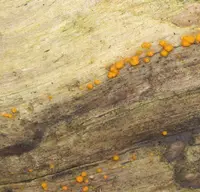
Inspect the wood every few weeks for characteristic orange-brown, glove-like fruiting and photograph patches over time, which helps track progress when growing willow gloves and adjust moisture or shade before damage occurs.

Common Pests and Diseases

Wood-boring beetles

This pest targets the decaying hardwood that supports the fungus rather than the fruiting bodies directly, but tunneling can dry and destabilize the substrate so the fungus declines or detaches. Symptoms include fine bore holes, frass (powdery sawdust), and increasingly brittle host wood around the colony.

Solution

Inspect supporting branches or logs regularly and prune out heavily bored sections, leaving pieces with firm, sound wood to support the fungus. Store collected host wood for growing willow gloves off the ground in a shaded, well-ventilated area and, if infestation is severe, replace the substrate with fresh but partially decayed hardwood rather than using insecticides that could disrupt the fungal community.

Competing wood-decay fungi

This disease pressure comes from other aggressive decomposer fungi that colonize the same dead branches or logs and can overgrow or exclude Hypocreopsis lichenoides. Symptoms include patches of different-colored crusts, brackets, or molds expanding into or around the characteristic glove-like structures.

Solution

Remove pieces of wood that show strong growth of competing fungi and retain or re-site sections where Hypocreopsis still dominates. When introducing new substrate, choose fresh pieces of suitable dead hardwood with minimal pre-existing fungal growth and keep conditions stable and shaded to favor established colonies.

Mold overgrowth

This disease appears when high moisture and stagnant air favor fast-growing molds that can coat or smother the fruiting bodies and surrounding bark. Symptoms include soft, fuzzy gray, white, or sometimes greenish growth creeping across the surface of the colony.

Solution

Improve air movement around the host branches by thinning surrounding vegetation or adjusting placement in cultivation, and avoid prolonged surface wetness from overhead watering or misting. Physically remove heavily moldy wood sections if the underlying fungus is no longer visible, and favor new, clean substrate with moderate moisture and good airflow to re-establish healthy growth.

Interesting Facts

Striking glove-like form

The fruiting bodies form dense, brownish cushions with short, finger-like projections that often resemble a cluster of tiny gloves pressed around a twig or stem, which is the origin of the common name willow gloves.

Specialist on old willow

In its core European range, this fungus is strongly associated with old or decaying willow branches, especially those already colonized by the ascomycete Hymenochaete corrugata, and is often used as an indicator of long-established, undisturbed wet woodland.

Widespread yet uncommon

Although recorded from several European countries and parts of North America, it is rarely abundant at any given site and is often found only where suitable host wood, humidity, and shade conditions persist for many years.

Botan icon

Did you know?

This species is frequently described as a mycoparasite, meaning it grows on and exploits another fungus (most often Hymenochaete corrugata) rather than directly decomposing wood, making its survival dependent on the presence of a very specific fungal host community.

FAQs about willow gloves

This species performs best outdoors in cool, humid woodland-like conditions on decaying wood or branches. It is not suited to typical household environments, so willow gloves indoor care is rarely successful beyond short, experimental setups.

Grow Healthy Plants with Botan Care

Keep your plants happy and healthy with plant identification, disease detection, and easy care guidance.

Botan plant care app — identify plants on mobile

Explore More Plants