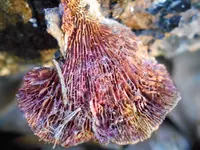
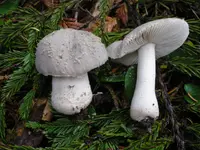
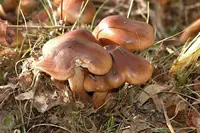
saddle's child Care (Hypomyces cervinus)

saddle's child

About saddle's child

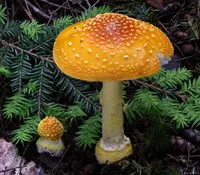
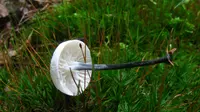
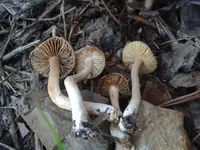
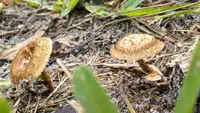
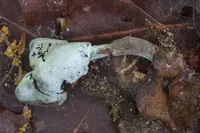
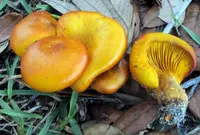
Saddle's child, Hypomyces cervinus, is not a true plant but a parasitic fungus that grows over other mushrooms in woodland habitats. It often forms smooth, pale to tan crusts that completely cover its host, changing the mushroom’s color and texture.

This species is found mainly in temperate forests, especially in North America and Europe, where it appears during the usual mushroom season. It is not commonly grown at home, and attempts to care for saddle's child are experimental, since it needs suitable host mushrooms and consistently humid, shaded conditions.

Its specialized lifestyle makes it difficult to cultivate in controlled settings, so it is mostly of interest to mycology enthusiasts rather than typical home growers.

Main Plant Requirements

Care Difficulty

Moderate Care

Light Preference

Partial Shade

Water Requirements

Keep Soil Moist

Temperature Preference

Cool Climate

Hardiness Zone

Unknown

Soil Texture

Loamy, Silty, Organic-rich

Soil pH

Slightly acidic (6.5–7.0)

Soil Drainage

Moist but well-drained

Fertilization

Minimal (feed rarely)

Get Personalized Care Plan

Scan your plant to receive care tips personalized for your specific plant

Available on iOS and Android

How to Care for the saddle's child

This fungus prefers low, forest-like light rather than direct, open sun.

  • Provide bright shade or dappled woodland light, such as under deciduous trees with 1–3 hours of weak morning sun and no harsh afternoon sun.
  • Allow only filtered light through foliage or shade cloth; strong direct sun can dry the substrate and damage saddle's child fruiting bodies.
  • In summer, increase shade when sun intensity rises; in cooler seasons, slightly more indirect light is tolerated as long as the substrate stays moist.

Moist, not waterlogged, conditions are essential for this wood- and litter-associated fungus.

  • Keep the substrate evenly damp, allowing only the top 1–2 cm of leaf litter or soil surface to begin drying before rewetting, rather than following a fixed schedule.
  • Use loose, well-drained organic material so pooled water drains away within a few hours; standing water encourages rot and loss of Hypomyces cervinus colonies.
  • In hot, dry weather, check moisture daily for drying cracks or crispy debris; in cool, wet seasons, reduce added water and watch for sour odors as a sign of excess moisture.

Steady, cool to mild temperatures support reliable growth and fruiting.

  • Aim for 55–70°F (13–21°C) as an optimal range, which mimics shaded woodland conditions where this fungus typically develops.
  • Tolerates short dips to about 40°F (4°C) but prolonged exposure near freezing or any hard frost can damage developing tissues and reduce future fruiting.
  • At 75–80°F (24–27°C) growth often slows; during heat waves, maintain deep shade and higher humidity around the substrate to prevent overheating and desiccation.

This fungus tolerates a wide humidity range and usually does not need targeted humidity control in cultivation.

Hypomyces cervinus grows best on moist, organic-rich substrates rather than typical potting soil.

  • Use a loose mix of well-decayed wood chips, leaf litter, and coarse compost to mimic rotting forest debris.
  • Keep the substrate consistently moist but never waterlogged, allowing slight surface drying between soakings to maintain aeration.
  • Aim for slightly acidic to neutral conditions around pH 5.5–7.0, avoiding limed or strongly alkaline materials.
  • Avoid compacted mineral garden soil, which restricts gas exchange and slows colonization of the woody substrate.

This species is not well suited to conventional container growing, as it naturally colonizes decaying mushrooms and forest litter rather than forming a stable pot culture.

This fungus grows on host mushrooms and does not benefit from conventional fertilizing, so no feeding is recommended for Hypomyces cervinus or saddle's child.

Pruning is not applicable to Hypomyces cervinus because it is a parasitic fungus rather than a green plant.

Transplanting Hypomyces cervinus focuses on moving colonized host material rather than handling a rooted plant.

  • Shift pieces of the infected host mushroom onto a new substrate only when fresh, actively growing tissue is present.
  • Work during mild temperatures to limit stress and rapid decay of the host material.
  • Handle gently to avoid crushing the fungal tissue, using clean tools or gloved hands.
  • Place transferred material in a stable, shaded, humid environment to support continued colonization.

Propagation of Hypomyces cervinus is specialized and mainly of interest to mycologists, not typical home growers.

Specific winter care is not relevant for Hypomyces cervinus in home settings, as it follows natural seasonal cycles on its mushroom hosts and needs no deliberate protection.

Care Tips

Sterile Substrate Prep

Before inoculation, pressure-sterilize or oven-pasteurize the growth substrate and tools to reduce competing fungi that easily overtake Hypomyces cervinus cultures.

Host Selection Strategy

Choose robust, clean deer mushroom (Pluteus cervinus) fruiting bodies as hosts, discarding any with signs of mold, bacterial slime, or insect tunneling, since weak hosts greatly reduce successful colonization.

Controlled Inoculation Zones

Work in a still-air box or in front of a HEPA-filtered airflow when transferring tissue or spores, and flame-sterilize tools between cuts to maintain clean, uncontaminated cultures.

Moisture Film Management

Provide high humidity without allowing visible water film on host surfaces by using fine-mist spraying on enclosure walls instead of directly on the fungi, which limits bacterial issues and surface rot.

Staggered Culture Rotation

Maintain several small cultures started at different times rather than one large batch, so any contamination or decline only affects part of the production while growing saddle's child remains continuous.

Common Pests and Diseases

Mycophagous springtails

These insects feed on fungal tissue and can graze the surface of fruiting bodies, leaving pits and roughened areas. This pest is most common in constantly damp culture setups or terrariums used to grow Hypomyces cervinus.

Solution

Reduce excess moisture by improving ventilation and avoiding waterlogged substrates, then physically remove heavily infested pieces of substrate or fruiting bodies. For persistent problems, use sticky traps around the culture area and, if necessary, apply a targeted insecticidal soap or horticultural oil to surrounding non-fungal surfaces, taking care not to saturate the fungal host.

Fungus gnat larvae

These insects develop in moist, organic substrates and their larvae can tunnel through the substrate and superficial fungal tissue, weakening the host mushrooms colonized by H. cervinus.

Solution

Allow the top layer of the substrate or casing to dry slightly between waterings and improve airflow to make conditions less favorable to larvae. Use yellow sticky traps to reduce adult populations and, in more serious infestations, apply a biological control like Bacillus thuringiensis israelensis (Bti) to the substrate according to label directions.

Competitive mold contamination

This disease involves fast-growing molds such as Trichoderma or Penicillium that colonize the same substrate, outcompeting H. cervinus and its host mushrooms, often appearing as green, blue, or gray patches with powdery spores.

Solution

Promptly remove and discard contaminated sections of substrate and any heavily overgrown host mushrooms, and reduce humidity spikes and stagnant air that favor mold sporulation. For future cycles, use properly pasteurized or sterilized substrate, clean tools and containers thoroughly, and maintain good airflow so H. cervinus can establish before competing molds dominate.

Interesting Facts

Specialist parasite of deer mushrooms

This species is a mycoparasite that specifically infects deer mushrooms in the genus Pluteus, overgrowing their gills and cap surface with a whitish to buff crust and often distorting the host’s shape.

Host transformation effect

Infected Pluteus fruiting bodies gradually lose their normal pink to brown gill color and distinct gill structure as the parasitic tissue replaces the fertile surface and suppresses spore production of the host mushroom.

Microscopic spore features

Its ascospores, produced in saclike structures called asci, are smooth, ellipsoid, and hyaline (translucent), which helps mycologists distinguish it from closely related Hypomyces species that parasitize other agaric or bolete hosts.

FAQs about saddle's child

Growth is relatively slow and strongly depends on the availability of suitable host mushrooms, moisture, and temperature. It typically appears and expands over an existing mushroom within several days to a couple of weeks, then stabilizes as resources decline.

Grow Healthy Plants with Botan Care

Keep your plants happy and healthy with plant identification, disease detection, and easy care guidance.

Botan plant care app — identify plants on mobile

Explore More Plants