Spore-friendly substrate
Reserve a small, undisturbed patch of soil or leaf litter where mature caps can drop spores, and avoid raking or compacting this area so the fungal network can slowly expand.

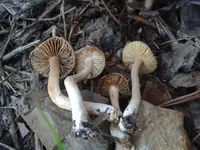
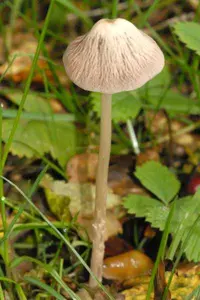
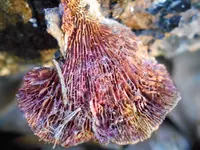
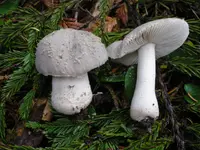
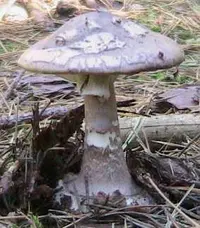
The lilac leg fibrecap, Inocybe griseolilacina, is a small woodland mushroom rather than a leafy houseplant. It produces pale brown to grayish caps with a fibrous, often slightly scaly surface and a slender, lilac-tinged stem, which gives the common name.
This species typically occurs in temperate forests, forming mycorrhizal partnerships with tree roots, especially in mixed or deciduous woods. It is specialized in its natural ecology, so attempts to care for lilac leg fibrecap at home are rarely successful.
In nature, it prefers undisturbed, humus-rich soil with consistent moisture and dappled light on the forest floor, conditions that are difficult to reproduce in containers or typical garden beds.

Care Difficulty
Hard Care

Light Preference
Partial Shade

Water Requirements
Regular Water

Temperature Preference
Cool Climate

Hardiness Zone
Unknown

Soil Texture
Loamy, Silty, Organic-rich

Soil pH
Acidic (5.5–6.5), Slightly acidic (6.5–7.0)

Soil Drainage
Moist but well-drained

Fertilization
Minimal (feed rarely)
Scan your plant to receive care tips personalized for your specific plant
Available on iOS and Android
This fungus prefers dappled woodland light rather than open, direct sun.
This mycorrhizal fungus depends on consistently moist, well‑drained soil rather than direct watering on its fruiting bodies.
This species fruits best in cool to mild conditions typical of temperate woodlands.
This fungus does not have meaningful humidity requirements for cultivation and is not suited to routine indoor humidity management.
This ectomycorrhizal fungus relies on natural woodland soils rather than a standard potting substrate.
This species is not realistically suitable for container growing, as it depends on complex soil and tree-root associations that are hard to reproduce in pots.
This ectomycorrhizal fungus relies on its tree partners for nutrition, so direct fertilization of Inocybe griseolilacina is not recommended.
As a wild ectomycorrhizal mushroom, Inocybe griseolilacina is not managed through pruning and should be left undisturbed.
This species is not suited to normal repotting; it forms symbiotic relationships with tree roots in soil and is best left where it establishes naturally.
Propagation of this wild ectomycorrhizal fungus is highly specialized and not practical as a home or garden technique.
This woodland fungus is naturally cold hardy in its native range and needs no special winter care in the ground.

Plant Health Check
Not sure what's wrong with your plant? Check your plant's health inside the app.
The species is recognized by its characteristically pale lilac to grayish-lilac stipe (stem), especially near the apex in fresh specimens, which helps distinguish it from many other brownish Inocybe species.
It forms ectomycorrhizal associations with broadleaf trees such as beech and oak, exchanging mineral nutrients for photosynthates at the root interface and contributing to forest soil health.
Like many Inocybe species, it contains muscarine, a cholinergic alkaloid that can cause serious poisoning, which is why mycologists strongly discourage foraging or consuming it despite superficial similarity to some edible mushrooms.
This mushroom is considered poisonous and should never be eaten. It contains toxic compounds that can cause serious gastrointestinal and neurological symptoms. Keep children and pets away and avoid handling it with damaged skin.
Keep your plants happy and healthy with plant identification, disease detection, and easy care guidance.