

Sterile Substrate Prep
Pressure-sterilize hardwood sawdust or small chip blocks at 15 psi for 90–120 minutes to reduce competing fungi before inoculating with Hypomyces rosellus.

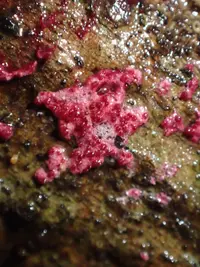
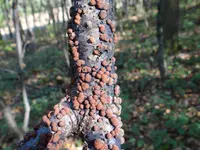
Pink polypore mould (Hypomyces rosellus) is a parasitic fungus, not a true plant, that colonizes bracket and crust fungi, especially polypores. It forms smooth to slightly bumpy pink to reddish crusts that cover and distort its host, often changing the host’s texture and color.
This species is found mainly in temperate forests, growing on dead or decaying wood where its host fungi develop. It is not commonly cultivated, and its dependence on specific fungal hosts makes it difficult to manage or predict, so practical advice on how to care for pink polypore mould is very limited.
In nature it prefers cool to mild, humid conditions and shaded woodland habitats, reflecting the environments where its host fungi thrive.

Care Difficulty
Moderate Care

Light Preference
Partial Shade

Water Requirements
Keep Soil Moist

Temperature Preference
Warm Climate

Hardiness Zone
Unknown

Soil Texture
Loamy, Organic-rich

Soil pH
Slightly acidic (6.5–7.0)

Soil Drainage
Moist but well-drained

Fertilization
Minimal (feed rarely)
Scan your plant to receive care tips personalized for your specific plant
Available on iOS and Android
This fungus thrives in shaded woodland conditions with only brief indirect light each day.
This fungus depends on consistently moist but not waterlogged host tissue and surrounding substrate.
This species performs best in cool to mild woodland temperatures with stable seasonal shifts.
This fungus needs consistently high humidity to form stable fruiting structures.
This parasitic fungus does not grow in conventional potting soil but on decaying or infected wood and bracket fungi.
This species is suitable for carefully controlled container culture rather than standard potted growth.
Hypomyces rosellus typically grows on decaying fungi and does not benefit from standard plant fertilization.
Pruning for Hypomyces rosellus is generally unnecessary and is limited to hygiene rather than shaping growth.
Transplanting Hypomyces rosellus focuses on renewing host substrate rather than handling roots, since it is a parasitic fungus.
Propagation of Hypomyces rosellus is specialized and usually handled by experienced mycologists rather than home growers.
Outdoor Hypomyces rosellus on native hosts generally needs no special winter care beyond normal habitat conditions.

Plant Health Check
Not sure what's wrong with your plant? Check your plant's health inside the app.
This species grows as a parasite on certain bracket fungi, especially in the genus Trametes, forming a pink to reddish crust over the host’s fruiting bodies and eventually deforming or killing them.
The fruiting surface often starts pale pink and can become deeper pink to reddish with age, sometimes developing a whitish, powdery layer of spores that gives it a frosted appearance.
Under the microscope, it produces long, thin, pointed spore-bearing structures and smooth, ellipsoid spores, which are important diagnostic characters used by mycologists to distinguish it from related Hypomyces species.

This fungus is part of a group sometimes called fungus-destroying fungi, because species in the genus Hypomyces specialize in parasitizing and visibly transforming other mushrooms rather than growing directly on soil, wood, or plant material.
Growth is relatively fast once established, often covering a suitable fungal host within days to a few weeks. Rate depends on temperature, moisture, and host species. Stable humidity and consistent host availability support growing pink polypore mould efficiently.
Keep your plants happy and healthy with plant identification, disease detection, and easy care guidance.

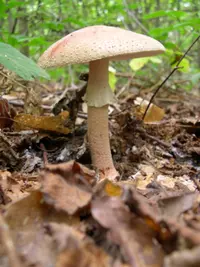
blusher
Amanita rubescens
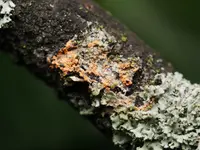
Erythricium aurantiacum
Erythricium aurantiacum
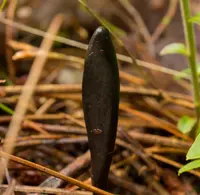
Slimy Earthtongue
Geoglossum difforme
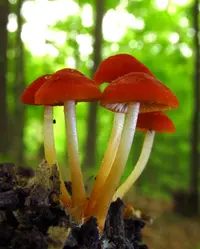
Marasmius sullivantii
Marasmius sullivantii
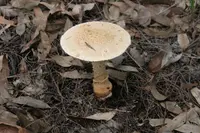
Ocher-Gilled Barefoot Lepidella
Amanita ochrophylla
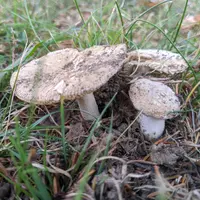
Poison Champagne Amanita
Amanita crenulata
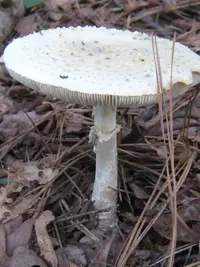
Coker's amanita
Amanita cokeri
Hypoxylon howeanum
Hypoxylon howeanum