Hypoxylon howeanum Care

Hypoxylon howeanum

About Hypoxylon howeanum

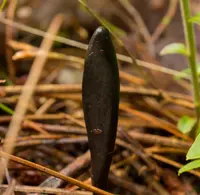
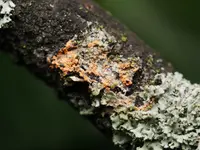
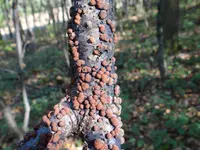
Hypoxylon howeanum is not a leafy plant but a wood-inhabiting fungus that forms crust-like patches on dead or decaying branches. Its fruiting bodies are typically dark, low, and closely attached to the wood surface, giving affected twigs a rough, encrusted look.

This species occurs mainly in temperate forests, often on fallen hardwoods or weakened branches, where it acts as a decomposer. It is not usually cultivated on purpose, so information on how to care for Hypoxylon howeanum is limited, but stable moisture and cool, shaded conditions generally favor its growth.

Main Plant Requirements

Care Difficulty

Moderate Care

Light Preference

Partial Shade

Water Requirements

Moderate Water

Temperature Preference

Warm Climate

Hardiness Zone

Unknown

Soil Texture

Loamy

Soil pH

Slightly acidic (6.5–7.0)

Soil Drainage

Well-drained

Fertilization

Minimal (feed rarely)

Get Personalized Care Plan

Scan your plant to receive care tips personalized for your specific plant

Available on iOS and Android

How to Care for the Hypoxylon howeanum

This fungus prefers stable, shaded woodland light rather than direct, open sun exposure.

  • Aim for bright shade with dappled or filtered light under trees, avoiding more than 1–2 hours of direct sun, especially between 11 a.m. and 4 p.m.
  • Partial shade with 2–4 hours of early morning or late afternoon sun is acceptable, but sustained strong sun can dry host wood and reduce Hypoxylon howeanum development.
  • In summer, provide extra shade or canopy cover, while in low-light seasons remove dense debris so some indirect light still reaches the substrate.

Moist but not waterlogged wood is important for consistent development of this fungus on its host.

  • Check the substrate or decaying wood and aim for evenly moist conditions; surface layers should feel damp but not dripping or slimy.
  • Increase moisture input during warm, dry periods by gentle soaking, then allow the outer 1–2 cm of wood or surrounding soil to drain before adding more water.
  • Reduce watering in cool seasons to prevent standing water, moldy anaerobic patches, and sour smells that indicate poor aeration and excess saturation.

Stable, mild temperatures support reliable growth and fruiting on host wood.

  • Optimal activity occurs around 55–70°F (13–21°C), conditions typical of shaded woodland or sheltered garden sites with limited temperature swings.
  • The organism tolerates brief drops to about 25–30°F (-4– -1°C), but repeated hard freezes and thaw cycles can damage host tissue and slow colonization.
  • Heat above 80–85°F (27–29°C), especially with dry air, can desiccate the substrate; provide shade, mulch, and moisture buffering during hot spells.

This species tolerates a broad humidity range, so air moisture is usually not a critical factor for Hypoxylon howeanum.

Hypoxylon howeanum develops best on well-aerated, draining substrate rather than compact, waterlogged ground.

  • Use a loose, crumbly mix based on sandy loam with 20–30% coarse mineral material such as grit, perlite, or pumice to prevent compaction.
  • Ensure rapid drainage so water does not stand on the surface; slight slopes or raised beds help excess water move away from the substrate.
  • Maintain slightly acidic to neutral conditions around pH 6.0–7.0 by blending in modest amounts of leaf mold or well-rotted compost instead of high-lime amendments.
  • Avoid heavy clay, peat-only substrates, or spots that stay saturated after rain, since poor aeration impairs host-root health and can reduce fruiting.

This species is not well suited to container growing, as it naturally colonizes dead wood and bark in the ground environment rather than confined pots.

This fungus-like organism usually grows on dead wood and does not benefit from garden fertilization.

Pruning is not a standard practice for Hypoxylon howeanum because it develops naturally on decaying wood surfaces.

Transplanting this wood-inhabiting species is rarely appropriate, as it colonizes dead or declining trees in situ.

  • Avoid attempting to move established colonies, since the mycelium is embedded deeply in the host wood.
  • If removal of infected wood is necessary, cut and dispose of affected branches or logs rather than transplanting.
  • For ecological management, focus on host tree health and sanitation instead of trying to relocate the organism.

Intentional propagation of Hypoxylon howeanum is generally not recommended in garden or indoor settings.

This species is naturally cold hardy on outdoor wood and requires no dedicated winter care from gardeners.

Care Tips

Substrate rotation

If cultivated on wood blocks or logs, rotate pieces every 2–3 months so air reaches all sides and fungal tissue does not stay in constant contact with overly wet surfaces that invite secondary molds.

Sanitary handling

Disinfect tools and cutting surfaces with 70% isopropyl alcohol before trimming or dividing colonized substrate to prevent introducing aggressive competitor fungi or bacteria.

Moisture mapping

Use several shallow trays or zones with slightly different moisture levels so you can observe where the fungus fruits best, then match that microclimate for future batches when growing Hypoxylon howeanum.

Controlled air exchange

Provide gentle but consistent air movement near the culture to remove stale air without direct drafts, which limits sporulation of competing molds while maintaining adequate oxygen for stable growth.

Substrate aging

Allow freshly cut hardwood pieces to season for 4–8 weeks before inoculation so excess sap and antimicrobial compounds dissipate, giving the mycelium a more stable and less chemically active substrate to colonize.

Common Pests and Diseases

Sooty mold

This disease forms a dark, powdery coating on the host surface where the fungus is growing, often following insect honeydew or other nutrient-rich films. Symptoms include black, crusty layers that reduce photosynthesis on living hosts or obscure diagnostic features on dead wood.

Solution

Remove or reduce the underlying nutrient source such as insect honeydew by gently washing affected surfaces with water and a mild biodegradable soap, then rinse well. Improve air movement and light exposure around the host material, and physically scrape or brush off loose fungal crusts where appropriate to reduce spread and to better monitor Hypoxylon howeanum care instructions in the surrounding habitat.

Wood-boring beetles

These insects tunnel into dead or declining wood where Hypoxylon howeanum may also be present, creating galleries that weaken the substrate. This pest can accelerate structural breakdown and alter moisture levels, indirectly affecting fungal growth patterns.

Solution

Cut out and destroy heavily bored wood to remove larvae and reduce reinfestation pressure. Store woody material in dry, well-ventilated conditions, use fine-mesh screening where feasible, and introduce or conserve natural predators such as parasitic wasps when managing larger habitat pieces outdoors.

Bark beetles

These insects colonize stressed or recently dead branches and trunks, sometimes in the same wood colonized by Hypoxylon howeanum. This pest leaves small round entry holes and fine boring dust, which can signal extensive internal damage and changes in wood moisture regimes.

Solution

Promptly remove and dispose of badly infested wood to break the beetle life cycle and protect nearby material. For valuable habitat logs, reduce stress by avoiding prolonged waterlogging, limit mechanical damage, and if necessary wrap sections in breathable mesh to reduce fresh colonization flights.

Interesting Facts

Early-stage bark colonizer

This species typically colonizes recently dead or dying hardwood twigs and small branches, especially of beech and other broadleaf trees, playing a role in the early stages of wood decay on the bark surface rather than deep inside the wood.

Distinctive seasonal color shift

Fresh stromata (the fungal fruiting crust) are usually pale gray to whitish and become darker and more crust-like with age, which helps field mycologists separate it from related Hypoxylon species that are darker from the outset.

Microscopic spore fingerprint

Its ascospores are narrowly ellipsoidal with a characteristic straight germ slit running nearly the full spore length, a microscopic feature mycologists rely on to confirm identification to species level.

FAQs about Hypoxylon howeanum

This species is a wood-inhabiting fungus that develops on dead or declining wood rather than spreading through soil like an aggressive ground cover. It expands slowly along woody substrates and is not considered an aggressive spreader in managed landscapes.

Grow Healthy Plants with Botan Care

Keep your plants happy and healthy with plant identification, disease detection, and easy care guidance.

Botan plant care app — identify plants on mobile

Explore More Plants