Hazel Woodwart Care (Hypoxylon fuscum)

Hazel Woodwart

About Hazel Woodwart

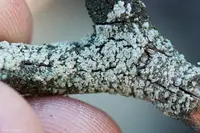
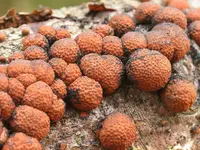
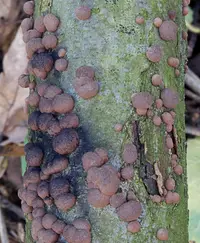
Hazel woodwart, Hypoxylon fuscum, is a small, wood-inhabiting fungus rather than a leafy houseplant. It forms hard, cushion-like crusts on dead or dying hazel branches. The surface is usually dark brown to almost black, with a finely bumpy texture as the tiny spore openings mature.

This species is native to Europe and commonly found in hedgerows and woodlands wherever hazel grows. It plays an ecological role in breaking down dead wood, so it is not typically cultivated.

Gardeners mainly notice it as a sign of stressed or declining hazel stems. There is little reason to actively care for Hazel Woodwart, beyond maintaining overall shrub health and good air circulation around branches.

Main Plant Requirements

Care Difficulty

Moderate Care

Light Preference

Partial Shade

Water Requirements

Moderate Water

Temperature Preference

Cool Climate

Hardiness Zone

5–9

Soil Texture

Loamy, Silty, Organic-rich

Soil pH

Acidic (5.5–6.5), Slightly acidic (6.5–7.0)

Soil Drainage

Moist but well-drained

Fertilization

Minimal (feed rarely)

Get Personalized Care Plan

Scan your plant to receive care tips personalized for your specific plant

Available on iOS and Android

How to Care for the Hazel Woodwart

This fungus prefers low to moderate light typical of shaded woodland habitats.

  • Provide dappled or filtered light under deciduous trees, with no more than 1–3 hours of weak morning sun per day.
  • Avoid direct midday and afternoon sun, which can overheat host branches and dry substrates too quickly for Hazel Woodwart to persist.
  • Ensure partial to full shade in summer; winter light levels matter less because the fungus is largely dormant on dead or declining wood.

This wood-inhabiting fungus relies on consistently moist, not saturated, wood rather than direct watering.

  • Maintain the habitat so that wood stays slightly damp; in dry spells, moisten surrounding soil or mulch when the top 2–3 cm are dry.
  • Ensure good drainage around host wood so water does not pool, which encourages competing rot and possible decay collapse of Hypoxylon fuscum colonies.
  • Watch for cracking, very light wood as a sign of excessive dryness, and for sour, foul odors as a sign of prolonged waterlogging.

This species tolerates a broad temperate climate but fruits best in cool to mild conditions.

  • Aim for general habitat temperatures of 45–70°F (7–21°C), typical of shaded woodland or garden woodpiles in temperate regions.
  • It survives short drops to about 20°F (-7°C) once established in wood, but repeated hard freezes below this can reduce visible fruiting.
  • Sustained heat above 86°F (30°C), especially with low humidity, can dry wood rapidly; provide shade and mulch to buffer temperature swings.

Humidity is not a meaningful care factor for Hypoxylon fuscum, which naturally develops on dead hazel wood in outdoor conditions.

This fungus develops on dead hazel branches rather than in conventional potting soil, so substrate choice focuses on wood condition, moisture, and aeration.

  • Use sound, dead hazel wood with intact bark, avoiding pieces that are deeply rotted or crumbly, as this reduces stable colonization surfaces.
  • Provide a moderately moist environment around the wood by keeping it in a shaded, humid outdoor spot without standing water on the surface.
  • Maintain free air circulation around the branches so the wood surface dries slightly between wet periods, limiting aggressive mold competitors.
  • Avoid chemical treatments, preservatives, or painted wood, since residues can inhibit Hypoxylon fuscum colonization and fruiting.

This species is not suitable for conventional container growing, as it colonizes dead hazel wood rather than living roots in potting media.

This fungus lives on woody hosts and does not need direct fertilization, so focus on overall tree and soil health rather than feeding Hypoxylon fuscum itself.

Pruning targets the host tree or shrub rather than Hypoxylon fuscum itself, aiming to maintain structural safety and limit stressed wood.

  • Inspect trees late winter to early spring, before leaf-out, to identify dead or weakened branches associated with fungal cankers.
  • Remove clearly dead, cracked, or severely cankered limbs back to healthy wood using sharp, disinfected bypass pruners or a pruning saw.
  • Thin crowded interior branches on the host tree to improve airflow and light penetration, which helps reduce moisture retention on bark.
  • Dispose of removed wood off-site rather than composting, to lower local inoculum levels of canker-causing fungi.

Management concerns focus on the host tree’s position and health, since this fungus is not grown as a container or ornamental subject.

  • Transplant young host trees or shrubs in early spring or early fall, when temperatures are mild and soil is workable.
  • Choose a site with appropriate light, soil drainage, and space so the host grows vigorously and is less prone to stress-related canker problems.
  • Move plants with a firm, intact root ball, disturbing roots as little as possible and watering deeply after transplanting to settle soil.
  • Monitor for slow recovery, dieback, or bark lesions after planting and correct waterlogging or drought promptly to reduce stress.

This wood-decay fungus is not typically propagated intentionally in gardens or home landscapes, so routine propagation guidance is not relevant.

In its natural range this fungus and its woody hosts are generally cold hardy and require no special winter care beyond normal tree management.

Care Tips

Substrate rotation

Periodically rotate or replace small sections of the host wood so that fresh, recently cut hazel branches are always available, which maintains an active infection front and more consistent fruiting patterns when growing Hazel Woodwart.

Moisture buffering

Place the inoculated hazel wood over a layer of damp, well-drained organic mulch rather than bare ground to keep the microclimate around the wood more stable and delay excessive drying of the substrate.

Shaded ventilation

Install simple slatted barriers or perforated panels that block direct sun and heavy rain but still allow good airflow, which reduces cracking of stromata while also preventing prolonged surface wetting that favors contaminant fungi.

Stroma monitoring

Inspect the stromata regularly and remove pieces of wood where the surface turns pale, powdery, or strongly overgrown by other molds, as this limits competition and helps keep the remaining colonies visually and structurally sound.

Successive inoculation

When cutting new hazel branches, place them in close contact with established colonized wood so that spores can naturally spread onto the fresh material, creating staggered age classes of colonization and extending the productive life of the culture area.

Common Pests and Diseases

Willow branch canker

This disease affects the willow host tissue that Hazel Woodwart colonizes, producing sunken, dead patches on twigs and small branches that may girdle and kill them. Symptoms include rough, cracked bark and dieback of fine shoots.

Solution

Prune out and remove dead or cankered twigs during dry weather, cutting back into healthy wood and disinfecting tools between cuts. Improve tree vigor through proper watering and mulching, and avoid wounding bark so the fungus has fewer entry points.

Secondary wood decay

This disease develops as the fungus further decomposes already weakened or dead willow wood, causing it to become brittle and structurally compromised. Symptoms include soft, crumbly, or honeycombed wood under the bark near old stromata.

Solution

Cut back and remove extensively decayed branches before they fail, disposing of them away from healthy trees. For larger trees, consult an arborist to assess structural safety and to determine whether selective pruning or staged removal is needed.

Bark-boring beetles

These insects exploit stressed or dying willow branches where this fungus is present, tunneling under bark and accelerating decline. Symptoms include small round exit holes, frass (fine sawdust), and rapid twig dieback.

Solution

Promptly remove and destroy heavily infested or dying branches to reduce breeding sites. Support the overall health of the host tree with correct watering and reduced mechanical damage, and consider trunk band traps or targeted pheromone traps where beetle pressure is high.

Wood-boring larvae

These insects feed within decaying willow wood that has been softened by fungal activity, further hollowing out branches and stems. Symptoms include internal galleries, weakened limbs, and occasional oozing or loose bark sections.

Solution

Prune and discard branches that show extensive internal tunneling, focusing on those already structurally weakened. Maintain host trees in good condition to slow the spread of decay, and avoid storing cut infected wood near living trees to limit breeding habitat.

Interesting Facts

Specialist on hazel wood

This fungus occurs mainly on dead or dying stems and branches of hazel (Corylus avellana), which is why it is commonly called hazel woodwart.

Seasonal color change

Its cushion-like stromata start pale brown and often turn dark brown to nearly black as they mature and weather, making older colonies easy to overlook as part of the bark.

Hidden spore structures

The fertile layer consists of many tiny embedded flasks called perithecia that release microscopic ascospores through small openings on the surface when conditions are moist.

Botan icon

Did you know?

Molecular and microscopic studies have shown that this species, once lumped with several similar Hypoxylon taxa, is distinct enough in spore features and chemistry to serve as a reference species for understanding diversity within the genus on hardwood hosts.

FAQs about Hazel Woodwart

This fungus spreads slowly along dead or dying hazel wood, forming multiple cushion-like patches over time. It does not jump to healthy green tissue and is not considered aggressive in managed garden or woodland settings.

Grow Healthy Plants with Botan Care

Keep your plants happy and healthy with plant identification, disease detection, and easy care guidance.

Botan plant care app — identify plants on mobile

Explore More Plants