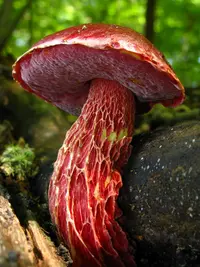
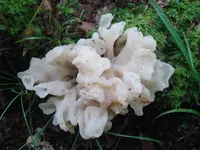
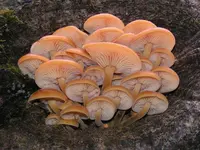
goldenhaired inkcap Care (Parasola auricoma)

goldenhaired inkcap

About goldenhaired inkcap

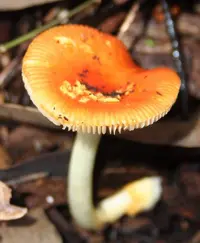
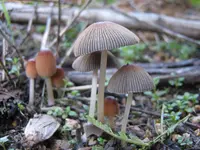
The goldenhaired inkcap, Parasola auricoma, is a small, delicate mushroom rather than a leafy houseplant. It produces thin, umbrella-like caps with fine golden hairs when young, then quickly expands and darkens. This species typically appears on nutrient-rich soil, wood chips, or decaying plant debris, often in gardens, lawns, or woodland edges in temperate regions. It has a very short life span, sometimes emerging and collapsing within a single day. Because of its fleeting fruiting bodies and reliance on decaying organic matter, it is not a stable ornamental species and can be challenging if someone wants to care for goldenhaired inkcap. It prefers moist, organic-rich substrates and moderate shade, similar to many woodland fungi.

Main Plant Requirements

Care Difficulty

Moderate Care

Light Preference

Partial Shade

Water Requirements

Keep Soil Moist

Temperature Preference

Cool Climate

Hardiness Zone

Unknown

Soil Texture

Loamy, Organic-rich, Peaty

Soil pH

Acidic (5.5–6.5), Slightly acidic (6.5–7.0)

Soil Drainage

Moist but well-drained

Fertilization

Minimal (feed rarely)

Get Personalized Care Plan

Scan your plant to receive care tips personalized for your specific plant

Available on iOS and Android

How to Care for the goldenhaired inkcap

This delicate saprotrophic fungus prefers cool, gentle light typical of shaded woodland edges.

  • Provide bright dappled shade or light filtered through trees, with only 1–2 hours of weak morning sun and no direct midday or afternoon sun.
  • Goldenhaired inkcap fruits best where taller plants cast shifting shade, preventing caps from drying; consistent leaf litter cover also helps moderate light reaching the mycelium.
  • Avoid open, exposed sites; strong sun for several hours can desiccate the substrate, while deep, constant shade can reduce fruiting frequency.

Moist, evenly damp substrate is essential for reliable fruiting of this short‑lived inkcap.

  • Maintain consistently moist but not waterlogged soil or leaf litter; the surface should feel damp to the touch but not spongy or muddy.
  • Allow only the top 1–2 cm of substrate to start feeling less damp before rewetting; Parasola auricoma declines where the ground dries and cracks.
  • Ensure excellent drainage so water does not pool for more than a few hours, since prolonged saturation encourages anaerobic conditions and decay of the mycelium.

This species fruits best in mild, cool to moderately warm conditions typical of temperate forests.

  • Optimal fruiting usually occurs around 55–68°F (13–20°C), often in spring and fall when air and soil stay cool and moist.
  • Growth slows noticeably above about 77°F (25°C); hot, dry spells can stop fruiting until cooler, wetter conditions return.
  • The fungus tolerates brief drops near 32°F (0°C) in its dormant mycelial state, but hard frost or freeze–thaw on exposed fruiting bodies quickly damages caps.

This fungus has minimal humidity requirements and usually manages well in typical outdoor conditions.

  • Tolerates a wide range of ambient humidity, roughly 30–80%, as long as the substrate itself stays evenly moist.
  • Dry air is rarely a problem if the underlying wood, mulch, or soil does not dry out completely.
  • Wilting or rapid collapse of caps usually indicates substrate drought rather than low air humidity; water the substrate gently to restore moisture.

This saprophytic fungus grows best in loose, organic-rich material rather than mineral garden soil.

  • Use a substrate of well-rotted wood chips, leaf litter, and compost to mimic decomposing forest debris for Parasola auricoma.
  • Ensure the substrate stays loose and crumbly, with fast drainage so water passes through but leaves slight, even moisture.
  • A near-neutral pH around 6.0–7.5 is suitable; avoid strongly acidic peat-only mixes and heavily limed, alkaline material.
  • Improve aeration by mixing in coarse bark or chunky wood chips and avoid compacted or waterlogged spots where oxygen is limited.

This species can be grown in shallow containers as a temporary display if the decomposing substrate is prepared correctly.

  • Choose a wide, shallow container to spread a thin layer of woody, organic substrate where fruiting bodies can emerge naturally.
  • Use a potting tray or box with many drainage holes so excess water exits quickly and the wood-based substrate does not turn anaerobic.
  • Select a rigid container material that holds shape when wet so the loose, fibrous substrate remains evenly moist without collapsing or compressing.

Parasola auricoma is a saprophytic fungus that obtains nutrients from decaying organic matter and does not need conventional fertilization.

Parasola auricoma does not require pruning because each mushroom cap is short-lived and naturally decomposes in place.

This fungus is not suited to standard repotting; it appears where conditions are right in soil or mulch rich in organic debris.

  • Transplanting is unreliable, as the main organism lives as fine mycelium threads through the substrate, not as a compact root mass.
  • If moving material, gently relocate a portion of the original leaf litter or woodchip layer rather than individual mushrooms.
  • Carry the substrate in a shallow tray or bucket, keeping it slightly moist to reduce mycelium stress and desiccation.
  • Position the transplanted substrate in a similar shaded, humus-rich area and avoid disturbance while it re-establishes.

Propagation of Parasola auricoma is indirect and depends on spore dispersal and suitable organic matter rather than controlled horticultural methods.

This saprophytic fungus is naturally cold hardy in temperate climates and needs no specific winter care beyond maintaining its organic substrate.

Care Tips

Use Decaying Wood

Place a thin, partially rotted hardwood branch or wood chip layer on the substrate, as this provides a stable, fungus-friendly food source that can extend fruiting over several days or weeks.

Control Flush Timing

Lightly mist and then cover the colonized substrate with a clear plastic dome or humidity tent for 12–24 hours to trigger a dense fruiting flush, then ventilate to reduce condensation and avoid stem collapse.

Rotate Fruiting Trays

Prepare 2–3 small trays of colonized substrate started 1–2 weeks apart so that when one tray finishes fruiting you have another reaching peak stage, giving more continuous mushrooms from the same culture.

Spore Print Renewal

Collect spore prints from the healthiest, well-formed caps onto sterile paper or foil so fresh spores are available for new inoculations, keeping the culture vigorous over multiple cycles.

Manage Short Lifespan

Since caps often degrade within a few hours, schedule observations or photography early in the day and harvest promptly at full expansion, which helps in caring for goldenhaired inkcap when timing activities around its very brief display window.

Common Pests and Diseases

fungal gnat larvae

This pest often appears in very damp, organic-rich substrates where the fungus is fruiting. Symptoms include tiny black gnats flying around the substrate surface and fine, threadlike larvae feeding in the top layer of the medium.

Solution

Allow the substrate surface to dry slightly between waterings if the fungus is being cultivated in trays, use fine mesh or sand as a top-dressing to limit egg-laying, and place yellow sticky traps near the surface to catch adults. In more serious cases, a biological control such as Bacillus thuringiensis israelensis (BTI) applied according to label directions can reduce larval populations without harming the mycelium.

mushroom springtails

These insects thrive in constantly moist culture containers and feed on fungal mycelium and decaying organic matter, sometimes scarring developing caps. This pest is usually noticed as small, jumping white or gray insects on or just under the substrate surface.

Solution

Reduce excessive moisture, increase ventilation in culture areas, and remove heavily infested substrate patches. If needed, use shallow traps baited with a small piece of moist bread or mushroom tissue, then discard the collected insects outside the growing area.

parasitic fungi

This disease is caused by competing or parasitic molds and mushrooms that colonize the same substrate, often forming colored patches (green, blue, or dense white) that overgrow the intended mycelium. Symptoms include stunted or distorted fruiting bodies and poor or patchy emergence of caps.

Solution

Discard heavily contaminated substrates, clean or sterilize reusable containers, and prepare fresh substrate using good hygiene and, where appropriate, pasteurization or sterilization. Improve airflow, avoid excessive condensation, and reduce nutrient-rich surface debris to limit the spread of parasitic fungi and support healthier Parasola auricoma care instructions.

bacterial blotch

This disease develops in overly humid, stagnant conditions and leads to soft, water-soaked spots or slimy areas on caps and stipes that darken as they age. Symptoms include a sour or unpleasant odor and rapid collapse of affected fruiting bodies.

Solution

Improve air circulation around culture trays, reduce overhead misting, and avoid water droplets sitting on caps for extended periods. Remove and discard affected mushrooms promptly, clean tools and surfaces with a mild disinfectant, and adjust watering so the substrate stays moist but not waterlogged.

Interesting Facts

Extremely short-lived caps

Mature fruiting bodies often persist for only a few hours before collapsing and disappearing, so the mushrooms are typically visible for a single morning or day after rain.

Golden hair identification

The species is distinguished by fine golden to yellow-brown hairs on the cap surface when young, a key microscopic and macroscopic feature used by mycologists to separate it from other small inkcap relatives.

Wood-litter specialist

It grows mainly on nutrient-rich, decaying hardwood debris such as wood chips, buried twigs, and leaf litter, playing a role in breaking down complex plant material in urban gardens and parks.

FAQs about goldenhaired inkcap

This mushroom is not considered a good edible. It is small, very short-lived, and can be confused with toxic look-alikes. Field guides generally recommend avoiding consumption and treating it as inedible rather than as a food source.

Grow Healthy Plants with Botan Care

Keep your plants happy and healthy with plant identification, disease detection, and easy care guidance.

Botan plant care app — identify plants on mobile

Explore More Plants