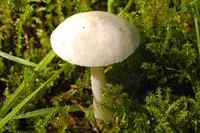
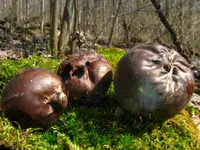
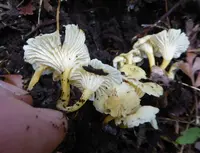
rusty woodwart Care (Hypoxylon rubiginosum)

rusty woodwart

About rusty woodwart

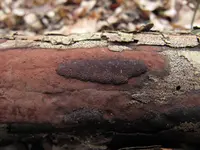
Rusty woodwart, Hypoxylon rubiginosum, is a crust-like wood-decay fungus rather than a leafy plant. It forms hard, rust-brown patches on dead or dying hardwood, especially beech and oak.

These patches sit tightly on the bark and often show small surface bumps where spores are released. It plays an important ecological role by breaking down dead wood in temperate forests across Europe and North America.

Because it grows on naturally decaying wood outdoors, gardeners rarely try to cultivate it intentionally. For anyone wondering how to care for rusty woodwart, it generally appears and persists on its own wherever conditions suit it: cool, moist, shaded wood with plenty of natural decay.

Main Plant Requirements

Care Difficulty

Moderate Care

Light Preference

Partial Shade

Water Requirements

Moderate Water

Temperature Preference

Cool Climate

Hardiness Zone

Unknown

Soil Texture

Loamy, Organic-rich

Soil pH

Acidic (5.5–6.5), Slightly acidic (6.5–7.0)

Soil Drainage

Moist but well-drained

Fertilization

Minimal (feed rarely)

Get Personalized Care Plan

Scan your plant to receive care tips personalized for your specific plant

Available on iOS and Android

How to Care for the rusty woodwart

This wood-decay fungus typically develops on dead or declining hardwood in shaded to semi-shaded forest conditions.

  • Provide bright dappled shade or light woodland shade, with 1–3 hours of soft morning sun and protection from harsh midday and afternoon sun.
  • Ensure host logs or branches receive filtered light under a tree canopy; deep, continuous darkness can slow fruiting body development.
  • Avoid prolonged direct sun exceeding 4–5 hours, which can dry substrates and crack crusts when caring for rusty woodwart in managed woodland settings.

Hypoxylon rubiginosum develops on naturally moist, decaying hardwood rather than in cultivated beds.

  • Favor sites where wood stays evenly moist but not waterlogged; the substrate should feel damp but not dripping when squeezed by hand.
  • Avoid areas with standing water or poor drainage, as waterlogged wood limits oxygen and reduces fungal activity, while completely dry wood slows or halts growth.
  • In dry seasons, natural rainfall may be insufficient; if managing logs, rewet them when the outer 2–5 mm feel dry and lightweight, then let excess water drain away.

This species is adapted to temperate forests with cool to moderately warm conditions.

  • Optimal activity typically occurs around 55–75°F (13–24°C), with steady moisture and shade supporting gradual colonization of hardwood.
  • The fungus tolerates cool weather down to around 25–30°F (-4 to -1°C), surviving typical winter frosts on dead wood in many temperate regions.
  • High heat above 85–90°F (29–32°C), especially with low humidity, can dry host wood and slow visible growth, so partial shade and shelter from hot, exposed sites are beneficial.

Humidity is not a key factor for Hypoxylon rubiginosum, which naturally colonizes dead wood in variable outdoor conditions.

This fungus develops on dead or decaying hardwood rather than in conventional potting soil.

  • It colonizes firm, intact or slightly decayed hardwood logs or branches, not loose loamy or sandy substrates.
  • Focus on moderately moist, well-aerated dead wood; avoid waterlogged, buried, or constantly saturated timber that limits oxygen.
  • Slightly acidic to neutral wood (roughly pH 5.0–7.0) from broadleaf trees such as oak or beech supports more stable fruiting.
  • Do not apply fertilizers, compost, sand, bark mixes, or perlite, as Hypoxylon rubiginosum relies on the natural structure and nutrients of the wood itself.

This species is not suitable for conventional container growing, since it is a wood-decaying fungus rather than a typical potted plant.

Hypoxylon rubiginosum lives on dead or declining wood and normally needs no supplemental fertilizer in gardens or natural settings.

Hypoxylon rubiginosum is not shaped by pruning, but limited removal of affected wood on host trees can support overall tree health.

  • Carry out any pruning in late winter or very early spring, before active sap flow and insect activity increase.
  • Remove dead, severely infected, or structurally weak branches back to a healthy lateral or the branch collar.
  • Use clean, sharp bypass pruners or a pruning saw, disinfecting blades between cuts to limit spread of other pathogens.
  • Avoid heavy thinning that stresses the tree; focus on safety, canopy clearance, and maintaining a stable branch structure.

This fungus is not maintained as a potted specimen; management focuses on when and how to intervene on infected host wood rather than repotting.

  • Treat removal of heavily colonized branches or small trees as a one-time “transplanting” decision, usually during dormancy in late winter.
  • Look for extensive stem cankers, brittle wood, and branch dieback as signs that removal and replacement planting may be safer.
  • When replanting nearby, choose a hardy, site-appropriate tree species and prepare a wide, loosened planting hole to reduce root stress.
  • Water the new tree deeply after planting, keep soil evenly moist for the first season, and avoid root disturbance while it establishes.

Intentional propagation of Hypoxylon rubiginosum is rarely done in horticulture, since it is a wood-decay fungus rather than an ornamental plant.

This species is naturally cold hardy on dead or stressed wood and generally needs no directed winter care in managed landscapes.

Care Tips

Host tree selection

Establish this fungus only on already-dead or clearly declining hardwood, such as fallen beech or oak logs, to avoid unintentionally stressing or infecting healthy landscape trees.

Log size management

Use moderate-diameter branches or logs (5–20 cm) instead of very large trunks, as smaller material colonizes and fruits more reliably and is easier to inspect and move if needed.

Moisture retention setup

Partially sink the wood into the soil or leaf litter and surround it with coarse wood chips to help the substrate stay evenly moist without constant watering.

Microhabitat shading

Position colonized wood where it gets dappled light and shelter from prevailing wind, such as on the north or east side of a shrub thicket, so the surface does not dry and crack between rains.

Monitoring and rotation

Inspect the wood several times a year and rotate or slightly reposition pieces that show uneven colonization or excessive drying, which supports more uniform fruiting when growing rusty woodwart.

Common Pests and Diseases

Bark beetles

These insects tunnel into stressed or dying host trees whose dead wood later supports colonies of this fungus. Symptoms include small round exit holes, powdery frass, and rapid decline or death of the host tree, after which rusty woodwart fruiting bodies may appear on the bark.

Solution

Limit attractants for bark beetles by keeping nearby shade or ornamental trees healthy through proper watering, mulching, and avoidance of trunk wounds. Remove and dispose of heavily infested, dead, or dying branches and logs promptly so they do not serve as breeding material, and consult a certified arborist for high‑value trees if infestations are recurrent.

Wood-boring larvae

These insects, often beetle or moth larvae, create galleries within dead or decaying branches that later become colonized by this wood‑inhabiting fungus. Symptoms include soft, tunneled wood, scattered fine sawdust, and weakened branches that break easily, which can change the way Hypoxylon fruiting bodies develop and spread on the substrate.

Solution

Cut out and discard heavily bored branches and small logs to reduce both mechanical weakening and fungal spread. Store firewood and cut timber away from living trees and off moist soil, and encourage natural predators such as birds by maintaining diverse habitat rather than using broad‑spectrum insecticides.

Secondary wood-decay fungi

This disease complex involves other decay fungi colonizing the same dead or dying wood where rusty woodwart develops, often accelerating structural breakdown. Symptoms include overlapping fungal crusts or brackets, crumbly or stringy wood, and faster loss of branch or log integrity than expected for simple aging.

Solution

For trees used as habitat or ornamentals, prune out severely decayed limbs before they pose a fall risk and dispose of them away from the site. When keeping wood specifically to observe Hypoxylon rubiginosum, choose stable pieces of hardwood, elevate them to reduce soil contact, and replace them once advanced decay or multiple competing fungi dominate the surface.

Interesting Facts

Specialist on hardwoods

This fungus mainly colonizes dead or dying branches and trunks of broadleaf trees such as beech, oak, and maple, where it helps break down tough lignin and cellulose in the wood.

Rusty crust appearance

Its fruiting bodies form a thin, rust-brown to orange crust on bark that later turns darker and rougher as the reproductive structures mature and release spores.

Seasonal spore release

The species forms tiny flask-shaped structures embedded in the crust that release spores through minute openings, often most actively during moist, mild weather in spring and autumn.

Botan icon

Did you know?

This species is often used as an indicator of long-standing woodland continuity in parts of Europe, because it tends to persist on deadwood in older, relatively undisturbed broadleaf forests.

FAQs about rusty woodwart

This fungus colonizes dead or dying hardwood relatively quickly, but visible cushion-like fruiting patches usually take months to a few years to develop and expand, depending on moisture, temperature, and how decomposed the host wood already is.

Grow Healthy Plants with Botan Care

Keep your plants happy and healthy with plant identification, disease detection, and easy care guidance.

Botan plant care app — identify plants on mobile

Explore More Plants