

Spore capture method
Place a shallow tray with moist, well-drained substrate beneath mature fruiting bodies to catch and retain spores, then move the tray to a fresh, shaded site to increase the chance of new colonies establishing.

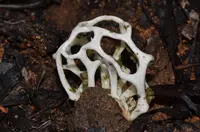
Smooth cage fungus, Ileodictyon gracile, is a saprophytic fungus, not a true plant, known for its delicate white lattice or cage-like fruiting body. It emerges from an egg-shaped sac in soil rich in decaying organic matter, often in gardens, mulch beds, and grassy areas.
This species is native to Australia and New Zealand but now appears in other mild, damp regions through movement of soil and plant materials. Its reliance on moist, organic substrates and natural spore spread makes it unpredictable to cultivate, so attempts to care for smooth cage fungus focus mostly on maintaining consistently moist, nutrient-rich ground.
It prefers sheltered, humid locations and loose, well-drained soil with plenty of decomposing wood or leaf litter, where the network of fungal threads stays undisturbed.

Care Difficulty
Hard Care

Light Preference
Partial Shade

Water Requirements
Moderate Water

Temperature Preference
Warm Climate

Hardiness Zone
Unknown

Soil Texture
Loamy, Organic-rich

Soil pH
Slightly acidic (6.5–7.0)

Soil Drainage
Moist but well-drained

Fertilization
Minimal (feed rarely)
Scan your plant to receive care tips personalized for your specific plant
Available on iOS and Android
Ileodictyon gracile develops best where light and shade alternate through the day in open ground.
Water management focuses on keeping the substrate evenly moist but never stagnant.
Temperature influences both growth and fruiting reliability for this species.
This fungus tolerates a range of outdoor humidity but fruits best in consistently moist, humid conditions around 60–90%.
This saprophytic fungus needs loose, organic-rich substrate rather than conventional potting soil.
This species is generally unsuitable for conventional container growing and performs best when established in open ground or large outdoor mulch beds.
Ileodictyon gracile, commonly known as smooth cage fungus, does not need routine fertilization in typical garden or woodland soil.
Pruning is generally unnecessary for Ileodictyon gracile because the visible fruiting body is short-lived and decomposes naturally.
Transplanting focuses on moving the underlying fungal habitat rather than the short-lived fruiting body of Ileodictyon gracile.
Propagation of Ileodictyon gracile is specialized and not usually attempted by home growers, as it depends on spore dispersal and suitable soil fungi communities.
Ileodictyon gracile is generally cold tolerant in its suitable climate range and does not require specific winter care.

Plant Health Check
Not sure what's wrong with your plant? Check your plant's health inside the app.
The mature fruiting body forms a delicate white lattice or cage with long, thin arms, making it one of the most open and fine-meshed structures among stinkhorn fungi.
Like other stinkhorns, it produces an olive-brown, foul-smelling slime (gleba) on the cage surface that attracts flies and other insects, which then carry the spores to new locations.
This species is naturally associated with southern temperate regions, especially New Zealand and Australia, where it typically appears in mulch, leaf litter, or disturbed ground after rain.

Molecular and morphological studies suggest that this species is distinct from the similar smooth cage fungus Ileodictyon cibarium, with I. gracile generally showing slimmer, more delicate arms and a more open lattice while still sharing the same unusual cage-forming growth habit.
This species does not spread through roots or stems. It develops from buried eggs that appear where spores land on suitable, nutrient-rich organic matter. In gardens it usually remains localized, unless fresh mulch or debris is repeatedly introduced.
Keep your plants happy and healthy with plant identification, disease detection, and easy care guidance.

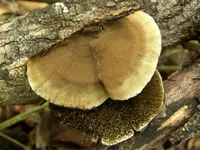
Cerrena hydnoides
Cerrena hydnoides
Botryobasidium aureum
Botryobasidium aureum
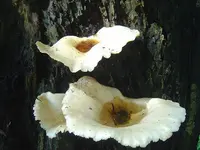
Flat Crep
Crepidotus applanatus
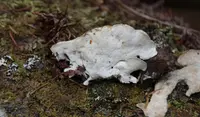
Bitter Bracket
Amaropostia stiptica
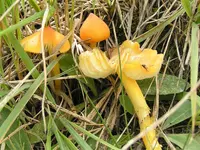
Persistent Waxcap
Hygrocybe acutoconica
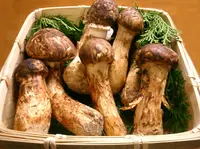
Matsutake
Tricholoma matsutake
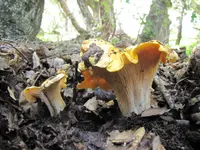
California Golden Chanterelle
Cantharellus californicus
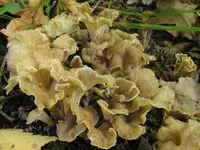
blackening chanterelle
Cantharellus melanoxeros