Encourage Dense Hedges
Shear only the soft new growth in late spring rather than cutting into old wood, which encourages a thick, uniform hedge line without creating bare gaps.

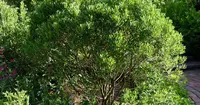
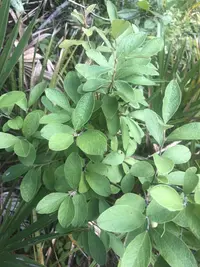
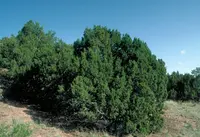
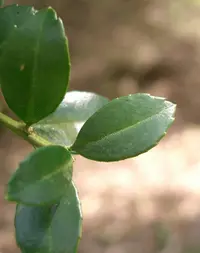
Inkberry, Ilex glabra, is an evergreen holly native to wetlands and coastal plains of eastern North America. It naturally forms dense, rounded shrubs with small, glossy dark-green leaves.
Plants produce modest white flowers followed by black berry-like fruits that persist into winter and attract wildlife. Its compact growth and tolerance of pruning make it useful for low hedges and foundation plantings.
Inkberry is generally considered reliable and not difficult to grow if its basic needs are met. It prefers acidic, consistently moist but well-drained soil and does best in full sun to light shade, which helps guide how to care for inkberry.

Care Difficulty
Moderate Care

Light Preference
Partial Sun

Water Requirements
Keep Soil Moist

Temperature Preference
Cold Hardy

Hardiness Zone
5–9

Soil Texture
Sandy, Loamy, Peaty

Soil pH
Strongly acidic (4.5–5.5), Acidic (5.5–6.5)

Soil Drainage
Moist but well-drained

Fertilization
Minimal (feed rarely)
Scan your plant to receive care tips personalized for your specific plant
Available on iOS and Android
This coastal evergreen shrub prefers consistent light conditions to keep foliage dense and healthy.
This shrub prefers evenly moist, acidic soil and does not tolerate prolonged drought or standing water.
This species is naturally cold-hardy but grows best within moderate temperature ranges.
This evergreen shrub handles a wide humidity range but benefits from moderately moist air, especially when young.
Ilex glabra prefers consistently moist, acidic, well-aerated soil that mimics wetland edges.
This species can be grown in containers, especially on patios or at entryways, if moisture and stability are managed carefully.
Inkberry (Ilex glabra) benefits from light feeding but grows acceptably in average, not overly rich soil.
Pruning Ilex glabra helps maintain a dense, natural shape and removes unhealthy wood.
This shrub is usually grown in the ground, so focus on careful transplanting rather than frequent repotting.
Ilex glabra is commonly propagated by semi-ripe cuttings and less often by seed due to slow germination.
This species is generally cold hardy in much of its range and needs only modest winter care in the ground.

Plant Health Check
Not sure what's wrong with your plant? Check your plant's health inside the app.
This shrub keeps its small, dark green leaves year-round even in nutrient-poor acidic bogs and wet pine barrens, where many other woody plants lose foliage or fail to survive.
The nearly black drupes, which give inkberry its common name, are an important late-fall and winter food source for birds such as towhees and small songbirds that disperse its seeds across wetland edges.
In its native coastal plain habitats, this species can regenerate after low-intensity fire and withstand periodic flooding, allowing it to persist in fire-managed pine ecosystems and saturated soils.

Ilex glabra is one of the few North American holly species historically used as a caffeine source; Indigenous peoples and early settlers sometimes combined its roasted leaves with those of other yaupon relatives to brew stimulating beverages.
Yellowing foliage often indicates poor drainage, waterlogged soil, or high soil pH. Compacted clay, standing water, or nutrient lockout can all cause stress. Improve drainage, check pH, and adjust watering before considering fertilizer or Ilex glabra plant care changes.
Keep your plants happy and healthy with plant identification, disease detection, and easy care guidance.