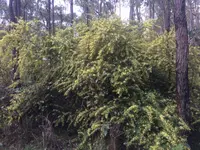
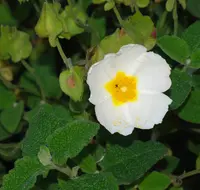
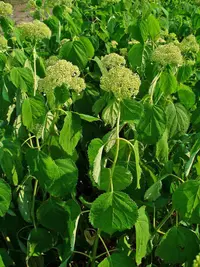
Wind-aware placement
Site the shrub where prevailing winds are filtered by other vegetation or fencing, which reduces branch breakage and desiccation in exposed, open landscapes.

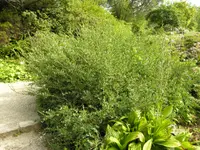
Blue-green willow, Salix caesia, is a small, cold-hardy shrub willow found mainly in northern and montane regions of Europe and parts of Asia. It often grows along riverbanks, lake shores, and moist meadows, where soils stay cool and consistently damp.
This species forms low, multi-stemmed thickets with slender branches and distinctive bluish-green leaves that give it a soft, silvery look from a distance. In spring it produces typical willow catkins that support early pollinators.
Overall, it is a relatively undemanding plant if given cool conditions, steady moisture, and well-drained, slightly acidic soil. Gardeners who learn how to care for Blue-green Willow usually find it reliable in the right climate.

Care Difficulty
Moderate Care

Light Preference
Full Sun

Water Requirements
Keep Soil Moist

Temperature Preference
Cold Hardy

Hardiness Zone
3–6

Soil Texture
Sandy, Loamy, Silty

Soil pH
Acidic (5.5–6.5), Slightly acidic (6.5–7.0)

Soil Drainage
Waterlogged tolerant

Fertilization
Minimal (feed rarely)
Scan your plant to receive care tips personalized for your specific plant
Available on iOS and Android
Salix caesia prefers full sun in cool to mild climates but tolerates some light shade.
Salix caesia is a moisture-loving shrub that thrives in consistently damp, not stagnant, soil.
This willow is cold-hardy and prefers cool to moderate temperatures for strongest growth.
This willow prefers cool, moderately humid air but adapts to typical outdoor conditions in most temperate climates.
Salix caesia grows best in consistently moist, deep, mineral soils with high aeration and no prolonged waterlogging.
This species can be grown in containers short-term, but it performs best when eventually established in open ground.
Salix caesia usually grows well in ordinary soil, but light feeding improves vigor in poor sites.
Pruning Salix caesia helps maintain a stable framework and remove weak growth.
This willow is more often transplanted in the landscape than kept long term in containers.
Salix caesia is commonly propagated from cuttings rather than seed for reliable results.
This willow is generally cold hardy and needs minimal winter care in most temperate climates.

Plant Health Check
Not sure what's wrong with your plant? Check your plant's health inside the app.
This willow is notable for its blue-green, waxy-coated leaves and young stems, a glaucous surface that helps reduce water loss and gives the plant its distinctive coloration in exposed mountain habitats.
It typically grows along cold, fast-flowing mountain streams and lake margins in subalpine and boreal regions, where it helps stabilize gravelly and rocky banks with its dense, spreading root system.
Many botanists consider this species to have arisen through ancient hybridization within the Salix genus, which helps explain its variable morphology and intermediate traits between closely related alpine willows.

In several parts of northern and central Europe, conservation assessments treat this willow as a habitat priority species because stable, cold, gravelly river systems that support its populations have become much less common due to river engineering and land-use change.
This species can spread by suckers and seed along moist banks, but it is usually manageable in gardens. Regular pruning and removing unwanted shoots control spread. In sensitive wetlands, consult local guidance before planting to prevent ecological issues.
Keep your plants happy and healthy with plant identification, disease detection, and easy care guidance.