

Bay Bolete Identification (Imleria badia)

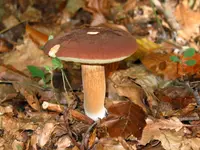
To recognize Bay Bolete, look first for a smooth brown cap, a pore surface under the cap instead of gills, and a stout stem without a ring or netlike pattern.

Most caps are about 2 to 6 inches (5 to 15 cm) across, with small yellow to olive pores and a firm, central stem.

Imleria badia Identification

Check Your Plant with Botan

Upload a clear image to check whether your plant ID is correct.

Clear images work best. Avoid photos taken too close or too far away

Check the mushroom’s cap, pore surface, and stem shape first.

  • Cap is smooth, convex to broadly rounded, usually dark chestnut to bay brown, often 2 to 6 inches (5 to 15 cm) wide.
  • Underside has fine pores, not gills; pores are pale yellow to olive and often bruise blue where pressed.
  • Stem is fairly even or slightly club-shaped, without a ring, and lacks a net-like raised pattern.
  • Flesh looks pale to yellowish and may show some blue staining after cutting, especially above the tubes.

A pore surface and plain brown stem are especially useful visible checks for Imleria badia.

Imleria badia shows distinct age-related changes in cap shape, pore surface, and stem proportions.

  • Young plant: Button-like fruit bodies start compact, with a rounded to hemispherical chestnut-brown cap and a thick, short stem; the pore surface stays pale and fine.
  • Mature plant: As the mushroom expands, the cap becomes broadly convex to nearly flat, often reaching 2-6 inches (5-15 cm), while the stem looks longer relative to cap width.
  • Fruiting stage: Older visible fruit bodies show yellow to olive pores that bruise blue, and the cap surface may look smoother or slightly greasy when moist.

Imleria badia is most often seen from summer into fall, when fresh fruiting bodies emerge from the ground. This is the main seasonal clue, since the species is identified as a mushroom rather than by year-round stems or leaves. In fall, look for smooth chestnut- to bay-brown caps and yellow pores on new specimens. Older fall mushrooms often darken, soften, and lose their clean outline as they age.

Several boletes can be mistaken for Bay Bolete at a glance.

porcini(Boletus edulis)

Both have brown caps and pores, but porcini usually has a thicker, club-shaped stem with a clear white net pattern near the top.

red-cracking bolete(Xerocomellus chrysenteron)

Similar size and brown cap can confuse beginners. It often shows cracked cap skin with reddish flesh beneath and a slimmer, more irregular stem.

bitter bolete(Tylopilus felleus)

Also brown-capped with pores, but the stem usually has dark netting and older pores turn pinkish rather than yellow to olive.

Checking stem pattern and pore color is usually the fastest way to separate these species.

Imleria badia is native across much of Europe and parts of temperate Asia. It is most often found in conifer and mixed woodland, especially with pine and spruce, and also occurs in some broadleaf forests. Habitat can help narrow identification because this bolete is usually encountered on the forest floor in mossy or needle-littered woods rather than in open grassland. Its regular association with conifer-dominated woodland is a useful field clue.

This mushroom carries a meaningful misidentification risk. Wrong identification matters because some similar boletes can cause poisoning if eaten by humans or pets.

  • Dangerous look-alikes: A key safety check is the pore surface under the cap. Imleria badia has pores, not gills. Confusion with toxic gilled mushrooms can lead to serious ingestion risk.
  • Blue bruising is not enough: The pores and flesh may bruise blue after handling, but that feature alone does not confirm identity. Several different boletes share it, including species linked with gastrointestinal upset after ingestion.

Scan. Check. Confirm.

Use Botan to identify or confirm it from a photo, helping narrow down look-alikes before you rely on an initial guess.

FAQ

The most reliable feature is the pore surface under the cap. It has fine yellow pores that usually bruise blue-green when handled, paired with a smooth chestnut-brown cap and no net-like pattern on the stalk.

More Plant Identification Guides

Scan Your Plant. Get the Details.

Use Botan to identify it from a photo, then review plant details, care information, and common problems for that species.

Botan app identifying a plant from a photo
Best Fertilizer for Grass in Summer: How to Choose the Right One

6 min read · 18 Aug 2026

Best Fertilizer for Grass in Summer: How to Choose the Right One

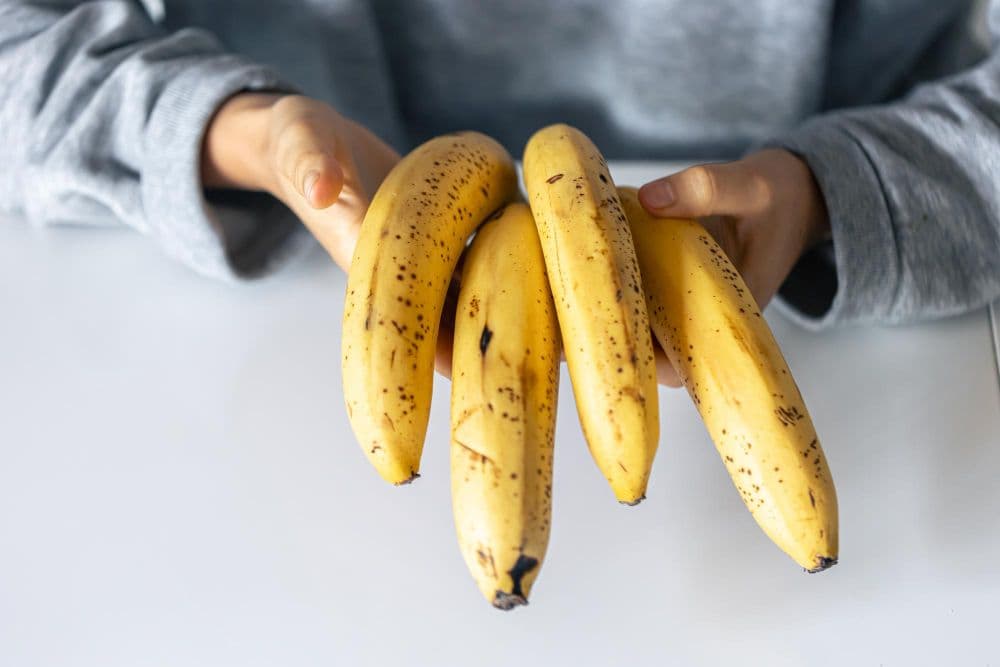
The right fertilizer in summer can make a lawn thrive. The wrong one can damage it. Here, you’ll learn the best NPK ratios by grass type, when and how to apply your formula, and how to recognize the signs of over- or under-fertilizing.

Plant Care
Best Fertilizer for Grass in Summer: How to Choose the Right One
Banana Peel Water for Plants: 5 Things to Know Before Trying It

5 min read · 9 Jul 2026

Banana Peel Water for Plants: 5 Things to Know Before Trying It

Banana water can provide potassium and some nutrients that may support plant growth, but it is not a universal fix. Use it carefully and only when the plant actually shows signs of nutrient deficiency rather than as a routine treatment.

Plant Care
Banana Peel Water for Plants: 5 Things to Know Before Trying It
How To Revive a Dying Plant: 6 Steps To Bring A Plant Back To Life

6 min read · 1 Sept 2026

How To Revive a Dying Plant: 6 Steps To Bring A Plant Back To Life

Drooping leaves and brown tips don't always mean the end, and a weakened plant can often recover with a little help. These six simple steps will help you revive a dying plant and restore its health.

Plant Care
How To Revive a Dying Plant: 6 Steps To Bring A Plant Back To Life