Pinch For Bushiness
Regularly pinch out the soft shoot tips once stems reach 10–15 cm to encourage branching, create a denser dome of foliage, and keep the plant from becoming tall and leggy.

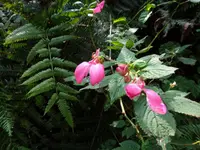
Impatiens stuhlmannii is a herbaceous perennial from shaded, humid forests of East Africa. It is related to common bedding impatiens but is less widely grown. Plants usually form soft, green, branching stems with serrated leaves and showy, orchid-like flowers in shades of pink, orange, or red, often carried along the upper stems. In suitable conditions it can develop a shrubby, upright habit that stays relatively compact, making it interesting for bright indoor spots or protected patios. Its preference for consistent moisture, good airflow, and stable, mild temperatures means it is moderately easy but not fully beginner-proof. Understanding how to care for Impatiens stuhlmannii helps prevent problems like wilting, root rot, and leaf drop.

Care Difficulty
Moderate Care

Light Preference
Partial Shade

Water Requirements
Keep Soil Moist

Temperature Preference
Tropical / Frost Sensitive

Hardiness Zone
11–12

Soil Texture
Loamy, Organic-rich

Soil pH
Acidic (5.5–6.5)

Soil Drainage
Moist but well-drained

Fertilization
Light (every 4–6 weeks)
Scan your plant to receive care tips personalized for your specific plant
Available on iOS and Android
This species prefers bright, gentle light that mimics a forest understory.
This plant needs evenly moist but not waterlogged soil throughout the growing season.
Stable, mild temperatures support the best growth and flowering.
This species prefers consistently moist air and reacts quickly to dry conditions.
This species performs best in moist, airy, organic-rich soil that drains rapidly but never dries out completely.
This species is well suited to container growing when moisture and stability are managed carefully.
Thoughtful feeding supports compact growth and extended flowering in Impatiens stuhlmannii.
Targeted pruning keeps Impatiens stuhlmannii bushy and flowering well.
Careful repotting or transplanting helps maintain healthy roots and steady growth.
New plants are commonly produced from soft stem cuttings or seeds.
This species is frost sensitive and needs protection in regions with cold winters.

Plant Health Check
Not sure what's wrong with your plant? Check your plant's health inside the app.
This species occurs naturally in moist, shaded mountain forests of Tanzania and Kenya, often growing on rocky slopes and along streambanks where air humidity and soil moisture stay consistently high.
It forms thick, fleshy, semi-succulent stems and leaves that can store water, allowing the plant to cope with short dry periods despite its preference for constantly moist conditions.
Its flowers show the typical spurred shape of the genus, with a backward-pointing nectar spur that is adapted for pollination by insects with sufficiently long mouthparts, helping reduce unwanted nectar robbing.
This species usually performs best outdoors in mild, humid, frost-free climates, where it can grow larger and flower more freely. Indoors, growth is more compact and flowering lighter, but Impatiens stuhlmannii indoor care is still very achievable.
Keep your plants happy and healthy with plant identification, disease detection, and easy care guidance.