

cogongrass Identification (Imperata cylindrica)

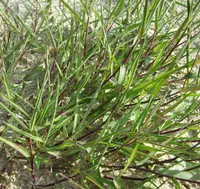
To recognize cogongrass, look for narrow, upright leaves about 1 to 4 feet (30 cm to 1.2 m) tall, with a distinct off-center white midrib and sharply pointed tips. Leaves rise in dense clumps from spreading underground rhizomes.

The flower heads are narrow, cylindrical, and fluffy white, held above the foliage on erect stems.

Imperata cylindrica Identification

Check Your Plant ID

Upload a clear photo to check your plant identification with Botan.

Clear images work best. Avoid photos taken too close or too far away

  • 1 free identification
  • No sign-up
  • 30,000+ plants in database

Check the leaves and the way the grass forms patches.

  • Leaves are narrow, upright blades, often 2-6 feet (0.6-1.8 m) tall, with a very noticeable off-center white midrib.
  • Blade edges feel sharp and the tip narrows to a long, pointed end.
  • Plants spread in dense, circular clumps or patches from creeping underground rhizomes, so many shoots rise close together.
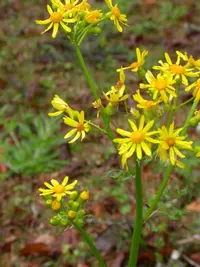
  • Flower heads are narrow, silky white plumes held above the leaves.

The off-center midrib is one of the quickest visual clues.

Imperata cylindrica shows several visible stage changes that can help confirm identification.

  • Juvenile plant: Early shoots form small, upright leaf fans from rhizomes. Blades are narrow and stiff, with the pale off-center midrib already visible.
  • Mature plant: Established clumps spread into dense colonies, with many erect leaves rising 2-4 feet (0.6-1.2 m). The base stays tufted rather than branching into woody stems.
  • Flowering stage: Flowering stems rise above the leaves and carry narrow, silky, plume-like flower heads. The whole clump looks lighter because of the dense white hairs.

In spring to early summer, cogongrass often shows narrow, silvery-white, fluffy seed heads held above the leaves. These pale plumes can make patches stand out from surrounding grasses. After frost, foliage usually turns tan to brown and looks dry or straw-like. Dense clumps or spreading patches often remain visible through winter as persistent dead leaves.

Several grasses can be mistaken for cogongrass at a glance.

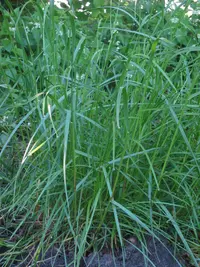
johnsongrass(Sorghum halepense)

Both form tall grass stands with long, narrow leaves. Johnsongrass usually has broader leaves and an open, many-branched seed head, while Imperata cylindrica has a denser white, silky spike-like plume.

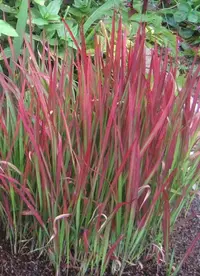
Japanese blood grass(Imperata cylindrica 'Rubra')

This excluded cultivar of the same species belongs in the Varieties section, not here.

broomsedge bluestem(Andropogon virginicus)

Both can show upright clumps and pale seed heads. Broomsedge grows in bunches rather than spreading mats, and its flowering stems carry narrow paired racemes instead of a single fluffy white plume.

Imperata cylindrica is native across parts of Africa, southern Europe, Asia, and Australia. That broad Old World range matters mainly because wild or naturalized plants outside it are often invasive escapes rather than local native grasses. It is most often found in open, disturbed places such as grassland, roadsides, field margins, forest edges, and sandy coastal sites. Seeing it form dense stands in sunny, disturbed ground can help narrow identification.

  • Leaf edges: The leaves have sharp margins that can cut skin on contact. This is a handling risk for humans and pets brushing through dense growth.
  • Silica-rich blades: The foliage is coarse and abrasive. Repeated skin contact with leaves can cause minor mechanical irritation in humans; pets may also get mouth irritation if they chew the blades.

Confirm It from a Photo

Use Botan to identify or verify a plant from an image when you want a quicker, more confident check before labeling it.

FAQ

Japanese blood grass is a cultivated form of the same species, usually shorter and known for red upper leaf blades. Wild-type plants are green with a pale off-center midrib and spread aggressively by sharp, creeping rhizomes.

More Plant Identification Guides

Identify the Plant and Get Its Profile

Upload a photo to identify it with Botan, then see plant details, care information, and common problems.

Botan app identifying a plant from a photo
Best Time to Mow Lawn – A Complete Guide

5 min read · 10 Aug 2026

Best Time to Mow Lawn – A Complete Guide

Explore when to mow your lawn for its health and a pleasant green color. Find out the best time for this task during the summer heat, and follow practical tips for correctly cutting the grass, and learn common mistakes to avoid.

Plant Care
Best Time to Mow Lawn – A Complete Guide
How to Water Houseplants: Watering Guide

7 min read · 24 Aug 2026

How to Water Houseplants: Watering Guide

Learn how often to water indoor plants, key factors for proper watering, and how to adjust the care routine by plant type, season, pot size, light, and indoor conditions.

Plant Care
How to Water Houseplants: Watering Guide
How to Bottom Water Plants: Complete Guide

6 min read · 13 Jul 2026

How to Bottom Water Plants: Complete Guide

Bottom watering helps soil absorb moisture evenly and keeps foliage dry, reducing the risk of missed dry spots or root problems. Place the pot in a tray of water for a short time, then let it drain well.

Plant Care
How to Bottom Water Plants: Complete Guide