Spore print monitoring
Place a clean sheet of foil or paper under mature caps for a few hours to collect spore prints, which helps track fruiting vigor over time and indicates whether the mycelium is still actively reproducing.

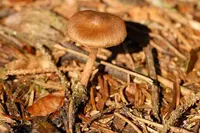
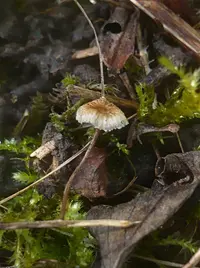
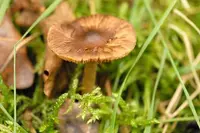
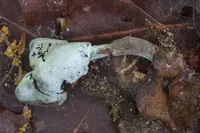
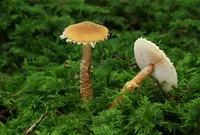
Inocybe assimilata is not a true plant but a small, brownish mushroom-forming fungus that appears in soil among trees. It typically has a cone-shaped to bell-shaped cap with fibrous scales and a slender, fragile stem. Spores are released from the gills under the cap.
This species occurs naturally in temperate forests, often in mixed or coniferous woodland, where it forms mycorrhizal partnerships with tree roots. Because it relies on these root associations, it is not a practical species to cultivate at home, and any attempt to care for Inocybe assimilata should be approached with caution.
In nature, it favors moist, well-drained, humus-rich soils and appears during mild, damp weather conditions.

Care Difficulty
Moderate Care

Light Preference
Partial Shade

Water Requirements
Moderate Water

Temperature Preference
Cool Climate

Hardiness Zone
Unknown

Soil Texture
Loamy, Sandy, Organic-rich

Soil pH
Slightly acidic (6.5–7.0)

Soil Drainage
Moist but well-drained

Fertilization
Minimal (feed rarely)
Scan your plant to receive care tips personalized for your specific plant
Available on iOS and Android
This mycorrhizal woodland fungus prefers low, filtered forest light rather than direct sun exposure.
Moist, well-drained, organically rich soil is critical for this woodland fungus and its tree partners.
This species favors cool to mild woodland conditions and reacts poorly to both hard frost and intense heat.
Humidity is not a meaningful care factor for Inocybe assimilata, which is a wild ectomycorrhizal fungus rather than a cultivated houseplant.
Soil conditions matter primarily for host trees, since this ectomycorrhizal fungus is not typically cultivated directly.
This species is not suitable for standard container growing, as it depends on complex ectomycorrhizal associations with tree roots in soil ecosystems.
This ectomycorrhizal fungus is not managed like a garden plant and normally receives no direct fertilization.
Pruning is not applicable to Inocybe assimilata, as it is a wild ectomycorrhizal mushroom associated with tree roots rather than a plant with stems or foliage.
This species is not suited to pots, so management focuses on where host trees grow rather than on repotting.
Spore-based propagation of this wild ectomycorrhizal fungus is complex and rarely attempted outside research contexts, so routine home propagation is not recommended.
This native ectomycorrhizal fungus is generally cold hardy in its natural range and needs no dedicated winter care when left in stable woodland conditions.

Plant Health Check
Not sure what's wrong with your plant? Check your plant's health inside the app.
Mature fruitbodies often develop a sharp, unpleasant smell that some field mycologists compare to arsenic or coal gas, helping separate it from paler, similar Inocybe species with weaker odors.
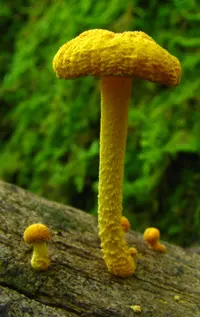
This species typically shows a characteristic darkening and fine powdery coating near the top of the stem, a combination of features used alongside cap color and odor for reliable identification in the field.
It is a common ectomycorrhizal fungus in temperate Europe, forming nutrient-exchange partnerships with broadleaf trees such as beech and oak, and often fruiting on moist, humus-rich soil in mixed woodland.
This fungus is considered poisonous and should never be eaten. It can cause serious gastrointestinal and neurological symptoms. Keep children and pets away and remove fruiting bodies from areas where accidental ingestion might occur.
Keep your plants happy and healthy with plant identification, disease detection, and easy care guidance.