Substrate sterilization
Before inoculating, pasteurize or sterilize woody debris or leaf litter to reduce competing fungi and soilborne pathogens, which improves colonization success when growing collared fibrecap.

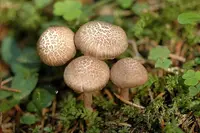
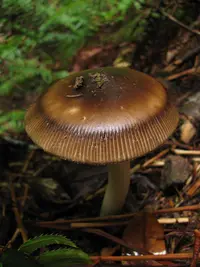
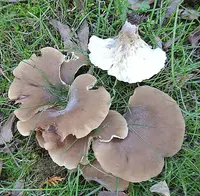
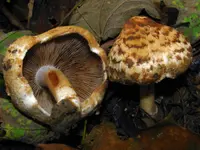
Collared fibrecap (Inocybe cincinnata) is a small woodland mushroom, not a typical houseplant. It produces slender, fibrous stems with a conical to bell-shaped cap that often shows a pale collar-like zone. The gills turn brown as spores mature.
This species usually appears in temperate forests and parklands, often near deciduous trees, growing directly from soil rich in organic matter. It forms mycorrhizal associations, meaning it lives in partnership with tree roots rather than standard potting mixes.
Because of its ecological needs and toxic nature, it is not recommended to grow or care for collared fibrecap in home settings. It prefers natural, undisturbed woodland conditions with consistent moisture and dappled light.

Care Difficulty
Hard Care

Light Preference
Partial Shade

Water Requirements
Regular Water

Temperature Preference
Cool Climate

Hardiness Zone
Unknown

Soil Texture
Loamy, Sandy, Organic-rich

Soil pH
Acidic (5.5–6.5)

Soil Drainage
Moist but well-drained

Fertilization
Minimal (feed rarely)
Scan your plant to receive care tips personalized for your specific plant
Available on iOS and Android
This woodland fungus prefers shaded, stable light similar to a forest floor understory.
This mycorrhizal fungus depends on consistently moist, well-drained soil around its host tree roots.
This temperate woodland species fruits best in cool to mild conditions rather than heat.
This ectomycorrhizal fungus handles a wide humidity range but fruits best in moderately moist air.
This woodland fungus relies on host tree roots and forms best fruiting bodies in loose, moist, organic-rich mineral soil.
This species is poorly suited to container growing because it depends on stable outdoor tree root associations.
This mycorrhizal fungus grows naturally in low-nutrient woodland soils and should not be fertilized directly.
Inocybe cincinnata forms short-lived mushrooms that do not benefit from structured pruning.
This woodland fungus is not suited to typical pot culture, so focus on careful soil disturbance rather than true repotting.
Inocybe cincinnata is rarely propagated intentionally because it depends on complex mycorrhizal relationships with tree roots.
This collared fibrecap is a hardy woodland fungus that usually needs no targeted winter care when left in stable soil.

Plant Health Check
Not sure what's wrong with your plant? Check your plant's health inside the app.
This species contains high levels of muscarine, a neurotoxic alkaloid that can cause serious poisoning with excessive salivation, sweating, tear production, and slowed heart rate after ingestion.
It typically has a small, brown, fibrous to finely scaly cap that often cracks into small fibrillose patches as it ages, helping mycologists separate it from smoother-capped brown mushrooms in the same habitat.
This fungus forms ectomycorrhizal associations with the roots of hardwoods such as beech and other broadleaf trees, exchanging mineral nutrients for carbohydrates and contributing to forest nutrient cycling.
This mushroom is considered poisonous and should not be eaten. It contains toxic compounds that can cause serious gastrointestinal and neurological symptoms. For safety, avoid tasting, handling unnecessarily, or using it as food in any way.
Keep your plants happy and healthy with plant identification, disease detection, and easy care guidance.