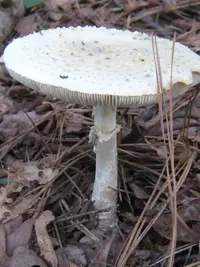
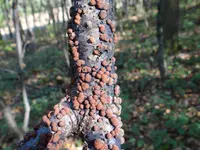
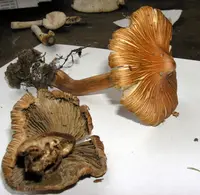
Inocybe curvipes Care

Inocybe curvipes

About Inocybe curvipes

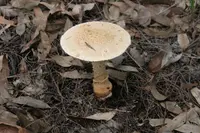
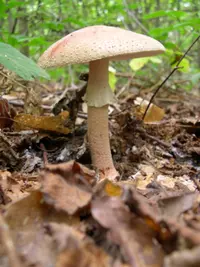
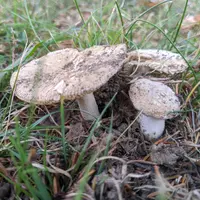
Inocybe curvipes is a small, brownish mushroom-forming fungus rather than a leafy houseplant. It typically produces slender, curved stems with conical to bell-shaped caps that may crack with age. The gills are crowded and usually become brown as spores mature.

This species occurs in temperate regions, often in forested areas, forming mycorrhiza, which is a nutrient-exchanging partnership with tree roots. It is not suited to casual home cultivation, as it depends on living host trees and specific soil fungi communities.

Anyone wanting to learn how to care for Inocybe curvipes should understand that it is best observed in natural or research settings, not grown as a decorative or edible species.

Main Plant Requirements

Care Difficulty

Hard Care

Light Preference

Partial Shade

Water Requirements

Regular Water

Temperature Preference

Cool Climate

Hardiness Zone

Unknown

Soil Texture

Loamy, Silty, Organic-rich

Soil pH

Slightly acidic (6.5–7.0)

Soil Drainage

Moist but well-drained

Fertilization

Minimal (feed rarely)

Get Personalized Care Plan

Scan your plant to receive care tips personalized for your specific plant

Available on iOS and Android

How to Care for the Inocybe curvipes

This woodland fungus thrives in dappled forest light rather than direct open sun.

  • Provide bright, filtered light or light shade, similar to deciduous woodland edges, with 2–4 hours of weak morning sun and no harsh afternoon sun.
  • Site the host trees where taller vegetation or canopy creates broken shade; full, unfiltered midday sun can dry the upper soil and reduce fruiting.
  • Expect some seasonal change: more light reaches the ground in early spring and late fall, while dense summer canopy reduces light but maintains suitable conditions for Inocybe curvipes.

This mycorrhizal fungus depends on stable, evenly moist but not waterlogged soil around its host tree roots.

  • Aim for soil that stays slightly moist 5–10 cm deep; let the surface dry lightly between rain or irrigation rather than staying constantly wet.
  • Use well-drained, humus-rich soil; standing water, sour smell, or slimy soil indicate overwatering and poor aeration that can suppress fungal activity.
  • During hot, dry periods, increase deep watering of the host trees when leaves begin to droop or soil cracks, but reduce supplemental watering in cool, rainy seasons.

This species is adapted to temperate climates with cool to mild conditions through most of the year.

  • Optimal fruiting often occurs around 50–68°F (10–20°C), especially in moist spring or fall periods with stable soil moisture.
  • It tolerates a broader annual range of about 32–77°F (0–25°C), but hard, prolonged freezes can halt activity until soil thaws.
  • Avoid extreme heat above about 86°F (30°C) combined with drought, which can dry the upper soil layer and sharply reduce visible Inocybe curvipes fruiting.

This ectomycorrhizal fungus does not require active humidity management in outdoor conditions.

This fungus relies on suitable outdoor soil conditions rather than a potting mix.

  • Support host trees in slightly acidic to neutral mineral soils, typically pH 5.0–7.0, rather than trying to grow Inocybe curvipes in containers or artificial substrates.
  • Favor loose, well-drained, moderately moist forest soils with a mix of sand, silt, and decayed organic litter over compacted or waterlogged ground.
  • Maintain a thin layer of leaf litter or fine woody debris to provide organic matter while avoiding thick, anaerobic mulch that stays wet for long periods.
  • Avoid heavily fertilized, saline, or highly disturbed soils, which can disrupt ectomycorrhizal associations and reduce fruiting body formation.

This species is not suitable for conventional container growing, as it forms ectomycorrhizal relationships with tree roots in the ground.

This ectomycorrhizal fungus relies mainly on its tree host, so Inocybe curvipes needs little to no direct fertilization.

As a wild mushroom-forming fungus, Inocybe curvipes is not pruned in the usual horticultural sense and requires no pruning care.

This species grows in soil as a mycorrhizal partner of trees, so transplanting focuses on conserving its habitat rather than moving individual fungi.

  • Avoid disturbing the soil around host tree roots where fruiting bodies appear, as this can damage the underground mycelium.
  • If soil disturbance is unavoidable, keep a portion of original leaf litter and topsoil in place to preserve fungal threads.
  • Maintain stable moisture and avoid compaction after any ground work so fine roots and associated fungi can recover.
  • Do not attempt container culture; the fungus depends on living tree roots and typical transplanting methods are ineffective.

Propagation of this fungus is not a practical home technique; it spreads naturally via spores and root associations.

This temperate woodland fungus is generally cold hardy and does not need targeted winter care in gardens or landscapes.

Care Tips

Mycorrhizal host choice

Introduce this fungus only under suitable host trees such as oaks or beeches, and avoid conifers or heavily disturbed sites where compatible roots and soil fungi are scarce.

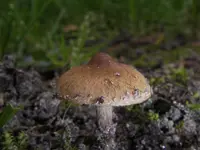
Minimize soil disturbance

Once colonized, mark the fruiting zone and avoid digging, rototilling, or heavy raking there, since disturbing fine feeder roots can drastically reduce future mushroom production.

Reduce chemical inputs

Keep the area free from systemic fungicides, broad-spectrum insecticides, and high-salt synthetic fertilizers, which can disrupt ectomycorrhizal partnerships and suppress fruiting.

Maintain leaf litter

Allow a natural layer of leaves and small twigs to remain around host tree bases to support stable soil moisture and microbial life that favor growing Inocybe curvipes.

Monitor site succession

Track changes in canopy density and understory vegetation over several years, and if shade or competition increases too much, lightly thin nearby shrubs rather than altering the soil directly.

Common Pests and Diseases

Fungal competitors

This problem involves other saprotrophic fungi outcompeting the mycelium for organic matter in the substrate. Symptoms include weak or patchy mycelial growth and the appearance of foreign mushroom or mold species on or near the intended culture.

Solution

Remove and discard heavily contaminated substrate, then restart with fresh, well-pasteurized or sterilized material and clean tools. Maintain stable moisture and temperature suited to the target species so the resident mycelium can colonize rapidly and outcompete unwanted fungi, which is central to growing Inocybe curvipes under controlled conditions.

Mite infestations

These insects, often mushroom or soil mites, feed on fungal mycelium and developing fruiting bodies. This pest causes pitted, deformed, or aborted mushroom caps and can leave fine debris or movement visible on the substrate surface.

Solution

Discard heavily infested cultures and thoroughly clean the growing area, benches, and tools to remove residual mites and eggs. Reduce entry points by using fine-mesh filters or covers, keep surrounding organic debris to a minimum, and if necessary use predatory mites or targeted, mushroom-safe biological controls around but not directly on the culture.

Bacterial blotch

This disease is caused by bacterial colonization of wet mushroom tissue, leading to slimy, discolored spots on caps and stems. Symptoms include yellow to brown, greasy-looking lesions that may soften and break down the fruiting bodies.

Solution

Remove and discard affected mushrooms promptly and increase air movement to reduce surface moisture on caps. Avoid overhead spraying, water early in the day so surfaces dry quickly, and keep tools and water sources clean to limit bacterial spread.

Green mold contamination

This disease is typically caused by Trichoderma species that rapidly colonize the substrate, appearing as dense white mycelium that turns bright green as spores develop. Symptoms include stalled or completely suppressed growth of the desired mycelium and abundant green sporulating patches.

Solution

Isolate and discard contaminated blocks or trays to prevent spore spread, then clean all nearby surfaces and tools with an appropriate disinfectant. For new cultures, use high-quality spawn, ensure proper substrate pasteurization or sterilization, and avoid overwatering or compaction, which favor Trichoderma development.

Fungus gnat larvae

This pest lays eggs in moist substrate, and the larvae feed on fine mycelium and young primordia, reducing yield and causing malformed fruiting bodies. Adults resemble small dark flies hovering near the substrate surface or vents.

Solution

Use yellow sticky traps to reduce adult populations and cover vents or openings with fine mesh to limit entry. Allow the top layer of substrate or casing to dry slightly between waterings, remove heavily damaged cultures, and consider using a biological control such as Bacillus thuringiensis israelensis in surrounding moist areas, following label directions carefully.

Interesting Facts

Curved-stipe identifier

This species is distinguished by its typically curved, often somewhat twisted stipe, a macroscopic feature that helps separate it from many similar brown Inocybe species in the field.

Strong muscarine content

It is documented as a muscarine-containing toxic species, meaning ingestion can cause classic muscarinic poisoning symptoms such as sweating, salivation, and slowed heart rate.

Hardwood forest associate

The fungus commonly forms ectomycorrhizal associations with broadleaf trees, especially in temperate hardwood forests, exchanging mineral nutrients for sugars from its host roots.

FAQs about Inocybe curvipes

This species is considered poisonous and must not be eaten. It contains muscarine, a toxin that affects the nervous system. Consumption can cause sweating, salivation, vomiting, diarrhea, breathing difficulties, and in severe cases can be life‑threatening.

Grow Healthy Plants with Botan Care

Keep your plants happy and healthy with plant identification, disease detection, and easy care guidance.

Botan plant care app — identify plants on mobile

Explore More Plants