Rhizome positioning
Plant rhizomes shallowly so the top is just at or slightly below the soil surface, which reduces rot risk and improves flowering when growing Black Iris in heavier garden soils.

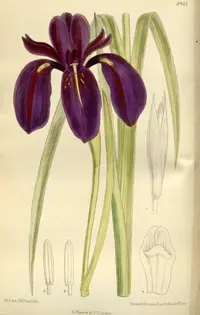
Black iris (Iris chrysographes) is a rhizomatous perennial grown mainly for its dramatic, very dark purple to almost black flowers. It forms upright fans of narrow, green leaves and sends up slender stems carrying elegant, bearded blooms in late spring to early summer.
This species is native to damp meadows and stream edges in southwestern China, so it prefers cool conditions and evenly moist, fertile soil. It can be moderately demanding in hot or very dry climates, where consistent moisture and good soil preparation are important. Gardeners who learn how to care for Black Iris usually find it reliable and long-lived in suitable sites.

Care Difficulty
Moderate Care

Light Preference
Partial Sun

Water Requirements
Keep Soil Moist

Temperature Preference
Cold Hardy

Hardiness Zone
5–8

Soil Texture
Loamy, Silty, Organic-rich

Soil pH
Acidic (5.5–6.5), Slightly acidic (6.5–7.0)

Soil Drainage
Moist but well-drained

Fertilization
Light (every 4–6 weeks)
Scan your plant to receive care tips personalized for your specific plant
Available on iOS and Android
This beardless iris prefers cool, bright conditions with protection from intense midday sun.
This moisture-loving iris needs consistently damp but not stagnant soil, especially in the growing season.
This iris prefers cool summers and tolerates significant winter cold once established outdoors.
Humidity plays only a minor role for Iris chrysographes, which adapts to typical household conditions.
Iris chrysographes needs consistently moist, structured soil that stays aerated yet never stagnant.
This species can grow successfully in containers if moisture and stability are carefully managed.
Iris chrysographes benefits from light, targeted feeding rather than heavy fertilization.
Iris chrysographes responds well to modest, seasonal pruning aimed at cleanliness and sustained flowering.
This species is usually grown in the ground, with transplanting of rhizome clumps every few years rather than frequent repotting.
Iris chrysographes is most commonly propagated by division, with seed used mainly by advanced growers selecting new forms.
Established Iris chrysographes plants are generally cold hardy in temperate climates and need only modest winter care.

Plant Health Check
Not sure what's wrong with your plant? Check your plant's health inside the app.
This species is known for some of the deepest purple to near-black flowers in the iris genus, caused by very high concentrations of anthocyanin pigments in the petals.
In the wild, this plant typically grows along stream margins and in seasonally wet meadows in southwestern China, showing a strong adaptation to cool, moist, humus-rich soils.
It has slender, upright, grasslike leaves that form dense clumps, which help it compete in open, sunny habitats without shading its own flowers.

The species name chrysographes means gold-writing and refers to the fine golden streaks and lines that often appear on the falls of the flowers, a feature that makes the blooms especially valued in breeding and ornamental displays.
Lack of flowers often comes from insufficient winter chill, overcrowded clumps, too much shade, or heavy, soggy soil. Divide congested rhizomes, improve drainage, and ensure strong sun exposure to support reliable flowering.
Keep your plants happy and healthy with plant identification, disease detection, and easy care guidance.