Rhizome division timing
Lift and divide clumps every 3–4 years in late summer, replanting only the firm outer rhizomes with at least 1–2 healthy fans to maintain strong flowering and reduce disease buildup.

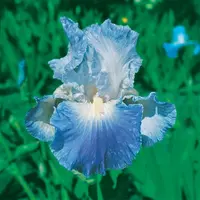
Iris 'Clarence' is a bearded iris cultivar grown mainly for its showy, fragrant flowers and upright sword-like leaves. It is a hardy perennial that forms clumps over time. Flowers typically appear in shades of pale blue, white, and lavender with ruffled petals, giving strong structure and color to borders and mixed beds. This cultivar was bred from garden irises, which themselves trace back to species native to Europe and western Asia. Iris 'Clarence' is generally considered easy to grow where winters are cool and soils drain well. It prefers full sun, moderate moisture, and neutral to slightly alkaline soil, and these traits make it straightforward to care for Iris in most home gardens.

Care Difficulty
Easy Care

Light Preference
Full Sun

Water Requirements
Moderate Water

Temperature Preference
Cold Hardy

Hardiness Zone
3–9

Soil Texture
Sandy, Loamy, Rocky

Soil pH
Slightly acidic (6.5–7.0), Neutral (7.0)

Soil Drainage
Well-drained

Fertilization
Minimal (feed rarely)
Scan your plant to receive care tips personalized for your specific plant
Available on iOS and Android
This tall bearded Iris prefers full sun for strong flowering and sturdy growth.
Iris 'Clarence' prefers moderate, infrequent watering with fast-draining soil around the rhizomes.
This bearded iris is hardy and tolerates a wide temperature range once established outdoors.
Humidity is not a critical factor for Iris 'Clarence', which adapts well to typical outdoor ambient conditions in most climates.
Iris 'Clarence' performs best in loose, well-drained, slightly acidic to neutral soil that never stays waterlogged.
This bearded iris is suitable for container growing when the pot is prepared to keep the rhizomes dry and stable.
This bearded Iris benefits from moderate feeding to support flowering but does not need heavy fertilization.
Pruning Iris 'Clarence' focuses on hygiene and maintaining strong bloom performance.
Transplanting or dividing Iris 'Clarence' in garden beds is more common than container repotting.
Multiplication of Iris 'Clarence' is most reliable through division of rhizomes.
This tall bearded iris is generally cold hardy in temperate climates and needs only light winter care.

Plant Health Check
Not sure what's wrong with your plant? Check your plant's health inside the app.
This cultivar is a remontant bearded iris, meaning it can flower more than once in a growing season, often in both late spring and early fall under suitable conditions.
Its flowers show a clear bicolor pattern, with pale to medium blue-violet standards (upper petals) and nearly white to very pale blue falls (lower petals), creating a high-contrast look that makes individual blooms stand out in garden plantings.
The flowers are notably fragrant for a tall bearded iris, producing a sweet, often described as lightly spicy scent that is easily noticeable at close range and contributes to its popularity in home gardens.
Poor flowering usually comes from overcrowded rhizomes, too much shade, or nutrient imbalance. Divide clumps every 3–4 years, maintain full-sun exposure, and avoid high-nitrogen fertilizers that promote leaves at the expense of flowers.
Keep your plants happy and healthy with plant identification, disease detection, and easy care guidance.