slender blue iris Care (Iris prismatica)

Also known as: Slender Blue Flag
slender blue iris

About slender blue iris

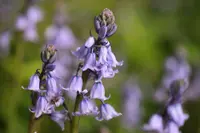
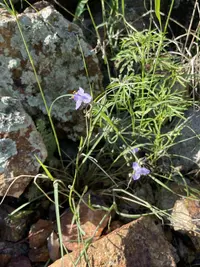
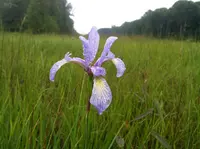
Slender blue iris, Iris prismatica, is a clump-forming perennial native to moist meadows, marsh edges, and coastal plains in eastern North America. It grows from slender rhizomes, with narrow, grass-like leaves and delicate violet-blue flowers held on thin, upright stems. The plant has a refined, airy look and tends to form loose colonies rather than dense clumps. It is generally considered moderate in difficulty, since it needs consistently moist, acidic to neutral soil and does not tolerate drought well. Gardeners who learn how to care for slender blue iris usually succeed by matching its natural cool, sunny, wet habitat as closely as possible.

Main Plant Requirements

Care Difficulty

Moderate Care

Light Preference

Full Sun

Water Requirements

Aquatic

Temperature Preference

Cold Hardy

Hardiness Zone

3–8

Soil Texture

Sandy, Loamy, Organic-rich

Soil pH

Acidic (5.5–6.5), Slightly acidic (6.5–7.0)

Soil Drainage

Waterlogged tolerant

Fertilization

Minimal (feed rarely)

Get Personalized Care Plan

Scan your plant to receive care tips personalized for your specific plant

Available on iOS and Android

How to Care for the slender blue iris

This species thrives in open, bright sites with consistent sun exposure.

  • Provide 6–8 hours of direct sun daily; morning sun with some light afternoon shade is ideal in hotter regions.
  • Tolerates light partial shade (3–4 hours sun), but flowering decreases and stems of slender blue iris may become weaker and more floppy.
  • In cooler climates full sun all day is suitable, but in summer heat above 86°F (30°C) protect from intense late-afternoon sun to avoid leaf scorch.

This wetland iris prefers consistently moist to wet soil rather than drying between waterings.

  • Keep soil evenly moist; in garden beds, aim for soil that feels damp 2–5 cm down and never fully dry, especially during active growth.
  • In summer, increase watering frequency during hot, windy periods, and reduce slightly in late fall and winter while ensuring the root zone does not dry out.
  • Watch Iris prismatica foliage for stress: drooping, folding, or browning tips indicate underwatering, while yellowing, mushy rhizomes and a sour smell signal waterlogged, poorly drained conditions.

This rhizomatous perennial is adapted to cool to mild climates with cold winters.

  • Active growth and flowering are strongest around 60–75°F (16–24°C), with good performance in typical spring and early summer conditions.
  • Dormant rhizomes tolerate winter cold to about -20°F (-29°C) when planted in the ground with some mulch protection in colder regions.
  • Summer heat up to 86°F (30°C) is usually tolerated if soil stays moist; prolonged extremes above 90°F (32°C) with dry soil can cause leaf scorch and reduced flowering the following year.

This rhizomatous wetland iris prefers moderately humid to damp air but generally adapts outdoors.

  • Aim for 50–70% humidity in exposed, windy sites to reduce leaf-tip drying.
  • Plants tolerate brief dry air but may show browning tips and rolled, flaccid leaves under prolonged low humidity.
  • Increase local humidity by planting near water features, using mulch over consistently moist soil, or grouping slender blue iris with other moisture-loving plants.

This species thrives in consistently moist, loose, organic-rich soil with reliable drainage.

  • Use a loamy mix with high organic matter, such as garden loam blended with compost and fine pine bark, to mimic natural wet meadow conditions.
  • Ensure the soil remains moist yet aerated; avoid heavy, compacted clay that stays waterlogged and excludes oxygen around rhizomes.
  • A slightly acidic to neutral pH around 5.5–7.0 supports nutrient availability for Iris prismatica.
  • Improve drainage and structure in dense soils by incorporating coarse sand or fine grit along with organic matter instead of relying on peat alone.

This species can be grown in containers if moisture and root depth are carefully managed.

  • Select a tall, deep container that allows rhizomes and roots to spread downward without crowding into a shallow layer.
  • Choose a heavy, stable pot material such as ceramic when placing containers in windy, exposed sites to prevent tipping of tall flowering stems.
  • Use a moisture-retentive but free-draining mix and elevate the pot on feet so drainage holes stay clear and excess water can escape quickly.

Iris prismatica benefits from light, targeted feeding in nutrient-poor soils but often needs little fertilizer in rich garden beds.

  • Use a balanced, slow-release fertilizer or light compost top-dressing in early spring as new growth emerges.
  • Apply at low strength, about half the label rate, to avoid lush, floppy foliage and reduced flowering.
  • On lean soils, repeat a light feeding once in midsummer during active growth for slender blue iris.
  • Stop feeding in late summer so plants can harden off and enter winter dormancy naturally.

Pruning Iris prismatica focuses on removing spent growth and maintaining a tidy clump without altering its natural form.

  • Deadhead faded flower stalks in late spring or early summer by cutting them at the base with clean hand pruners.
  • Remove yellow, dead, or damaged leaves whenever noticed to improve airflow and reduce disease risk.
  • In late fall or very early spring, cut back dry foliage to a few cm above the crown to refresh growth.
  • Avoid heavy shaping cuts; light thinning of crowded fans only if clumps become too dense or shade each other.

This species is usually grown in the ground, so care focuses on dividing and transplanting established clumps rather than frequent repotting.

  • Plan transplanting or division in early spring or early fall, when temperatures are mild and soil is moist.
  • Look for overcrowded clumps, weak flowering, or fans shading each other as signs the plant needs lifting and division every 3–5 years.
  • Lift the clump carefully with a fork, shake off excess soil, and divide rhizomes so each section has healthy roots and several fans.
  • Replant divisions at the same depth, water thoroughly, and keep soil evenly moist for several weeks to limit root stress.

Iris prismatica is commonly propagated by division of mature clumps, with seed used mainly by specialists or for wild-type restoration.

  • Divide established plants in early spring or early fall when soil is cool and workable.
  • Lift clumps and separate rhizomes by hand or with a clean knife, keeping several healthy fans and roots per division.
  • Replant divisions in moist, well-drained, slightly acidic soil and water consistently until new growth is established.
  • For seed, sow fresh seed outdoors in fall to allow natural cold stratification, which improves germination in spring.

Iris prismatica is cold hardy in much of its native range and usually needs only minimal winter care in the ground.

  • In colder zones, apply a 5–7 cm layer of mulch after the ground cools to insulate the root zone without covering the foliage crown.
  • Allow foliage to die back naturally before cutting it down, which helps nutrients return to the rhizomes.
  • Container-grown plants in very cold climates can be sunk into the ground or moved to a sheltered, unheated but frost-free space.

Care Tips

Protect Wet Margins

Site plants where natural soil moisture stays high but water movement is gentle, or add a low edging berm of soil or stones to slow runoff so the shallow roots are not exposed or eroded in spring floods.

Mulch For Cool Roots

Apply a thin 2–3 cm layer of fine pine bark or shredded leaves around clumps, keeping mulch a few cm from rhizomes to suppress weeds, retain moisture, and keep the root zone cool without trapping excess moisture against the crowns.

Control Taller Neighbors

Regularly cut back or thin vigorous grasses and taller perennials nearby so they do not shade out foliage or compete heavily for water in early summer when flower stems are forming.

Divide On Schedule

Plan to lift and divide congested clumps every 3–4 years in late summer, replanting only the most vigorous outer fans so flowering stays strong and the planting does not thin out in the center.

Monitor Soil Salts

In areas with hard irrigation water or near winter road salt, flush the bed with deep, clean watering in early spring and late summer to reduce salt buildup, which this species tolerates poorly when growing slender blue iris along roadsides or driveways.

Common Pests and Diseases

rhizome borer

This pest is the larva of certain moths that tunnels into the rhizomes, weakening or killing clumps and reducing flowering. Symptoms include sudden leaf yellowing, hollow or mushy rhizomes, and frass or small entry holes at the rhizome surface.

Solution

Lift and inspect rhizomes at least once a year, cutting out and discarding any sections that are soft, hollow, or infested, and destroy affected plant material rather than composting it. Replant only firm, healthy rhizomes, keep the planting area free of heavy mulch that hides larvae, and encourage predators such as ground beetles by avoiding broad-spectrum insecticides in the surrounding bed.

iris bud fly

This pest is a small fly whose larvae feed inside developing flower buds, which may become distorted, fail to open, or show brown streaks and damaged interiors. Symptoms include buds that feel soft or hollow when gently squeezed and reduced bloom quality.

Solution

Remove and destroy all damaged buds as soon as they are noticed to break the life cycle before larvae drop to pupate in the soil. Clean up spent blooms and plant debris after flowering, and if the problem recurs in the same spot, rotate plantings or use fine mesh over developing buds early in the season to exclude egg-laying adults.

leaf spot

This disease is usually caused by fungal pathogens that create tan to brown spots with darker edges on the narrow leaves, which can merge into larger lesions and cause premature browning. Symptoms include spotted foliage starting from older leaves and sometimes yellow halos around lesions.

Solution

Cut off and dispose of heavily spotted leaves during the growing season and remove all dead foliage at the end of the year to reduce overwintering spores. Improve air circulation by avoiding crowding, water at soil level so foliage dries quickly, and in persistent cases use a labeled ornamental-fungus spray early in the season according to package directions as part of broader Iris prismatica care.

bacterial soft rot

This disease affects the rhizomes, causing a foul smell, water-soaked tissue, and rapid collapse of affected sections, often starting at injured or waterlogged areas. Symptoms include yellowing foliage, plants that pull up easily, and rhizomes that feel slimy or emit a sour odor.

Solution

Dig up affected clumps, cut away and discard all soft or smelly rhizome tissue, and replant only firm, clean pieces in a well-drained, sunny site. Avoid deep planting and heavy mulch over the rhizomes, keep irrigation moderate so the soil does not stay saturated, and disinfect cutting tools between plants with a 10% bleach solution to prevent spread.

Interesting Facts

Coastal acid bog specialist

Iris prismatica is naturally restricted to acidic, wet habitats such as coastal bogs, fens, and wet meadows in eastern North America, making it much more habitat-specialized than many other native irises.

Remarkably slender foliage

The species has unusually narrow, grasslike leaves, often only 2–4 mm wide, which is a key feature botanists use to distinguish it from the broadly similar but broader-leaved Iris versicolor.

Disjunct Atlantic distribution

Its native range is patchy along the Atlantic coastal plain from Nova Scotia to parts of the southeastern United States, with local populations often isolated due to loss and fragmentation of suitable wetland habitat.

Botan icon

Did you know?

Chromosome studies show that Iris prismatica is diploid with 2n = 32, a count that helps botanists confirm its identity and clarify its relationships within the Limniris group of beardless irises.

FAQs about slender blue iris

Lack of flowers often comes from too much shade, soil that stays dry, or plants that are overcrowded. Division every 3–4 years, consistent moisture, and at least partial sun usually restore normal flowering.

Grow Healthy Plants with Botan Care

Keep your plants happy and healthy with plant identification, disease detection, and easy care guidance.

Botan plant care app — identify plants on mobile

Explore More Plants