

Use stable substrate
Anchor the moss onto rough, stable materials like lava rock, old bark, or porous bricks so the rhizoids can grip securely and form an even carpet that is not dislodged by rain or misting.


Isothecium alopecuroides, often called isothecium moss, is a creeping pleurocarpous moss that forms soft, feather-like mats over rocks, soil, and tree bases. Its fine, overlapping shoots create a dense, green carpet that can soften hard edges and fill shady gaps.
This species occurs widely in temperate regions, especially in humid woodlands, along streams, and on shaded stone walls. It is generally hardy and adaptable but depends on consistent moisture and protection from strong sun, which influences how easy it is to establish and care for isothecium moss.

Care Difficulty
Moderate Care

Light Preference
Partial Shade

Water Requirements
Keep Soil Moist

Temperature Preference
Cold Hardy

Hardiness Zone
6–9

Soil Texture
Loamy, Rocky, Organic-rich

Soil pH
Strongly acidic (4.5–5.5), Acidic (5.5–6.5)

Soil Drainage
Moist but well-drained

Fertilization
Minimal (feed rarely)
Scan your plant to receive care tips personalized for your specific plant
Available on iOS and Android
This moss prefers cool, shaded conditions that mimic moist woodland or streamside habitats.
Consistently moist conditions are essential for healthy growth of this moss.
This species favors cool, mild climates with protection from temperature extremes.
This moss prefers consistently moist, humid air to maintain dense, healthy cushions.
This moss thrives on moist, well-aerated, organic-rich substrates rather than dense, compacted ground.
This species adapts well to shallow container culture when moisture and stability are carefully managed.
This moss is adapted to nutrient-poor substrates and usually needs no added fertilizer in gardens or naturalistic plantings.
Isothecium alopecuroides benefits from light grooming rather than true pruning to keep mats tidy and healthy.
This species is usually grown on rocks, logs, or outdoor substrates, so management focuses on transplanting patches rather than frequent repotting.
Isothecium alopecuroides plant care often includes simple vegetative propagation from small patch divisions.
Established outdoor mats are generally cold hardy and need little specific winter care in temperate climates.

Plant Health Check
Not sure what's wrong with your plant? Check your plant's health inside the app.
This moss forms long, loosely interwoven shoots with curved branch tips that resemble a fox tail, which helps it trap leaf litter and fine organic particles on shaded tree trunks and rocks.
It is especially common as an epiphyte on the bark of broadleaf trees such as oak, beech, and maple in humid, oceanic climates, where its dense mats help stabilize surface moisture on the trunk.
In Europe and parts of coastal North America, its presence often indicates relatively mild, frost-free winters and consistently moist air, so bryologists use it as one of several species to characterize oceanic woodland habitats.
Growth is slow to moderate. In suitable cool, moist shade it may extend 1–3 cm per year, mainly during fall and spring. Disturbance, drying winds, or foot traffic slow coverage significantly, so patience is important when growing isothecium moss.
Keep your plants happy and healthy with plant identification, disease detection, and easy care guidance.

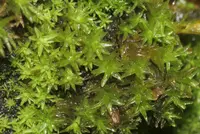
obtuseleaf aspen moss
Orthotrichum obtusifolium
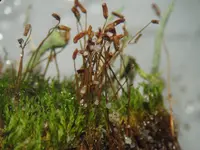
ceratodon moss
Ceratodon purpureus
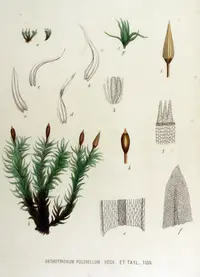
orthotrichum moss
Orthotrichum pulchellum
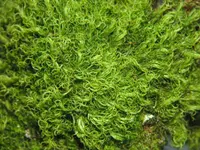
montane dicranum moss
Orthodicranum montanum
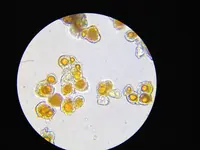
Trentepohlia umbrina
Trentepohlia umbrina

isothecium moss
Isothecium myosuroides
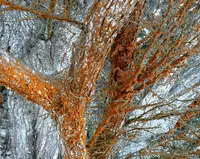
Orange Rock Hair
Trentepohlia aurea
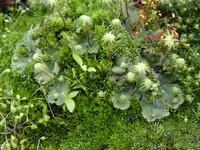
Common Liverwort
Marchantia polymorpha