Blue Star Creeper Care (Isotoma fluviatilis)

Also known as: swamp isotome
Blue Star Creeper

About Blue Star Creeper

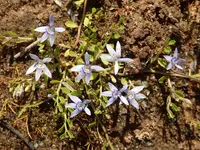
Blue star creeper, Isotoma fluviatilis, is a low, mat-forming perennial often used as a groundcover or between pavers. It stays very short and spreads to form a dense, fine-textured carpet.

The plant produces many tiny, star-shaped pale blue flowers over its green foliage during the warmer months, creating a soft, meadow-like look. It comes from moist, open habitats in Australia and New Zealand, which explains its preference for consistent moisture and well-drained soil.

Isotoma fluviatilis is generally considered easy to grow when provided with enough water and light traffic only. Gardeners who understand how to care for Blue Star Creeper usually find it a reliable option for filling small gaps and softening hard edges.

Main Plant Requirements

Care Difficulty

Moderate Care

Light Preference

Partial Sun

Water Requirements

Keep Soil Moist

Temperature Preference

Cool Climate

Hardiness Zone

5–9

Soil Texture

Sandy, Loamy, Organic-rich

Soil pH

Acidic (5.5–6.5), Slightly acidic (6.5–7.0)

Soil Drainage

Moist but well-drained

Fertilization

Minimal (feed rarely)

Get Personalized Care Plan

Scan your plant to receive care tips personalized for your specific plant

Available on iOS and Android

How to Care for the Blue Star Creeper

This low groundcover thrives in bright conditions but handles some shade in many gardens.

  • Provide 4–6 hours of direct morning sun with light or dappled shade in the afternoon, especially in hotter regions.
  • In cooler climates, Blue Star Creeper can tolerate full sun if soil stays evenly moist and does not dry out completely.
  • Watch foliage color and density; pale, thin growth suggests too little light, while scorched, crispy leaves indicate excessive hot afternoon sun, particularly in summer.

This plant prefers consistently moist soil but does not tolerate waterlogged conditions.

  • Water when the top 2–3 cm of soil feels slightly dry, aiming for evenly damp soil rather than soaked ground.
  • Increase watering frequency during hot, dry weather and reduce it in cool, rainy periods to avoid root rot and fungal issues in Isotoma fluviatilis.
  • Monitor for stress signs; wilting and dry, browning edges suggest underwatering, while yellowing, soft stems and a sour soil smell point to overwatering.

This groundcover is quite cold-hardy but grows best in moderate temperatures.

  • Active growth is strongest around 60–75°F (16–24°C), with dense foliage and steady flowering under stable soil moisture.
  • Mature plants usually tolerate short dips to about 10–15°F (−12 to −9°C), but new plantings benefit from mulch to buffer sudden frosts.
  • In hot climates, periods above 85–90°F (29–32°C) can cause stress; provide afternoon shade and reliable soil moisture to limit heat damage.

This creeping groundcover prefers moderate humidity but adapts well to typical household or outdoor conditions.

  • Aim for 40–60% humidity to keep foliage dense and flowering consistent in Blue Star Creeper.
  • It tolerates short dry-air periods, but extended humidity below 30% can cause leaf edge browning and sparse growth.
  • Increase humidity locally with nearby trays of water and pebbles or grouped plantings, rather than misting, to avoid fungal spotting.

This species performs best in moist, airy, well-drained soil that stays evenly damp but not waterlogged.

  • Use a fine-textured loam or sandy loam with 30–40% compost to support spreading roots and steady moisture.
  • Ensure drainage is rapid by blending in coarse sand or perlite at 10–20% of the volume, especially in heavy native soil.
  • Keep pH slightly acidic to neutral (pH 6.0–7.0) for Isotoma fluviatilis to access nutrients efficiently and maintain healthy foliage color.
  • Avoid compacted clay, peat-only mixes, or spots that stay soggy, which quickly lead to root rot and thinning mats.

This species is well suited to shallow containers and troughs where its creeping habit can be contained and displayed.

  • Choose a wide, shallow pot (15–20 cm deep) to favor lateral spreading and reduce overly wet lower soil layers.
  • Select a clay or unglazed ceramic container if outdoor conditions are cool and damp, to help excess moisture evaporate.
  • Elevate the pot slightly on risers so drainage holes stay clear and excess water runs off freely after rain or irrigation.

Isotoma fluviatilis benefits from light feeding but does not need heavy fertilization for healthy growth.

  • Use a balanced, dilute liquid fertilizer (around 10-10-10) at 1/2 strength or a light top-dressing of fine compost.
  • Feed every 4–6 weeks during spring and summer while the plant is actively growing and flowering.
  • Avoid high-nitrogen lawn fertilizers, which can cause weak, lush growth and reduce flowering in Blue Star Creeper.
  • Stop feeding in fall and winter to allow the plant to rest and prevent soft, frost-sensitive growth.

Pruning Isotoma fluviatilis is simple and mainly helps keep the mat dense, tidy, and flowering well.

  • Shear lightly with clean scissors or shears in late spring or after a heavy flush of flowers to refresh the carpet.
  • Remove dead, damaged, or sparse patches, trimming back to healthy stems to reduce disease and improve appearance.
  • Thin crowded areas by cutting small sections out, which encourages new shoots and better air flow at the soil surface.
  • For edging along paths, trim back creeping stems that stray into joints or beds for a more defined outline.

This groundcover is more often transplanted in the garden than repotted, and it responds well to careful division.

  • Transplant or divide in early spring or early fall when weather is mild and soil is workable.
  • Move clumps when growth becomes thin in the center, spread is uneven, or roots form a dense mat that dries quickly.
  • Lift sections with a hand trowel, keep soil around the roots, and replant at the same depth in moist, well-drained soil.
  • Water gently after transplanting, shade from hot sun for a few days, and keep soil evenly moist to limit transplant shock.

Isotoma fluviatilis is commonly propagated by division, small plugs, or short stem cuttings taken from healthy mats.

  • Divide established patches in early spring or early fall, lifting sections and teasing apart small clumps by hand.
  • Replant divisions 10–15 cm apart in loose, moist, well-drained soil, then water thoroughly to settle roots.
  • For cuttings, root 3–5 cm stem tips in a sterile, moist mix under bright, indirect light and high humidity.
  • Seeds are less common; if used, sow on the surface of fine mix, keep lightly moist, and provide gentle warmth.

In mild climates this plant is fairly cold tolerant and usually needs minimal winter attention in the ground.

  • In regions with frost, a 2–3 cm layer of fine mulch around, but not over, the crowns helps buffer soil temperature.
  • Avoid waterlogged soil in winter, especially in heavy clay, to reduce root rot and crown damage.
  • Container-grown plants in colder zones can be moved to a sheltered porch, unheated garage, or cold frame to avoid deep freezing.

Care Tips

Edge Containment

Install shallow plastic or metal edging 3–5 cm deep around paths and beds to prevent the mat from creeping into unwanted areas and to keep maintenance of growing Blue Star Creeper predictable.

Foot-Traffic Rotation

If used between pavers, alternate walking routes for a few weeks after planting or renovation so new runners can root firmly and recover from compression.

Fast Drainage Check

Before planting in a new area, dig a 15 cm test hole, fill it with water, and only plant once it drains within 30–60 minutes to avoid chronic root stress from standing moisture.

Moss And Algae Control

In shaded, damp spots, gently rake the surface every few weeks to break up moss or algae films that can smother foliage and reduce air movement at the soil surface.

Patch Repair Technique

For thin or damaged patches, lift small plugs from a dense area with a trowel and replant them 10–15 cm apart in the bare zone, then keep the area slightly moist until runners reconnect the carpet.

Common Pests and Diseases

Slugs and snails

This pest often feeds on tender new shoots and flowers, leaving irregular holes and ragged edges on the small leaves and carpets of foliage.

Solution

Hand-pick at dusk or early morning, use iron phosphate slug pellets according to label directions, and reduce hiding spots by keeping debris and dense thatch away from the planting edge. In wetter beds, copper tape barriers or beer traps around high-value patches can further lower damage while keeping the low mat growth intact when growing Blue Star Creeper.

Leaf spot

This disease causes small brown to dark-purple spots on leaves that can merge, thinning the mat and leaving bare patches in humid or poorly ventilated sites.

Solution

Remove and discard affected foliage, avoid overhead watering, and water early in the day so the leaves dry quickly. In areas with recurring issues, improve spacing and airflow, and apply a labeled ornamental groundcover fungicide as a preventative when prolonged wet weather is expected.

Botrytis blight

This disease shows as soft, water-soaked areas on stems and leaves that soon develop gray, fuzzy mold, especially in cool, damp, shaded conditions.

Solution

Cut out and dispose of all affected tissue, then reduce surface moisture by improving drainage and avoiding heavy mulching directly over the stems. Increase light and airflow where possible, and in persistent cases use a garden fungicide labeled for Botrytis on ornamentals, applied when conditions turn cool and wet.

Spider mites

These insects are tiny sap-feeders that cause fine speckling, dulling, or bronzing of foliage and may leave delicate webbing over dense mats in hot, dry weather.

Solution

Rinse foliage thoroughly with a firm stream of water, including the undersides, on several consecutive days to knock down populations. If needed, follow with insecticidal soap or horticultural oil, applied in the early morning or evening, and maintain slightly higher humidity and regular watering to reduce mite flare-ups without waterlogging the planting.

Interesting Facts

Natural creekside specialist

This species often occurs along stream banks and in seasonally damp sites in southeastern Australia, showing a high tolerance for periodic waterlogging yet also coping with short dry spells once established.

Fine-textured ground cover

It forms a very low, dense mat of tiny leaves and thin stems, which allows it to knit tightly between paving stones or in lawn gaps without creating thick thatch like many turf grasses.

Star-shaped flowering carpet

The plant produces numerous small, pale blue to white, 5-pointed flowers over the foliage in mild conditions, creating a starry carpet effect that has made growing Blue Star Creeper popular as an ornamental ground cover.

FAQs about Blue Star Creeper

This species spreads by surface stems and can fill gaps fairly quickly, especially in mild, moist climates. It usually stays low but may overrun delicate neighboring plants if not edged or thinned once or twice a year.

Grow Healthy Plants with Botan Care

Keep your plants happy and healthy with plant identification, disease detection, and easy care guidance.

Botan plant care app — identify plants on mobile

Explore More Plants