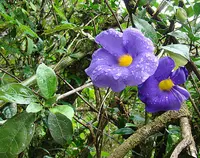
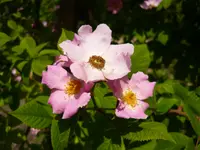
bellyache bush Care (Jatropha gossypiifolia)

Also known as: Cotton-leaf Physicnut, Pandou, Black Physicnut
bellyache bush

About bellyache bush

Bellyache bush, Jatropha gossypiifolia, is a fast-growing shrub or small tree from tropical and subtropical regions of the Americas. It is often found in disturbed sites, roadsides, and pastures, where it can naturalize and spread quickly.

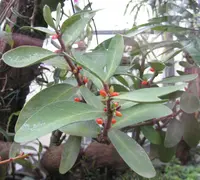
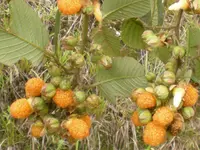
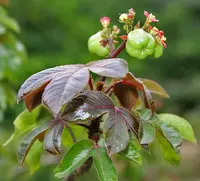
The plant has dark green to reddish leaves with three lobes, red-brown stems, and small red flowers followed by capsule-like fruits. Its attractive foliage and compact size can make it visually appealing, but it is often considered weedy in warm climates.

It is generally easy to grow in hot, sunny, well-drained locations and tolerates poor soils and dry periods. Because of its vigorous growth and toxicity, learning how to care for bellyache bush includes managing spread and handling it carefully.

Main Plant Requirements

Care Difficulty

Moderate Care

Light Preference

Full Sun

Water Requirements

Low Water

Temperature Preference

Tropical / Frost Sensitive

Hardiness Zone

10–11

Soil Texture

Sandy, Loamy, Organic-rich

Soil pH

Acidic (5.5–6.5), Slightly acidic (6.5–7.0)

Soil Drainage

Well-drained

Fertilization

Minimal (feed rarely)

Get Personalized Care Plan

Scan your plant to receive care tips personalized for your specific plant

Available on iOS and Android

How to Care for the bellyache bush

This sun-loving shrub performs best in warm, bright locations with strong light exposure.

  • Provide 6–8 hours of direct sun daily; full sun is ideal, though light afternoon shade is helpful in very hot, dry climates.
  • Tolerates partial shade, but flowering and compact growth decline if it receives under 4–5 hours of sun, and stems may become leggy.
  • In summer, monitor for leaf scorch on reflected-heat sites; in winter, avoid deep shade from buildings or trees to support stable growth of bellyache bush.

This species prefers infrequent, deep watering and soil that dries between waterings.

  • Outdoors in free-draining soil, water only when the top 4–6 cm feel completely dry; in sandy soils this may be weekly in summer and much less often in cooler seasons.
  • Use sharply drained soil or a raised bed to prevent standing water; prolonged soggy conditions cause root rot, yellowing leaves, and stem dieback.
  • Underwatering shows as limp, folding, or browning leaf edges; overwatering causes soft stems and persistent soil moisture 24+ hours after irrigation for Jatropha gossypiifolia.

This tropical shrub needs warm conditions and does poorly in cold or frosty climates.

  • Aim for 70–90°F (21–32°C) during active growth; it tolerates brief peaks to 95°F (35°C) if soil moisture is not extreme and roots are well aerated.
  • Protect from any frost; tissue damage often begins near 32°F (0°C), and whole-plant death is likely below 28°F (-2°C).
  • In regions with winter lows under 50°F (10°C), growth slows or stops; plants may defoliate and should be sited in the warmest, most sheltered microclimate available.

This species tolerates a wide humidity range but prefers moderately dry air.

  • Aim for 30–50% humidity, matching typical indoor conditions in most homes.
  • Bellyache bush copes with dry air but very high humidity combined with cool temperatures can encourage fungal problems.
  • Watch for repeated leaf spotting or mildew in overly damp, stagnant air and increase airflow or reduce crowding rather than adding moisture.

This plant prefers lean, fast-draining soil that does not stay wet.

  • Use a sandy or gritty loam with 30–50% mineral material such as coarse sand or fine gravel to keep roots dry and aerated.
  • In pots, mix roughly 2 parts cactus or succulent mix with 1 part coarse perlite or pumice for sharper drainage.
  • A slightly acidic to neutral pH around 6.0–7.0 suits Jatropha gossypiifolia, so avoid very alkaline mixes with heavy lime content.
  • Avoid dense clay, peat-heavy, or waterlogged substrates, and raise beds or use mounds in wet climates to prevent root rot.

This species is suitable for container growing, especially in cooler climates where it cannot stay outdoors year-round.

  • Choose a heavy, wide-based pot to counteract the shrub’s top-heavy growth and reduce tipping in wind or on balconies.
  • Select a mineral-based, free-draining mix and leave a 2–3 cm gap below the rim so water does not overflow and saturate the stems.
  • Use light-colored containers in hot sun to reduce root-zone overheating and lower the frequency of drought stress.

Jatropha gossypiifolia responds well to light, balanced feeding in active growth but does not need heavy fertilization.

  • Use a balanced NPK granular or liquid fertilizer, or well-aged compost, on established outdoor plants in spring.
  • Feed every 6–8 weeks during the warm growing season, focusing on plants in poor or sandy soils.
  • Dilute liquid products to 1/2 strength to limit salt buildup and reduce risk of root burn.
  • Stop or greatly reduce feeding in fall and winter when bellyache bush growth slows or becomes dormant.

Pruning Jatropha gossypiifolia helps control size, encourage branching, and maintain a safe, tidy shape.

  • Carry out main pruning in late winter or early spring before strong new growth starts.
  • Remove dead, damaged, crossing, or congested branches using sharp, clean bypass pruners or loppers.
  • Shorten excessively long shoots to shape the shrub and improve light penetration into the canopy.
  • Make clean cuts just above outward-facing buds to promote balanced branching and flowering.

This species is usually grown in the ground, so focus on thoughtful transplanting and occasional container up-potting.

  • Transplant young plants in late spring or early summer once soil is warm and frost risk has passed.
  • Look for roots circling the pot, slow growth, or frequent wilting as signals a container plant needs a larger pot.
  • Move to a container 1–2 in wider, using well-drained soil, and keep the original root ball intact to limit stress.
  • Water thoroughly after planting, provide light shade for 3–5 days, and avoid heavy pruning at the same time.

Jatropha gossypiifolia is commonly propagated from semi-hardwood cuttings and seeds under warm, bright conditions.

  • Take semi-hardwood stem cuttings in late spring or summer, 10–15 cm long, with several nodes.
  • Allow the milky sap to dry briefly, then dip the cut end in rooting hormone and place in a fast-draining medium.
  • Keep cuttings at 70–80°F with bright, indirect light and moderate humidity until roots form.
  • Sow fresh seeds in warm soil, barely covered, and maintain even moisture for steady germination.

This tropical shrub is frost-sensitive and needs thoughtful management in regions with cool or cold winters.

  • In USDA zones below 10, grow in containers so plants can be moved indoors before temperatures drop near 40°F.
  • Overwinter potted plants in a bright, frost-free space, allowing the soil surface to dry slightly between waterings.
  • In mild climates, apply a 5–8 cm mulch layer around outdoor plants to insulate the root zone from brief chills.
  • Expect partial leaf drop in cool conditions and resume stronger watering and feeding when warm growth returns.

Care Tips

Latex-safe handling

Wear gloves and long sleeves when pruning or repotting, and immediately wash off any milky sap from skin or tools to reduce irritation and prevent accidental eye contact.

Controlled shrub shaping

After flowering, selectively tip-prune only soft new growth to keep the plant compact while preserving flowering wood, rather than cutting back old, thicker stems hard in one session.

Seed pod management

Remove developing seed pods before they mature and eject seeds, which reduces unwanted self-seeding and keeps the planting area safer in regions where this species can spread aggressively.

Root-zone heat tolerance

In hot climates, apply a thin (2–3 cm) mineral mulch such as gravel around the root zone to moderate soil temperature without holding excess moisture that could encourage root issues.

Pest scouting routine

Inspect stems and leaf undersides every 2–3 weeks for scale insects and spider mites, and treat early with a horticultural oil spray applied in the evening to make caring for bellyache bush more predictable and low-risk.

Common Pests and Diseases

Spider mites

This pest feeds on the undersides of leaves, causing fine stippling, a dull appearance, and sometimes webbing on stems and foliage. Symptoms include leaf yellowing and premature drop, especially in hot, dry conditions.

Solution

Rinse foliage thoroughly with a strong but controlled stream of water, focusing on the undersides of leaves, and repeat weekly until activity drops. For persistent infestations, apply insecticidal soap or a horticultural oil labeled for mites, ensuring full coverage and avoiding application during intense sun or high heat.

Scale insects

These insects attach firmly to stems and leaves as small brown or gray bumps and suck sap, leading to weakened growth and sticky honeydew deposits. Symptoms include sooty mold growing on the honeydew and general decline of affected shoots.

Solution

Physically remove individual scales by gently scraping or wiping them off with a cotton swab dipped in isopropyl alcohol, then prune heavily infested twigs. For larger populations, use horticultural oil sprays during mild weather to smother crawlers and follow up with repeat treatments according to label directions.

Leaf spot

This disease causes circular to irregular brown or tan lesions on leaves, sometimes with darker borders and yellow halos. Symptoms include premature leaf drop when spots are numerous or leaves are heavily stressed.

Solution

Remove and discard affected leaves and any fallen debris around the base to reduce sources of reinfection. Improve air circulation by spacing and pruning, avoid wetting foliage when watering, and if needed use a copper-based or other labeled fungicide during periods of warm, wet weather as part of broader Jatropha gossypiifolia plant care.

Powdery mildew

This disease produces white to gray, powdery fungal growth on leaves, young stems, and sometimes flower buds. Symptoms include distorted new growth and reduced vigor in shaded or crowded conditions with poor air flow.

Solution

Increase light and air movement around the plant by pruning dense growth and avoiding overhead watering, then remove and discard heavily infected leaves. In recurring cases, apply a sulfur-based or other labeled powdery mildew fungicide in a series of light, preventive sprays when new growth appears.

Mealybugs

These insects form white, cottony clusters in leaf axils, along stems, and on roots, feeding on sap and excreting sticky honeydew. Symptoms include stunted growth, curling leaves, and sometimes ant activity around the plant seeking the honeydew.

Solution

Inspect plants regularly and dab visible mealybugs with a cotton swab dipped in isopropyl alcohol, then rinse the plant to remove residues. For more extensive infestations, use repeated applications of insecticidal soap or a light horticultural oil, ensuring thorough coverage of leaf axils and stems.

Interesting Facts

Toxic milky latex

This species produces a white latex in its stems and leaves that is highly irritant and toxic if ingested, a common chemical defense in the spurge family (Euphorbiaceae). The latex can cause skin irritation and should be kept away from eyes and mouth.

Sticky seed dispersal

Its fruits are small capsules that split open when mature, releasing sticky seeds that can cling to animals, clothing, or machinery, helping the plant spread over long distances. This, combined with prolific seed production, contributes to its invasive behavior in many tropical regions.

Color-shifting foliage

Young leaves often emerge deep red to purplish due to high levels of protective pigments called anthocyanins, then age to a dark green. These pigments can help protect tender leaves from intense sunlight and herbivory.

Botan icon

Did you know?

In several countries, this shrub is classified as a serious environmental weed because dense stands can outcompete native vegetation, interfere with livestock movement, and alter the structure of pastures and open woodlands.

FAQs about bellyache bush

All parts of this species are highly toxic if eaten, especially seeds and sap. Ingestion may cause severe gastrointestinal distress and other systemic symptoms. Keep it away from children, pets, and livestock, and wear gloves when pruning.

Grow Healthy Plants with Botan Care

Keep your plants happy and healthy with plant identification, disease detection, and easy care guidance.

Botan plant care app — identify plants on mobile

Explore More Plants