
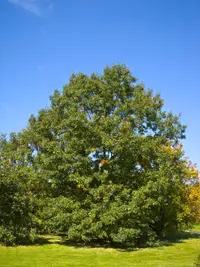
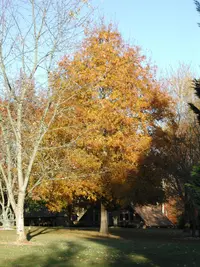

butternut Identification (Juglans cinerea)

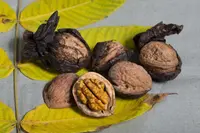
Recognize butternut by its long alternate compound leaves, usually 15 to 25 inches (38 to 64 cm) long, with 11 to 17 leaflets, plus its oblong nuts enclosed in a sticky husk.

Twigs are stout and pale, with large fuzzy terminal buds, and mature bark forms broad, light gray ridges and deep furrows.

Juglans cinerea Identification

Scan to Confirm butternut

Take a photo and use Botan to confirm your plant identification.

Clear images work best. Avoid photos taken too close or too far away

  • 1 free identification
  • No sign-up
  • 30,000+ plants in database

Check the tree’s leaves, twigs, bark, and fruit for a few clear visual clues.

  • Leaves are alternate, pinnate, and often 15-30 inches (38-76 cm) long, with 11-17 leaflets.
  • Leaflets are narrow, finely toothed, and usually stalkless or nearly so along the central leaf stem.
  • Twigs look stout and fuzzy, with a broad leaf scar below each bud.
  • Bark is light gray and broken into broad, flat-topped ridges with deep furrows.
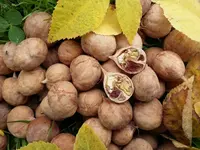
  • Fruits are oblong, lemon-shaped nuts with a sticky green husk, often hanging in small clusters.

Use several features together, especially the long compound leaves and oblong husked nuts.

Butternut shows useful visual shifts from sapling form to catkins and large husked fruits.

  • Juvenile plant: Young plants are upright and lightly branched, with stout greenish twigs and very large pinnate leaves that can reach 2 feet (60 cm) long.
  • Mature plant: Older trees develop a broad, open crown with thicker ascending limbs, furrowed pale gray bark, and a more irregular outline than juvenile plants.
  • Flowering stage: Flowering branches carry drooping male catkins, while female flowers appear in short terminal clusters, making reproductive shoots look visibly different from leafy sterile shoots.
  • Fruiting stage: Fruiting twigs bear several oblong, sticky-husked nuts in clusters, hanging beyond the leaves and adding a heavier, more pendant look to branch tips.

In spring, butternut leafs out with long compound leaves, and drooping greenish male catkins become easy to spot before or as the foliage expands. Female flowers are smaller but may be visible near shoot tips. By late summer into fall, clusters of oblong, sticky-husked nuts are conspicuous. After leaf drop, the stout twigs, large pale leaf scars, and broad, chambered pith are easier to notice on bare branches.

A few walnut relatives can be mistaken for butternut at a glance.

black walnut(Juglans nigra)

Both are large trees with long pinnate leaves and round husked nuts. Black walnut usually has 15-23 leaflets and dark, deeply furrowed bark. Butternut more often has 11-17 leaflets, paler bark, and oblong, sticky-husked fruits.

Japanese walnut(Juglans ailantifolia)

This species also has many leaflets and walnut-type fruits. It is best separated by its nearly spherical nuts in thick husks, while Juglans cinerea has more elongated nuts. Leaflets on Japanese walnut are often broader and more rounded.

Juglans cinerea is native to eastern North America, from New Brunswick and southern Ontario west to Minnesota, and south through the Appalachian region to Georgia, Alabama, Arkansas, and Mississippi. It is most often found in mixed hardwood woodland, stream valleys, floodplains, and well-drained slopes. In the wild, seeing it in upland forests or along wooded bottomlands within this range helps separate it from similar walnuts growing outside eastern North America.

Confirm the Species with Botan

Upload a photo to compare key details and get help identifying the plant or confirming the match.

FAQ

The quickest butternut identification clue is the fruit: oblong nuts with a sticky, hairy husk, unlike the rounder black walnut. Twigs and leaf stalks are also softly hairy, which helps when fruit is absent.

More Plant Identification Guides

Identify First. Learn What Comes Next.

Use Botan to identify a plant from a photo, then get species-specific care information, plant details, and common problems.

Botan app identifying a plant from a photo
Plant Pot Sizes: How to Choose the Right Plant Container

7 min read · 20 Aug 2026

Plant Pot Sizes: How to Choose the Right Plant Container

Plant pot sizes can be confusing because the number on the label only tells you part of the required information. A container may look spacious but actually be too shallow. So, how to choose pot size for plant species?

Beginner Guides
Plant Pot Sizes: How to Choose the Right Plant Container
How to Water Succulents: When, How Often, and How Much

7 min read · 18 Nov 2026

How to Water Succulents: When, How Often, and How Much

Yellowing, mushy, or shriveled leaves can all point to a watering problem, yet each can have a different cause. This guide explains how to water succulents, when to wait, and how soil, pots, and seasons change the routine.

Plant Care
How to Water Succulents: When, How Often, and How Much
20 Most Popular Fruits Around the World

7 min read · 22 Jul 2026

20 Most Popular Fruits Around the World

Curious which fruits the world actually eats the most? Here's the top-20 by production volume, an overview of what people choose in each region, and a few figures that defy common assumptions.

Plant Recommendations
20 Most Popular Fruits Around the World