Cavendish banana Identification (Musa acuminata)

To recognize Musa acuminata, look for a treelike herb with a stout pseudostem formed by tightly wrapped leaf bases and a crown of very large, paddle-shaped leaves arranged in a single spiral.

Its hanging flower spike carries maroon-purple bracts that lift to expose rows of pale flowers.

Musa acuminata Identification

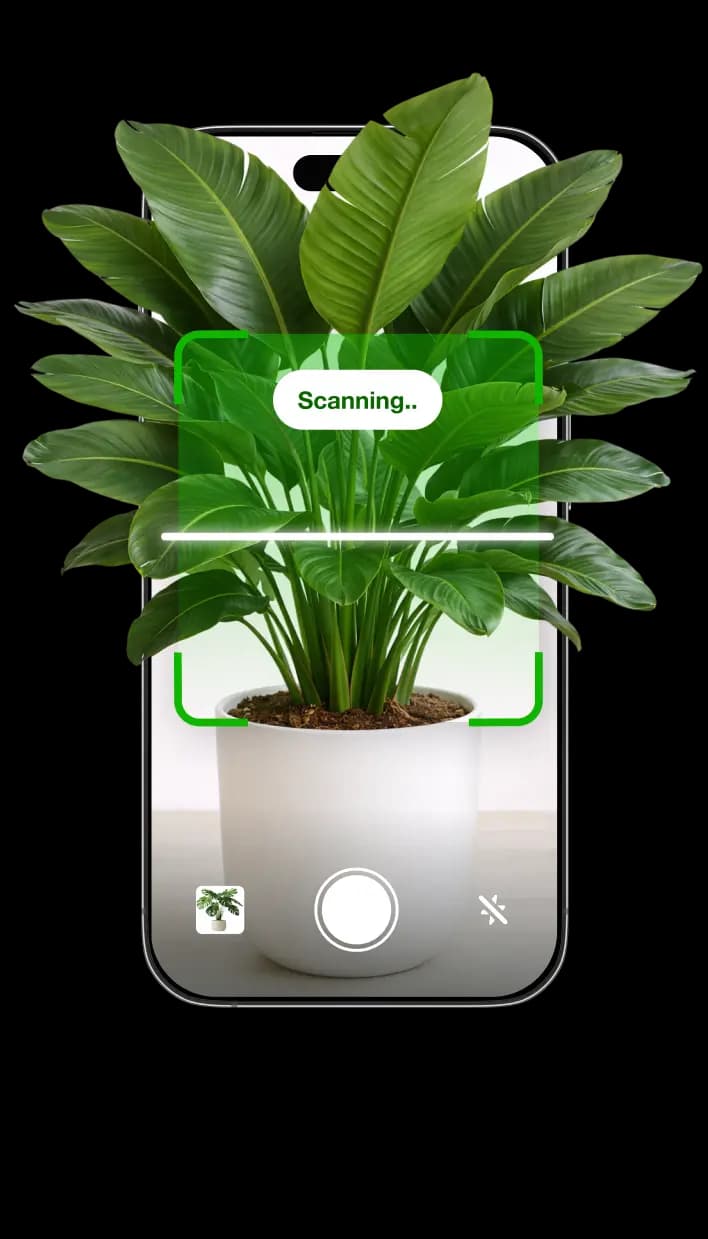
Scan to Confirm Cavendish banana

Upload a plant photo and check the identification in seconds.

Clear images work best. Avoid photos taken too close or too far away

Check the overall leaf and stem structure of Musa acuminata first.

  • Forms a clump of upright, soft pseudostems made from tightly wrapped leaf bases, not a woody trunk.
  • Leaves are long and paddle-shaped, often 5 to 9 feet (1.5 to 2.7 m) long, with a strong central midrib.
  • Leaf blades arise in a spiral at the top, creating a crown-like cluster rather than branches along the stem.
  • Hanging flower clusters have large purple bracts, followed by hands of narrow, curved bananas.

Torn leaf edges are common, so focus on size, spiral leaf arrangement, and the layered pseudostem.

Musa acuminata shows clear visual shifts from broad-leaved juveniles to hanging flower and fruit structures.

  • Juvenile plant: Leaves rise from a short, thick pseudostem made of overlapping leaf bases. Blades are narrower and shorter, and no hanging inflorescence is present.
  • Young plant: The clump forms a taller, trunk-like pseudostem, often 6-10 feet (1.8-3 m) tall, with larger upright leaves creating a more strongly vertical outline.
  • Flowering stage: A heavy central stalk emerges above the leaves, then bends downward. Large purple bracts lift back to expose rows of pale flowers beneath.
  • Fruiting stage: After flowering, the hanging stalk carries clustered hands of bananas. The developing fruits thicken, angle upward from the drooping axis, and replace the showy bracts.

Several well-known Musa acuminata cultivars can be separated by plant size and leaf pattern.

  • 'Dwarf Cavendish': Shorter than the typical form, usually about 6 to 10 feet (1.8 to 3 m) tall, with broad leaves often marked by reddish-purple blotches when young.
  • 'Grand Nain': Taller, often 10 to 15 feet (3 to 4.6 m), with plain green leaves and a sturdier, more upright pseudostem than 'Dwarf Cavendish'.
  • 'Zebrina': Leaves show bold maroon to dark red blotches on the upper surface, a stable pattern that stands out from plain green forms.
  • 'Ae Ae': Leaves are strongly variegated with large white to cream sectors and streaks, unlike the solid green foliage of the typical form.

A few bananas and banana-like plants are often mistaken for Musa acuminata.

plantain(Musa × paradisiaca)

Often confused because both have the same tall, paddle-leaf banana form. Plantains usually look more robust, with stiffer leaves and thicker, more angular fruits; Cavendish banana fruits are usually slimmer and more curved.

Japanese fiber banana(Musa basjoo)

Similar young plants share broad green leaves and a trunk-like pseudostem. Musa basjoo usually has a more openly spreading habit and a duller, less glossy look; mature pseudostems are often more yellow-green than the cleaner green common in many acuminata plants.

Musa acuminata is native to tropical Southeast Asia, with wild populations from northeastern India and southern China through Myanmar, Thailand, Malaysia, Indonesia, and the Philippines. It occurs mainly in humid lowland to lower montane rainforest, forest edges, and disturbed clearings, often below about 5,900 feet (1,800 m). This helps with identification because truly wild plants tied to Southeast Asian rainforest habitats are more likely to be Musa acuminata than African or Pacific Musa species.

Confirm It from a Photo

Use Botan to identify or verify your plant from a photo when labels are missing or similar plants are easy to confuse.

FAQ

The clearest feature is its large, upright pseudostem made of tightly wrapped leaf bases, topped by huge paddle-shaped leaves that tear into strips. For Cavendish banana identification, this false trunk is a key clue.

More Plant Identification Guides

Find the Plant. Get the Details.

Identify a plant from a photo with Botan, then see plant details, care information, and common problems for that species.

Botan app identifying a plant from a photo
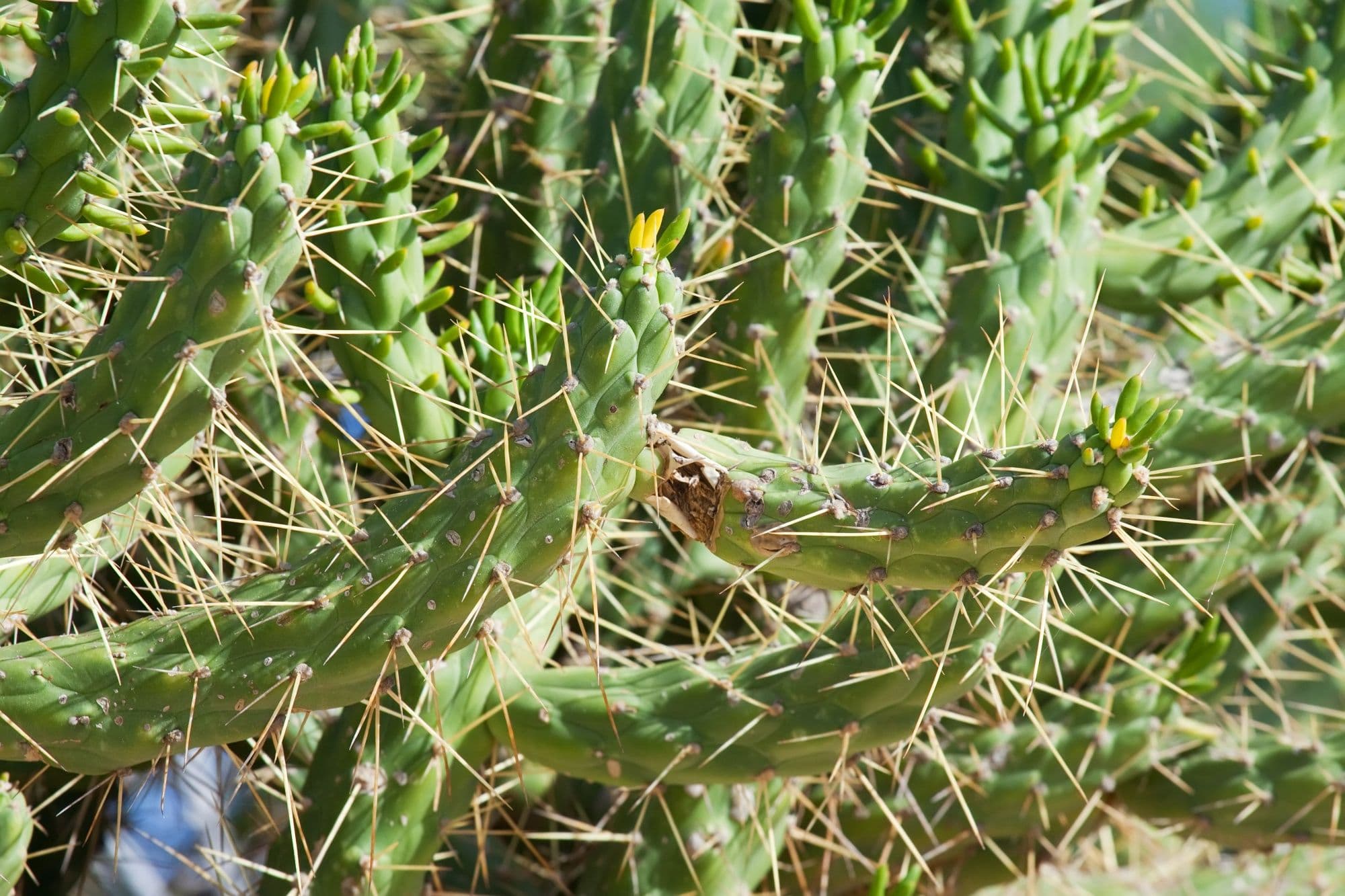
Thorny Plants: A Comprehensive Guide

10 min read · 25 Aug 2026

Thorny Plants: A Comprehensive Guide

Many plants defend themselves with sharp thorns. This guide explores over 20 examples among flowers, shrubs, trees, and vines. You'll learn what each plant looks like, why it grows thorns, and how to quickly identify them.

Plant Recommendations
Thorny Plants: A Comprehensive Guide
What Plants Don't Like Epsom Salt?

11 min read · 29 Jul 2026

What Plants Don't Like Epsom Salt?

Learn which plants can be seriously damaged by Epsom salt and which will thrive on it. We’ll explain when and how to use it properly, provide tips for indoor & outdoor plants — read on and enjoy a healthy garden.

Plant Care
What Plants Don't Like Epsom Salt?
How to Use a Moisture Meter for Plants

5 min read · 4 Sept 2026

How to Use a Moisture Meter for Plants

Watering by feel kills plenty of houseplants. A moisture meter checks the soil for you, and takes the guesswork out of it. This guide will show you how to use it correctly, from the first touch to the final reading.

Beginner Guides
How to Use a Moisture Meter for Plants