
Bee balm Identification (Monarda fistulosa)

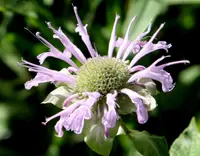
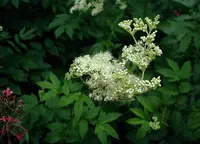
Recognize Monarda fistulosa by its square, upright stems, opposite lance-shaped leaves, and rounded flower heads made of many narrow, two-lipped tubular flowers clustered at each stem tip.

Plants usually grow in clumps, with paired leaves spaced along the stem and a single terminal flower head held above the foliage.

Monarda fistulosa Identification

Identify a Plant by Photo

Upload a clear image to check whether your plant ID is correct.

Clear images work best. Avoid photos taken too close or too far away

Check the stem, leaf pairs, and flower heads of Monarda fistulosa.

  • Upright clumps usually reach 2-4 feet (0.6-1.2 m) tall.
  • Stems are square in cross-section, a common mint-family trait.
  • Leaves grow in opposite pairs, are lance-shaped, and often 2-4 inches (5-10 cm) long.
  • Flower heads sit at stem tips as rounded clusters of many narrow, tubular blossoms.
  • Each flower shows a two-lipped form, usually in pale lavender to pink shades.

Crushed leaves also help confirm it, but the square stems and terminal flower clusters are the fastest visual clues.

Monarda fistulosa shows clear structural shifts from early leafy growth to flowering and seed set.

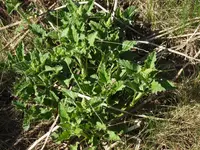
  • Juvenile plant: Low clumps show opposite, lance-shaped leaves on short stems, with tight spacing between leaf pairs and little branching compared with later stages.
  • Mature plant: Stems become upright and distinctly branched, forming a broader clump about 2-4 feet (0.6-1.2 m) tall with longer leaf pairs spaced farther apart.
  • Flowering stage: Each stem tip carries a rounded flower head with narrow, tubular lavender to pinkish flowers above leaflike bracts, making the plant top-heavy in outline.
  • Fruiting stage: After petals drop, the rounded heads persist as compact brown clusters of small dry fruits, while upper stems stay erect and visibly less showy.

Bee balm has several named selections and infraspecific forms that can be separated by flower color and plant stature.

  • Monarda fistulosa var. menthifolia: Usually shorter than the typical form and often bears denser heads of lavender to pink flowers; leaves are commonly grayer-green.
  • Monarda fistulosa var. mollis: Shows noticeably hairier stems and leaves, giving the plant a softer, gray-green look than the typical form.
  • Monarda fistulosa 'Claire Grace': A taller selection, often 3 to 4 feet (0.9 to 1.2 m), with clear lavender flowers and a broad, upright clump.
  • Monarda fistulosa 'Purple Rooster': Distinguished by deeper purple flower heads and a more vertical habit, often reaching about 4 feet (1.2 m).

In spring, Bee balm sends up upright stems with opposite, narrow leaves. By early to mid-summer, the plant is much easier to recognize when rounded clusters of lavender to pale purple flowers appear at the stem tips. After flowering, the heads dry into small brown clusters that often persist into fall. Winter usually leaves little to see above ground.

Several mint-family wildflowers can be mistaken for Bee balm.

wild bergamot(Monarda bradburiana)

Similar opposite leaves and tufted lavender flowers cause confusion. It stays shorter, often 1 to 2 feet (30 to 60 cm), and has broader, less ragged flower heads than Monarda fistulosa.

scarlet beebalm(Monarda didyma)

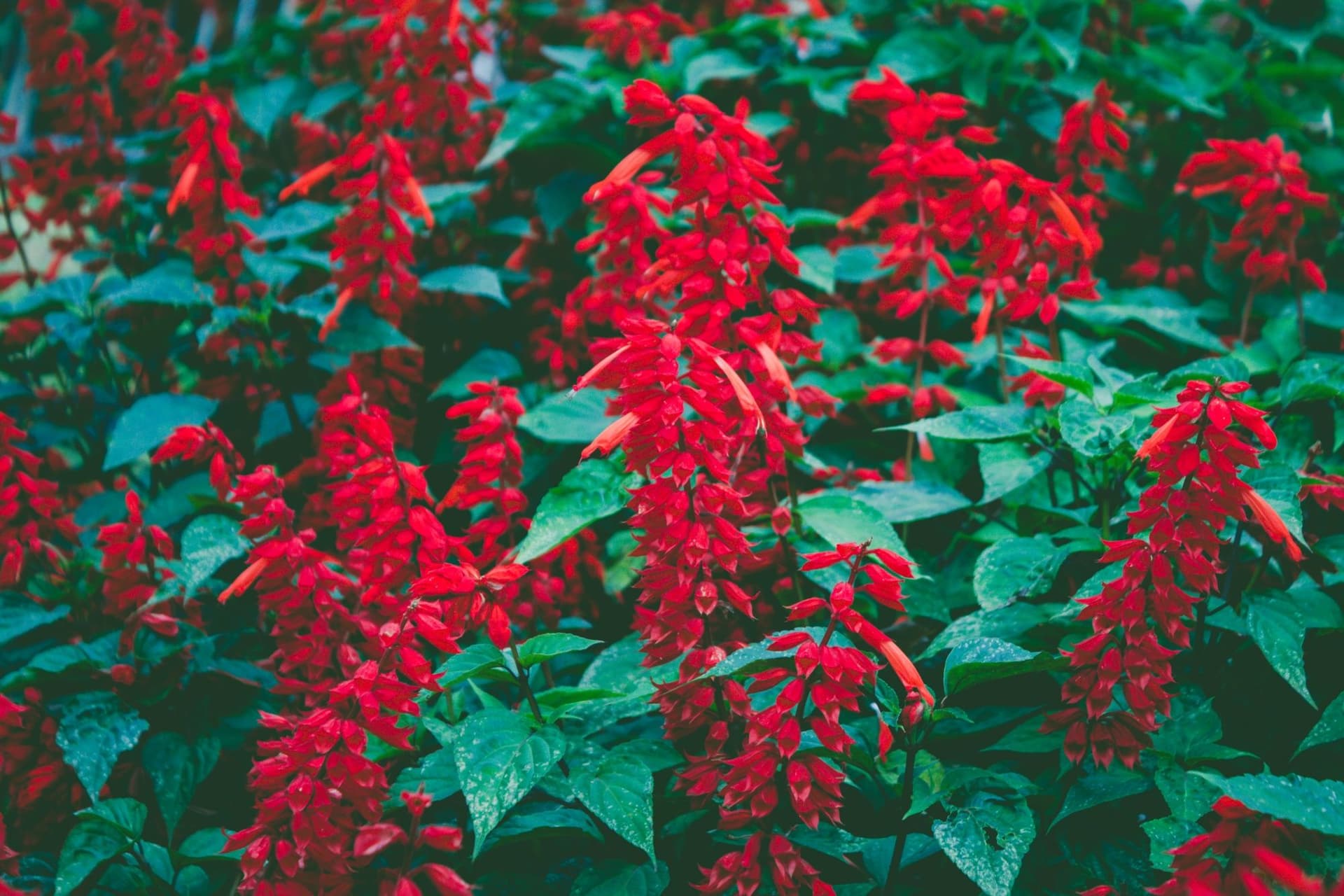
Both have opposite leaves and crowded tubular flowers. Monarda didyma usually has brighter red flower heads and broader leaves, while Monarda fistulosa more often shows pale lavender to pink blooms.

spotted beebalm(Monarda punctata)

It shares mint-family stems and opposite leaves. The easiest difference is the flower structure: Monarda punctata has stacked whorls with showy bracts, not one rounded shaggy head.

Monarda fistulosa is native to much of North America, from southern Canada through most of the United States, especially across the central and eastern regions. It is most often found in prairies, open woodlands, meadows, roadsides, and rocky or disturbed ground. Seeing it in sunny, non-wet habitats helps separate it from bee balms more often associated with streambanks or wetter sites.

Not Sure About the ID?

Use Botan to identify or confirm the plant from a photo so you can make better decisions before labeling or buying.

FAQ

Yes. Crushed leaves have a strong minty, oregano-like scent, a helpful clue when identifying Bee balm. The fragrance comes from aromatic oils in the foliage and pairs with square stems, which are typical of the mint family.

More Plant Identification Guides

Know Your Plant Better

Identify it from a photo with Botan, then get plant details, care information, and common problems for that species.

Botan app identifying a plant from a photo
20 Funny Plant Names That Make You Laugh

8 min read · 16 Oct 2026

20 Funny Plant Names That Make You Laugh

Some plants carry names that sound like jokes. This guide explains the origins of 20 funny plant names. You will also see which of these plants you can grow at home.

Plant Recommendations
20 Funny Plant Names That Make You Laugh
Best Fertilizer for Vegetable Gardens – What to Use for Each Plant

11 min read · 20 Jul 2026

Best Fertilizer for Vegetable Gardens – What to Use for Each Plant

Here, you’ll find the right fertilizer formula for vegetables in your garden. Learn how to adjust feeding correctly throughout the growing cycle, spot nutrient deficiencies by their symptoms, and keep your plants healthy and prolific.

Plant Recommendations
Best Fertilizer for Vegetable Gardens – What to Use for Each Plant
Rice Water for Plants – Which Plants Love It and How to Make It

8 min read · 14 Jul 2026

Rice Water for Plants – Which Plants Love It and How to Make It

Rice water can be an ideal DIY solution for orchids, roses, or fruiting plants. It supports growth, leaf count, and height. We’ll share how to make and apply it correctly for your plant.

Plant Care
Rice Water for Plants – Which Plants Love It and How to Make It