Corkscrew rush Care (Juncus effusus)

Also known as: common rush, corkscrew rush, Flutterrush
Corkscrew rush

About Corkscrew rush

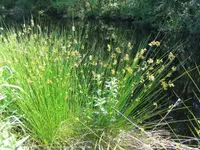
Corkscrew rush, Juncus effusus, is a moisture-loving perennial often grown for its twisted, spiral green stems instead of showy flowers or foliage. It forms dense, fountain-like clumps that add strong architectural lines to containers, ponds, and modern garden beds.

This species is native to wetlands and stream edges in many temperate regions, so it thrives in consistently damp or even boggy conditions. Understanding how to care for Corkscrew rush starts with providing ample moisture, cool to moderate temperatures, and a rich, somewhat heavy soil.

The plant is generally straightforward to grow if its water needs are met, but it declines quickly in dry or very hot, exposed sites. It suits both outdoor water gardens and bright indoor spots if humidity and watering are managed carefully.

Main Plant Requirements

Care Difficulty

Moderate Care

Light Preference

Full Sun

Water Requirements

Aquatic

Temperature Preference

Cold Hardy

Hardiness Zone

4–9

Soil Texture

Loamy, Clay, Organic-rich

Soil pH

Acidic (5.5–6.5), Slightly acidic (6.5–7.0)

Soil Drainage

Waterlogged tolerant

Fertilization

Minimal (feed rarely)

Get Personalized Care Plan

Scan your plant to receive care tips personalized for your specific plant

Available on iOS and Android

How to Care for the Corkscrew rush

This rush favors bright exposures and tolerates both full sun and partial shade when moisture is constant.

  • Provide 6–8 hours of sun, with morning sun and light afternoon shade ideal in hot climates to prevent leaf scorching.
  • In cooler regions, full sun all day supports denser, more upright growth; in hotter areas, give filtered light after 2–3 p.m.
  • If Corkscrew rush stems stretch, pale, or lean strongly toward windows, light is insufficient and the plant needs a brighter site.

This species is adapted to wet habitats and prefers soil that never fully dries out.

  • Keep soil consistently saturated to very moist; in gardens it can stand shallow water over the crown, and in pots the top 0–1 cm should stay damp.
  • In summer heat, expect faster drying and watch for limp, browning tips as a sign of underwatering rather than follow a fixed schedule.
  • If water stands foul-smelling or roots feel mushy, drainage is too low and Juncus effusus is beginning to suffer from oxygen-poor, rotting conditions.

This plant is cold-hardy yet grows most vigorously within a moderate temperature range.

  • Active growth occurs around 60–75°F (16–24°C); extended heat above 86°F (30°C) is tolerated if soil stays very wet.
  • Established clumps can survive down to about 0°F (−18°C), with foliage often browning in hard frost but crowns re-sprouting in spring.
  • In very hot periods above 90°F (32°C), deeper water or extra soil moisture help prevent stress, while sudden warm spells after frost may trigger early, tender shoots.

This wetland rush prefers consistently high humidity but adapts if its root zone stays very moist.

  • Aim for 60–90% humidity, especially indoors or in heated rooms.
  • Dry air combined with less-than-saturated soil causes browning tips and dull, shriveling coils on Corkscrew rush.
  • Stand the pot in a shallow water tray, group with other plants, or use a humidifier near the plant to boost local humidity.

This species thrives in saturated, organic-rich soil that stays wet without becoming stagnant indoors.

  • Use a heavy loam-based mix with 50–70% compost or peat-free organic matter plus some sand for structure.
  • Allow minimal drainage for outdoor bog-style containers but ensure indoor pots can slowly drain to avoid foul anaerobic conditions.
  • Target slightly acidic to neutral pH around 6.0–7.0 for stable growth and nutrient uptake.
  • Avoid very sandy, fast-draining, or peat-only mixes that dry out quickly and cause foliage to crisp.

This rush is suitable for container growing when the setup keeps the root zone consistently wet and stable.

  • Choose a deep, weighty pot to prevent tipping as the dense, upright clumps become top-heavy in wind.
  • Use an outer cachepot or water reservoir tray to maintain a constant water level around the inner nursery pot.
  • Place the container where splashing and overflow are acceptable, since frequent top-ups and standing water are typical for this species.

This wetland species has modest nutrient needs but benefits from light feeding in containers or poor soils when caring for Corkscrew rush.

  • Use a balanced, water-soluble fertilizer at 1/4–1/2 strength or a mild slow-release formula in spring.
  • Feed every 4–6 weeks during the active growing season if growth looks weak or foliage pales.
  • Avoid heavy, high-salt fertilizers that can burn roots, especially in pots with limited drainage.
  • Stop feeding in late summer and avoid fertilizing during winter dormancy to prevent soft, weak growth.

Pruning Juncus effusus is mainly about tidying growth and maintaining a clean clump.

  • Best time for major cleanup is late winter to very early spring before new shoots emerge.
  • Cut dead, brown, or damaged stems at the base using clean, sharp scissors or hand pruners.
  • Thin a few crowded, older stems from dense clumps to improve air flow and maintain fresh-looking growth.
  • Avoid cutting healthy green stems too low during the growing season to preserve energy and vigor.

Transplanting or repotting Juncus effusus keeps roots healthy and prevents overcrowded clumps.

  • Look for roots circling the pot, pushing through drainage holes, or for slowing growth as cues to move up a size.
  • Plan repotting or transplanting for early spring, just as new growth begins, to support quick recovery.
  • In containers, aim to repot every 2–3 years into a slightly larger pot with water-retentive, rich soil.
  • Water thoroughly before and after moving, keep roots evenly moist, and shade from strong sun for several days to reduce stress.

Juncus effusus is most reliably propagated by division, with seed used when larger numbers are needed.

  • Divide mature clumps in early spring or early fall when temperatures are mild and soil is moist.
  • Lift the plant, slice the root mass into sections with several healthy shoots, and replant at the original depth.
  • Keep divided sections in consistently damp, rich soil and bright light to encourage quick establishment.
  • For seed, sow on the surface of moist substrate, keep at 65–75°F, and do not allow the seeds to dry out.

Juncus effusus is generally cold hardy in temperate climates and needs limited winter care in the ground.

  • In cold regions, leave hardy clumps outdoors; they tolerate freezing once established.
  • After hard frosts, trim dead brown stems, leaving any still-green growth intact until spring.
  • Apply a 5–8 cm mulch around the root zone in exposed sites to moderate temperature swings.
  • Move containers to a frost-free but cool, bright spot or sink pots into the ground to insulate roots.

Care Tips

Container water management

If grown in a pot, stand the container in a shallow tray of water during active growth to keep the root zone constantly moist, but empty and refresh the tray weekly to avoid stagnant water and mosquito breeding.

Seasonal thinning

In late winter or very early spring, remove older brown or flattened stems at the base so new, upright spirals receive light and air, which keeps the clump dense and visually clean.

Divide crowded clumps

Every 2–3 years, lift and divide congested plants into smaller sections with healthy white roots and firm stems, then replant at the same depth to maintain vigor and prevent the center from dying out.

Stabilize in bog gardens

When planting at a pond edge or bog, press the root mass firmly into the mud and top-dress with a thin layer of coarse gravel so water movement does not loosen the plant before new anchoring roots form.

Indoor humidity control

For Corkscrew rush indoor care, place the pot on a wide pebble tray kept topped up with water and group it with other high-moisture plants to buffer against drying indoor air from heating or air conditioning.

Common Pests and Diseases

Rust fungus

This disease causes small orange to brown pustules or spots on stems and foliage, sometimes leading to yellowing and early dieback. Symptoms include a powdery or dusty spore mass that rubs off on fingers or nearby surfaces.

Solution

Remove and discard affected stems at the first sign of spotting, and avoid overhead watering to keep foliage as dry as possible. Improve air movement around the clump, cut back dense growth, and if rust recurs, use a sulfur or copper-based fungicide labeled for ornamental grasses, following label directions carefully.

Leaf spot

This disease produces brown to dark purple water-soaked spots on the rush stems that may merge into larger lesions. Symptoms include thinning clumps and premature browning of sections of the plant.

Solution

Prune out and dispose of heavily marked stems and any dead material around the base to reduce fungal spread. Reduce splashing by watering at soil level, and in persistent cases use a targeted ornamental grass fungicide and rotate products if treatment is repeated across seasons.

Aphids

These insects cluster on young rush stems and at the base of the curls, sucking sap and causing distorted or weakened growth. This pest may leave behind sticky honeydew that encourages black sooty mold on nearby surfaces.

Solution

Rinse colonies off with a strong stream of water, repeating every few days as needed, and encourage natural predators such as lady beetles by avoiding broad-spectrum insecticides. For persistent infestations, apply insecticidal soap or a horticultural oil, coating all sides of the stems and reapplying according to product instructions as part of practical Juncus effusus care.

Spider mites

These pests thrive in warm, dry indoor or sheltered conditions and puncture stem surfaces, leading to a dull, stippled appearance and fine webbing between curls. Symptoms include gradual yellowing and overall decline, especially in container-grown plants.

Solution

Increase humidity around the plant, regularly hose down the foliage, and isolate heavily infested containers. Treat with insecticidal soap or a light horticultural oil, making sure to cover all surfaces, and repeat treatments over several weeks to disrupt their life cycle.

Crown rot

This disease develops in waterlogged or poorly drained containers, causing the base of the clump to turn brown, mushy, and foul-smelling. Symptoms include sudden collapse of entire sections despite ample water.

Solution

Improve drainage by using a heavy but free-draining substrate in containers and avoid stagnant water around the crown, even though the species tolerates wet roots. Remove and discard affected plants, clean containers thoroughly, and replant healthy divisions in fresh medium, keeping the crown just at or slightly above the substrate surface.

Interesting Facts

Natural wetland engineer

This species often forms dense tussocks in marshes and along pond edges, where its roots trap sediment and help stabilize soft, waterlogged soils.

Oxygen pumps in roots

The stems transport oxygen from the air down into the root zone, allowing the plant to survive in low-oxygen, waterlogged substrates where many other species cannot persist.

Habitat for aquatic life

Its tight clumps and submerged roots provide shelter and breeding areas for aquatic invertebrates, amphibians, and small fish, making it valuable in constructed wetlands and natural ponds.

Botan icon

Did you know?

In traditional Japanese tatami mat production, a closely related rush is standard, but Juncus effusus has also been used regionally as a substitute fiber for floor coverings, baskets, and cordage due to its tough yet flexible stems.

FAQs about Corkscrew rush

Brown tips or stems usually come from water stress, excess fertilizer salts, or low humidity. Check that the root zone stays consistently moist, flush the pot occasionally, and trim dead tissue to reduce rot risk and encourage new growth.

Grow Healthy Plants with Botan Care

Keep your plants happy and healthy with plant identification, disease detection, and easy care guidance.


Botan plant care app — identify plants on mobile

Explore More Plants