Controlled Container Depth
Use a wide container or pond basket only 15–25 cm deep so the plant forms a dense clump near the surface instead of producing weak, elongated shoots in overly deep water.

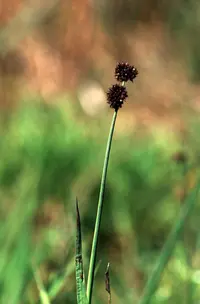
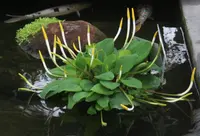
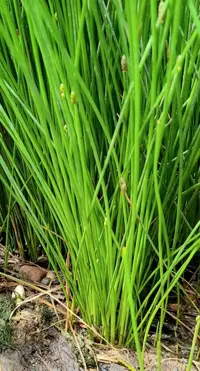
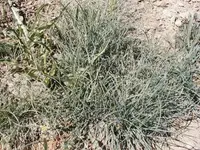
Sword-leaved rush (Juncus ensifolius) is a small, clumping wetland perennial with narrow, upright, grass-like leaves and compact clusters of dark brown flower heads. It forms tidy tufts that suit pond edges, water gardens, and consistently moist borders.
This species is native to wet meadows, stream margins, and marshy ground across parts of North America and northeastern Asia. It prefers full sun to light shade, constant moisture, and organic, boggy or heavy soils.
Its tolerance of wet, poorly drained conditions makes it useful where many ornamentals fail, though it can struggle in dry or very hot exposed sites. Gardeners who understand how to care for sword-leaved rush usually find it reliable and low-maintenance once established.

Care Difficulty
Moderate Care

Light Preference
Full Sun

Water Requirements
Aquatic

Temperature Preference
Cold Hardy

Hardiness Zone
4–9

Soil Texture
Loamy, Silty, Organic-rich

Soil pH
Acidic (5.5–6.5), Slightly acidic (6.5–7.0)

Soil Drainage
Waterlogged tolerant

Fertilization
Minimal (feed rarely)
Scan your plant to receive care tips personalized for your specific plant
Available on iOS and Android
This wetland rush prefers abundant light but tolerates some shade, especially in hotter climates.
This species naturally grows in saturated soils, so water access should be consistent and abundant.
This rush is cold-hardy yet grows best in cool to mild conditions with steady soil moisture.
This wetland rush prefers very moist air but adapts to typical indoor humidity if its roots stay saturated.
This species prefers saturated, oxygen-poor substrates that mimic stream edges or bogs rather than standard potting soil.
This rush grows reliably in containers when they are set up to maintain constant saturation or shallow standing water.
This wetland perennial needs only light feeding when grown in containers or nutrient-poor sites.
Pruning Juncus ensifolius is mainly cosmetic and helps maintain a tidy, dense clump.
This rush is more often transplanted in the landscape or pond edge than repotted indoors.
Propagation of Juncus ensifolius is straightforward using division or seeds in moist conditions.
This rush is generally cold hardy in much of its range and needs only modest winter attention outdoors.

Plant Health Check
Not sure what's wrong with your plant? Check your plant's health inside the app.
This species is strongly associated with cold montane and subalpine wetlands, often forming dense patches along mountain streams, seeps, and boggy meadows where few other graminoids tolerate the same combination of low temperatures and saturated soils.
It behaves as a short-lived perennial that rapidly colonizes disturbed wet soils such as edges of newly exposed streambanks or soil scarified by hoof action, helping stabilize substrate until longer-lived wetland species establish.
In parts of western North America, it is used as a regional indicator of seasonally to perennially saturated soils and relatively cool, clean water, so its presence can help ecologists characterize and map sensitive wetland habitats.
Brown leaf tips or whole brown stems usually result from underwatering, hard water salts, or excessive heat and wind. Keep the root zone consistently moist, reduce hot dry exposure, and remove dead stems at the base.
Keep your plants happy and healthy with plant identification, disease detection, and easy care guidance.