Hard Rush Care (Juncus inflexus)

Also known as: European meadow rush
Hard Rush

About Hard Rush

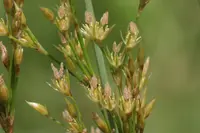
Hard rush, Juncus inflexus, is a clump-forming perennial rush with stiff, upright, bluish-green cylindrical stems. It has a strongly vertical, architectural look and no showy leaves. Small, brownish flower clusters appear along the stems in summer, adding subtle detail rather than bold color.

This species is native to damp habitats across Europe and parts of western Asia and has naturalized in other temperate regions. It thrives in consistently moist to wet soils, often near ponds, ditches, and rain gardens.

The plant is generally robust and low maintenance when moisture needs are met, but it struggles in dry conditions or very compacted, nutrient-poor soil. Understanding how to care for Hard Rush mainly means providing reliable water and avoiding prolonged drought.

Main Plant Requirements

Care Difficulty

Moderate Care

Light Preference

Full Sun

Water Requirements

Aquatic

Temperature Preference

Cold Hardy

Hardiness Zone

4–9

Soil Texture

Loamy, Clay, Silty

Soil pH

Acidic (5.5–6.5), Slightly acidic (6.5–7.0)

Soil Drainage

Waterlogged tolerant

Fertilization

Minimal (feed rarely)

Get Personalized Care Plan

Scan your plant to receive care tips personalized for your specific plant

Available on iOS and Android

How to Care for the Hard Rush

This wetland rush prefers bright exposure but adapts to a range of outdoor light conditions.

  • Provide 4–8 hours of sun daily, with best growth in full sun to light afternoon shade, especially in hotter regions.
  • Allow some partial shade in summer; morning sun with dappled light after midday reduces leaf tip scorch on Hard Rush in very hot, dry sites.
  • Watch for pale, weak stems in deep shade (too little light) and bleached or crispy tips in intense, all‑day sun (too much light).

This species thrives in consistently moist to waterlogged conditions and dislikes drying out.

  • Maintain soil that is always moist; in garden beds, the top 0–1 cm should not dry out, and near-pond plantings can stand in shallow water.
  • Increase watering during hot, windy periods so the root zone never dries; reduce only slightly in cool seasons, keeping soil damp rather than saturated if growth slows.
  • Monitor for underwatering when stems brown and collapse from the tips, and for poor drainage when water smells sour or roots appear black and mushy on Juncus inflexus.

This hardy rush tolerates a broad temperature range but grows best in cool to mild conditions.

  • Aim for active growth in 60–75°F (16–24°C), where stems stay firm, upright, and evenly colored through the growing season.
  • Tolerates winter lows down to about 0°F (−18°C) once established, with foliage often dying back but rhizomes surviving and resprouting in spring.
  • Handles summer heat up to about 90–95°F (32–35°C) if soil remains saturated; heat plus drying winds can cause browning tips and thinner new shoots.

This rush prefers consistently moist air but adapts to typical household levels if watered well.

  • Aim for 50–70% humidity, especially in warm rooms or near heaters.
  • Dry air can brown and curl stem tips; plants may thin out and look sparse.
  • Increase humidity by grouping pots, placing trays of wet pebbles nearby, or situating Hard Rush close to a bathroom or kitchen sink.

This wetland species needs dense, moisture-retentive soil that stays saturated without turning anaerobic for long periods.

  • Use a heavy loam rich in organic matter, such as garden loam mixed with compost and a small amount of coarse sand.
  • Soil should hold water like a bog yet still contain some air spaces; avoid mixes that are very peaty and collapse when wet.
  • Target slightly acidic to neutral pH around 6.0–7.0 for best nutrient availability and root health.
  • In containers, reduce any added perlite and instead rely on loam and compost to maintain constant moisture without rapid drying.

This species is well suited to containers, especially for water gardens and permanently wet pots outdoors.

  • Choose a deep, heavy pot to counterbalance the tall, upright foliage and prevent tipping in wind.
  • Use a container without extra side drainage slits so water can pool and keep the root zone consistently saturated.
  • Place the pot inside a decorative cachepot or standing water tray to maintain a shallow water reservoir around the root ball.

Juncus inflexus grows well in modestly fertile, consistently moist soil and needs only light supplemental feeding.

  • Use a balanced, slow-release fertilizer or dilute liquid feed at 1/2 strength for container or poor-soil plants.
  • Apply once every 4–6 weeks during spring–summer while growth is active.
  • Avoid heavy feeding; excess nutrients reduce the natural compact form of Hard Rush.
  • Stop fertilizing in fall–winter to allow dormancy and prevent weak, soft growth.

Pruning helps maintain Juncus inflexus as a tidy clump and supports healthy new growth.

  • Best time is late winter or early spring before strong new shoots emerge.
  • Cut out dead, brown, or damaged stems at the base using clean, sharp shears.
  • Thin crowded or crossing stems to improve air flow and keep a neat, upright clump.
  • Light shaping after flowering can remove spent flower stalks without stressing the plant.

This rush is more often transplanted in garden or pond settings than repotted indoors.

  • Transplant in early spring or early fall when temperatures are mild and soil is moist.
  • Look for roots circling a container, poor drainage, or slowed growth as signs it needs more space.
  • Divide and replant clumps every 3–4 years, spacing divisions to match mature spread.
  • Water deeply before and after moving, and keep soil evenly moist to reduce root stress.

Juncus inflexus is most reliably propagated by division, with seeds used mainly for larger-scale production.

  • Divide mature clumps in early spring or early fall, when conditions are cool and moist.
  • Lift the clump, cut it into sections with roots and shoots, then replant at original depth.
  • Keep divisions in consistently moist, well-drained soil with partial to full sun until re-established.
  • Sow fresh seed in trays of damp substrate, maintaining cool conditions and constant moisture for germination.

This species is generally cold hardy in temperate climates and usually needs minimal winter care outdoors.

  • Tolerates typical frosts; roots survive even if top growth browns and dies back.
  • Apply a 5–8 cm mulch around the base in colder zones to buffer freeze–thaw cycles.
  • For container plants in very cold regions, move pots to a sheltered, frost-free but cool area.
  • Reduce watering in winter, keeping soil just moist so roots do not dry out completely.

Care Tips

Container water management

If grown in a pot or pond basket, stand the container in a tray or outer pot with 2–5 cm of water during the growing season, then let it dry down to just moist for a few weeks in late autumn to reduce rot risk over winter.

Clump renovation

Every 3–4 years, lift and divide congested clumps in early spring, discarding woody centers and replanting only the young, firm outer sections to keep growth dense and upright.

Edge containment

In garden beds or around ponds, install a 20–30 cm deep root barrier or plant into a buried, bottomless container to prevent the rhizomes from spreading into liners, pumps, or nearby plantings.

Winter crown protection

In colder regions, leave most of the old foliage standing over winter and mulch lightly around the crown with straw or shredded bark to buffer freeze–thaw cycles, then cut back dead stems in early spring.

Algae and debris control

In pond and water-feature plantings, periodically trim submerged, decaying foliage and remove trapped leaves around the base to improve water circulation and reduce algae buildup while growing Hard Rush.

Common Pests and Diseases

Rust fungus

This disease causes yellow to orange-brown spotting or pustules on older leaves and stems, often in dense or poorly ventilated clumps. Symptoms include premature browning and dieback of affected foliage, especially in warm, humid weather.

Solution

Remove and discard heavily spotted or rusted leaves to reduce spore load, and thin or divide dense clumps to improve air movement. Avoid overhead watering, keep foliage as dry as possible, and, for severe or recurring cases, apply a labeled rust-control fungicide to the entire clump and surrounding soil surface according to product directions.

Leaf spot

This disease produces small brown, gray, or purplish spots on the rush stems and leaf-like culms, sometimes merging into larger lesions that weaken the plant. Symptoms include thinning of the clump and gradual decline under prolonged wet conditions.

Solution

Cut out and dispose of the worst affected stems, and clear away old plant debris from around the base to remove sources of infection. Reduce prolonged leaf wetness by adjusting irrigation, and if the problem persists, use a broad-spectrum fungicide labeled for ornamental grasses and rushes, applied at the first sign of new spotting.

Aphids

These insects cluster on young shoots and stem bases, sucking sap and causing pale, distorted growth and sticky honeydew on nearby foliage. This pest may encourage sooty mold growth on the honeydew, making stems appear dirty or blackened.

Solution

Spray colonies off with a strong stream of water, focusing on stem bases and tender new growth, and repeat every few days as needed. For heavier infestations, treat with insecticidal soap or a light horticultural oil, making sure to coat all sides of the stems while avoiding application in hot direct sun above about 85°F.

Rush sawfly larvae

These insects feed on the cylindrical stems, creating irregular notches or stripped sections that give the clump a ragged appearance. This pest is more frequent in naturalistic, moist plantings or near water features where rushes are mass-planted.

Solution

Inspect plants regularly in late spring and early summer, and hand-pick or shake larvae into a container of soapy water when numbers are low. If damage becomes extensive, use a targeted insecticide labeled for sawfly control and apply in the evening when beneficial insects are less active, focusing on the outer stems where larvae feed.

Interesting Facts

Spiral stem architecture

The stems have a distinctive, tightly twisted spiral structure when dried, which reflects the way the pith and outer tissues develop under tension as they elongate in saturated soils.

Preference for calcareous wetlands

This species shows a marked preference for base-rich, often calcareous clays and muds, so it is frequently used as an indicator of lime-influenced wetlands and ditches in field botany surveys.

Important in phytoremediation

Its dense root and rhizome system can tolerate nutrient-enriched, mildly polluted water and is used in constructed wetlands to help trap sediments and bind excess nutrients such as nitrogen and phosphorus, a useful aspect of Juncus inflexus plant care in water treatment settings.

Botan icon

Did you know?

In several European countries, this species is formally listed in habitat classification systems as a character species for specific wet grassland and ditch communities, meaning its reliable presence helps define and map entire vegetation types in conservation and land-use planning.

FAQs about Hard Rush

Browning usually results from dry soil, prolonged heat with low humidity, or salt and fertilizer buildup. Check moisture around the root zone, flush excess salts with water, and trim dead foliage to encourage fresh, healthy shoots.

Grow Healthy Plants with Botan Care

Keep your plants happy and healthy with plant identification, disease detection, and easy care guidance.

Botan plant care app — identify plants on mobile

Explore More Plants