sheep laurel Care (Kalmia angustifolia)

Also known as: Lambskill
sheep laurel

About sheep laurel

Sheep laurel, Kalmia angustifolia, is a compact, evergreen shrub in the heath family. It usually forms low, dense mounds with narrow, leathery leaves.

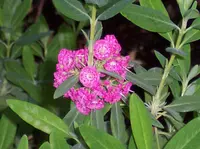
In late spring to early summer it carries clusters of small, deep pink to reddish flowers beneath the foliage, giving a distinctive band of color around each stem. It is native to cool, acidic wetlands and open woods in eastern North America.

This shrub is adapted to poor, acidic, often sandy or peaty soils and can tolerate cold climates, but dislikes drought and alkaline conditions. Understanding how to care for sheep laurel starts with providing acidic, moist, but well-drained soil and consistent light conditions.

Main Plant Requirements

Care Difficulty

Moderate Care

Light Preference

Partial Shade

Water Requirements

Regular Water

Temperature Preference

Cold Hardy

Hardiness Zone

2–6

Soil Texture

Sandy, Loamy, Peaty

Soil pH

Strongly acidic (4.5–5.5), Acidic (5.5–6.5)

Soil Drainage

Moist but well-drained

Fertilization

Minimal (feed rarely)

Get Personalized Care Plan

Scan your plant to receive care tips personalized for your specific plant

Available on iOS and Android

How to Care for the sheep laurel

This shrub prefers cool, bright conditions that balance sun exposure with protection from harsh midday rays.

  • Provide 4–6 hours of direct morning sun with light shade or filtered light from early afternoon onward, especially in warmer climates.
  • Tolerates partial shade (2–4 hours of direct sun) but flowering in sheep laurel decreases if light is too low, leading to sparse blooms and lanky growth.
  • In hot summers, protect from strong sun between 11 a.m. and 3 p.m. to prevent leaf scorch; in cooler northern sites it can handle more open exposure.

Moist, acidic, well-drained soil is essential for healthy root function and foliage quality.

  • Water when the top 3–5 cm of soil feels dry, aiming for consistently damp but never waterlogged soil, especially during the first 1–2 growing seasons.
  • Improve drainage with organic matter so water drains within a few hours; wilting with dry soil indicates underwatering, while yellowing leaves with soft stems suggest overwatering.
  • In spring and summer, monitor after hot, dry spells; in fall reduce watering as growth slows, and in winter water only during extended thaw periods if soil becomes very dry.

This cold-hardy shrub prefers cool climates with moderate summer temperatures.

  • Best growth occurs at 55–75°F (13–24°C), with cool nights that help maintain compact form and good bud set for the next season.
  • Hardy to about -30°F (-34°C) once established; flower buds may be damaged if sudden late frosts follow early warm spells in spring.
  • Tolerates brief heat up to 85–90°F (29–32°C) if soil stays moist and roots are mulched; prolonged heat and drought can cause leaf scorch and reduced flowering the following year.

This shrub prefers moderately moist air but usually adapts to typical outdoor humidity.

  • Aim for 40–60% humidity; brief dips lower are tolerated if soil moisture is steady.
  • Leaves curling, browning at edges, or tip dieback can signal humidity stress combined with drought.
  • In exposed, windy sites, cluster shrubs, use windbreaks, or add low underplanting to slightly raise humidity around sheep laurel.

This species needs acidic, well‑drained yet moisture‑retentive soil to thrive.

  • Use a loose, sandy or loamy mix rich in organic matter, such as composted bark or leaf mold, to mimic woodland soils.
  • Maintain an acidic pH around 4.5–5.5; avoid adding lime or alkaline amendments that can cause nutrient lockout and chlorosis.
  • Ensure fast drainage by incorporating coarse sand or pine bark fines so water drains freely but the root zone does not dry out instantly.
  • Avoid heavy clay, compacted sites, or mixes dominated by peat alone, which either waterlog roots or dry into a hard, airless mass.

This species can be grown in containers outdoors with careful moisture and stability management.

  • Choose a squat, wide container rather than a tall one to stabilize the branching shrub and reduce wind rock of the root ball.
  • Select a thick-walled, non‑metal pot (such as clay or heavy plastic) to buffer rapid swings in root‑zone temperature and moisture loss.
  • Elevate the pot slightly on blocks or feet so drainage holes stay clear and runoff moves away quickly after heavy rain.

Kalmia angustifolia is a low-feeding shrub, but light fertilization can support growth in poor soils.

  • Use a mild, acid-forming, slow-release fertilizer or thin layer of compost in early spring when new growth begins.
  • Apply a balanced NPK product at 1/2 strength, keeping granules off stems and foliage to avoid burn.
  • Feed once in spring and, if growth is weak, once in early summer; avoid midsummer–fall applications.
  • Do not fertilize sheep laurel in winter; allow the plant to rest during its dormant period.

Pruning Kalmia angustifolia is mainly done to maintain shape and remove unhealthy wood after flowering.

  • Prune in late spring or early summer right after blooms fade, so next year’s flower buds are not removed.
  • Cut out dead, diseased, or storm-damaged branches using clean, sharp hand pruners.
  • Thin a few crowded interior stems to improve light penetration and air flow in the canopy.
  • Light tip-pruning of overly long shoots maintains a compact, balanced shape without heavy cuts.

Sheep laurel is usually grown in the ground, so focus on careful transplanting rather than frequent repotting.

  • Transplant in early spring or early fall when temperatures are mild and soil is evenly moist.
  • Move plants only every several years, mainly when growth is poor or the site is too sunny, dry, or alkaline.
  • Dig a wide root ball, disturbing roots as little as possible to limit transplant shock.
  • Replant at the same depth, water deeply, then mulch 5–7 cm to keep roots cool and evenly moist.

Kalmia angustifolia can be propagated, but it roots and germinates more slowly than many shrubs.

  • Take semi-ripe cuttings in mid to late summer and root them in a moist, well-drained, acidic mix under high humidity.
  • Use a rooting hormone on cut bases and provide bright, indirect light and stable warmth around 68–72°F.
  • Layer low, flexible stems by pegging them into lightly wounded sections of stem buried in acidic soil.
  • Sow fresh seed in autumn, barely covered, and allow a natural cold period to improve germination.

Sheep laurel is cold hardy in much of its native range and usually needs only minimal winter care outdoors.

  • In cold climates, apply a 5–8 cm layer of mulch over the root zone after the ground cools but before deep freezes.
  • Keep mulch slightly away from the main stems to reduce risk of rot and rodent damage.
  • For container plants, move pots into a sheltered, unheated but frost-free space or heel them into the ground.

Care Tips

Site pH monitoring

Test soil pH every 1–2 years and keep it in the 4.5–5.5 range using elemental sulfur or acid-forming fertilizers, since this species quickly declines in neutral or alkaline soils.

Root zone mulching

Maintain a 5–8 cm layer of pine needles or shredded bark over the root zone, keeping it a few cm away from stems, to mimic its natural forest floor conditions and protect its fine, shallow roots.

Avoid root disturbance

Plan the planting area carefully and avoid digging, edging, or planting other shrubs within about 30–45 cm of the base, because disturbed roots recover slowly and overall vigor can drop for several seasons.

Light shade pairing

Plant alongside slightly taller, light-canopy shrubs or open-branch trees to provide dappled light and moderate wind protection, which closely matches its native heath and woodland edge habitat.

Disease-splash management

Space plants to allow air movement and water at soil level rather than overhead so foliage dries quickly, reducing leaf spot and blight risk when growing sheep laurel in humid climates.

Common Pests and Diseases

Leaf spot fungi

This disease causes small brown, purple, or tan spots on leaves that may merge into larger blotches and lead to premature leaf drop. Symptoms include more severe damage on older, shaded, or poorly ventilated foliage.

Solution

Prune out and discard heavily spotted leaves and thin dense branches to improve air circulation and faster drying after rain. Avoid overhead watering, keep mulch a few cm away from stems, and if leaf spots worsen each year, use a labeled ornamental shrub fungicide in early spring as new growth emerges, following sheep laurel care instructions on the product label where given.

Phytophthora dieback

This disease leads to wilting, leaf yellowing, and dieback of shoots, often starting on one side of the plant, especially in poorly drained or waterlogged soil. Symptoms include dark, discolored roots and lower stems that may feel soft or decayed.

Solution

Improve drainage immediately by redirecting water, raising the planting area, or amending soil so it drains freely. Remove and discard severely affected plants, avoid replanting Kalmia species in the same saturated spot, and treat remaining nearby plants with a labeled phosphonate (phosphorous acid) product according to instructions for ericaceous shrubs.

Piercing-sucking scale

These insects attach to stems and sometimes leaves, appearing as small, flat or dome-shaped bumps that do not move, and can cause yellowing, leaf drop, and stunted growth. This pest often produces sticky honeydew that can lead to sooty black mold on foliage.

Solution

Cut out and discard heavily infested twigs, and gently scrub remaining scales from stems with a soft brush dipped in mild soapy water, then rinse. For persistent infestations, apply a labeled horticultural oil during the dormant or cool season to smother scales, ensuring thorough coverage of stems and branch crotches.

Lace bug

These insects feed on the underside of leaves, causing fine pale stippling that can make foliage look grayish or bleached from above. This pest may leave dark tar-like spots of excrement on leaf undersides.

Solution

Rinse leaf undersides with a strong but controlled stream of water to dislodge nymphs and adults, focusing on the inner canopy. Encourage natural predators by avoiding broad-spectrum insecticides, and if damage is heavy, use insecticidal soap or horticultural oil directed to the lower leaf surfaces in cool, calm weather.

Leaf gall

This disease causes some young leaves and flower parts to swell, thicken, and turn pale green, pink, or whitish, forming distorted galls that later become white with fungal growth. Symptoms include scattered, swollen leaves mainly on new spring flushes.

Solution

Hand-pick and destroy galled leaves and shoots as soon as they are noticed, before they turn white and release spores. Rake and discard fallen infected material and keep the shrub well spaced and pruned for good airflow; fungicide is rarely needed if infected parts are removed promptly each spring.

Interesting Facts

Toxic browse deterrent

All parts of sheep laurel contain grayanotoxins, which make the shrub highly toxic to livestock and wildlife and help protect it from heavy browsing in nutrient-poor habitats.

Fire-adapted shrublands

This species often dominates acidic, sandy, or boggy sites that experience periodic fire; it can resprout from its woody root system and quickly reoccupy burned areas, forming dense thickets.

Specialized pollination mechanics

Its flowers have stamens held under tension in small pockets; visiting insects trigger these, causing the stamens to spring forward and dust the insect with pollen, improving pollination efficiency.

Botan icon

Did you know?

Sheep laurel often forms nearly pure carpets in nutrient-poor, acidic soils across northeastern North America, where its dense, clonal growth can suppress tree seedling establishment and strongly shape forest regeneration patterns.

FAQs about sheep laurel

Poor flowering often comes from too much shade, pruning at the wrong time, or nutrient imbalance. Heavy pruning after bud formation removes next season’s flowers. Soil that is too alkaline or very dry in spring also reduces bloom.

Grow Healthy Plants with Botan Care

Keep your plants happy and healthy with plant identification, disease detection, and easy care guidance.


Botan plant care app — identify plants on mobile

Explore More Plants