Double-Flowering Japanese Kerria Care (Kerria japonica 'Pleniflora')

Also known as: Japanese Rose, Easter Rose, Yellow Rose of Texas

About Double-Flowering Japanese Kerria

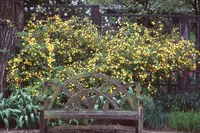
Kerria japonica 'Pleniflora', often called double-flowering Japanese kerria, is a deciduous shrub grown mainly for its bright yellow pompon-like spring blooms. It forms a loose, arching shape with slender green stems that stay attractive even after the leaves fall.

This cultivar comes from woodlands and thickets in East Asia, especially Japan and China, and adapts well to many garden conditions. It is generally easy to grow, as it tolerates partial shade, uneven moisture, and different soil types, though it prefers well-drained soil.

Gardeners who want to know how to care for Double-Flowering Japanese Kerria usually value it as a low-maintenance choice for borders, woodland edges, and informal hedges.

Main Plant Requirements

Care Difficulty

Easy Care

Light Preference

Partial Shade

Water Requirements

Moderate Water

Temperature Preference

Cold Hardy

Hardiness Zone

4–9

Soil Texture

Loamy, Sandy, Clay

Soil pH

Acidic (5.5–6.5), Slightly acidic (6.5–7.0)

Soil Drainage

Moist but well-drained

Fertilization

Minimal (feed rarely)

Get Personalized Care Plan

Scan your plant to receive care tips personalized for your specific plant

Available on iOS and Android

How to Care for the Double-Flowering Japanese Kerria

This shrub prefers bright, gentle light to produce dense blooms and healthy foliage.

  • Provide 3–6 hours of sun daily, ideally morning sun with afternoon shade, which suits Double-Flowering Japanese Kerria in most US climates.
  • Plant in dappled or filtered light under open trees if full morning sun is not available; dense deep shade reduces flowering and creates leggy, weak stems.
  • Avoid harsh all-day sun, especially hot western exposure, which can scorch leaves and dry the soil quickly; add mulch and light shade in summer if leaves pale or crisp at the edges.

This plant prefers evenly moist but not saturated soil, especially during active growth and flowering.

  • Water when the top 3–5 cm of soil feels dry, soaking the root zone thoroughly, then allow excess water to drain away to prevent root problems.
  • In spring and early summer, monitor more closely during new growth and flowering; in mid to late summer, water deeply during dry spells rather than giving shallow, frequent sips.
  • Reduce watering in late fall and winter once Kerria japonica 'Pleniflora' is dormant, but do not let the soil stay bone dry for long periods; wilted, drooping stems signal underwatering, while yellowing leaves in soggy soil indicate overwatering.

This hardy shrub tolerates a wide temperature range but performs best in moderate conditions.

  • Optimal growth occurs around 60–75°F (16–24°C) during spring and early summer, when new shoots and flower buds develop most actively.
  • Established plants tolerate winter lows near 0°F (-18°C) in many regions when planted in the ground and mulched; young plants benefit from extra mulch and wind protection.
  • In hot summers with temperatures above 90°F (32°C), provide afternoon shade and consistent soil moisture to reduce heat stress, leaf scorch, and premature leaf drop.

Humidity is rarely a concern for Kerria japonica 'Pleniflora' in typical outdoor conditions.

Kerria japonica 'Pleniflora' prefers moist, well-drained, loamy soil with moderate organic content.

  • Aim for a loam or sandy loam enriched with compost to support steady moisture without becoming heavy.
  • Ensure drainage is reliable; water should infiltrate quickly and not pool or leave the soil sticky for long periods.
  • Target a slightly acidic to neutral pH around 6.0–7.0 for optimum root function and nutrient uptake.
  • Improve dense or clay-heavy ground by incorporating coarse sand or fine bark to boost aeration and reduce waterlogging risk.

This shrub can be grown in containers if the pot is large and stable enough for its spreading root system.

  • Choose a wide, heavy container to counterbalance arching stems and prevent the pot from tipping in wind.
  • Use a deep potting volume so roots can spread laterally and downward, which supports vigorous cane production.
  • Select a pot material that moderates moisture, such as thick-walled clay or composite, to avoid rapid drying in summer heat.

This shrub grows well in average soil and needs only modest feeding to support flowering.

  • In spring, apply a light layer of garden compost or well-rotted manure around the root zone of Double-Flowering Japanese Kerria.
  • Use a balanced slow-release fertilizer (around 10-10-10) at half label rate in early spring if growth is weak or soil is poor.
  • Avoid high-nitrogen products, which encourage lanky stems and fewer blooms; maintain even soil moisture after feeding.
  • Do not fertilize in late fall or winter, when the plant is dormant and not actively using nutrients.

Kerria japonica 'Pleniflora' responds well to thoughtful pruning that maintains shape and flowering.

  • Prune just after the main spring bloom so flower buds for next year are not removed.
  • Cut out dead, damaged, or crossing stems at the base using clean, sharp bypass pruners.
  • Every 2–3 years, remove a portion of the oldest canes to encourage strong new shoots and abundant flowers.
  • Shorten overly long or arching stems to maintain a balanced outline and prevent the shrub from becoming too dense.

This shrub is usually grown in the ground, so care focuses on thoughtful transplanting rather than frequent repotting.

  • Transplant in early spring or early fall, when temperatures are mild and the plant is not under heat stress.
  • Look for signs such as slow growth, poor flowering, or the shrub outgrowing its space before moving it.
  • Dig a wide root ball, disturb roots as little as possible, and replant at the same soil depth in well-drained ground.
  • Water thoroughly after transplanting, then keep soil evenly moist and apply mulch to reduce root stress and conserve moisture.

Kerria japonica 'Pleniflora' is commonly propagated vegetatively to maintain its double flowers.

  • Take softwood or semi-ripe cuttings in late spring to midsummer, using 8–10 cm pieces with several leaf nodes.
  • Insert cuttings into a moist, well-draining mix, keep humidity high, and provide bright, indirect light for rooting.
  • Use division or separation of rooted suckers in early spring, replanting offsets promptly into prepared soil.
  • Simple layering of low, flexible stems in spring or early summer also works well; sever and transplant once roots form.

This shrub is generally cold hardy in much of the US and needs only minimal winter care in the ground.

  • Tolerates typical winter frosts in its hardiness range, though very exposed sites may cause tip dieback.
  • Apply 5–8 cm of organic mulch around the root zone in late fall, keeping it slightly away from the stems.
  • For container plants, move pots to a sheltered, unheated but frost-sheltered spot, and water sparingly to keep the root ball from drying out completely.

Care Tips

Renewal cane management

Every 2–3 years remove several of the oldest, thickest stems at ground level right after flowering to encourage strong new canes that flower more heavily and keep the shrub from becoming congested and bare at the base.

Suckers for propagation

When new shoots (suckers) appear a short distance from the main clump, lift them with a spade in early spring or fall, keeping as much root as possible, and replant immediately to expand your planting or fill gaps in a hedge.

Support in windy sites

In exposed gardens, install low, discreet shrub rings or a few well-placed bamboo canes and soft ties to prevent arching canes from flopping or snapping in strong winds while still allowing their natural fountain shape.

Understory companion planting

Plant shallow-rooted groundcovers or spring bulbs beneath the shrub to shade the soil surface, reduce weed pressure, and highlight the yellow blooms without competing heavily for water or nutrients.

Winter stem enhancement

To enjoy the green winter stems more, clear away dense plants immediately around the base in late fall and use a plain mulch backdrop so the colored canes remain visible and easier to inspect when caring for Double-Flowering Japanese Kerria.

Common Pests and Diseases

Blister blight

This disease causes pale, blister-like swellings and puckering on young leaves and shoots, often leading to distorted growth and reduced vigor.

Solution

Prune and dispose of affected shoots as soon as symptoms appear, then thin dense growth to improve air circulation around the plant. Avoid overhead watering, keep foliage as dry as possible, and if the problem is recurring in humid springs, apply a registered ornamental shrub fungicide labeled for leaf blights according to the product directions.

Cane blight

This disease leads to sunken, dark lesions on stems, followed by dieback of individual canes from the tip downward, especially after winter or mechanical damage.

Solution

Cut out and remove affected canes down to healthy green tissue, sterilizing pruning tools between cuts with alcohol or a 10% bleach solution. Maintain plant health with proper watering and mulch, avoid wounding stems, and consider a preventive fungicide spray on remaining canes in early spring if previous infections were severe.

Leaf spot

This disease produces small brown to purple spots on leaves that may merge into larger blotches, sometimes causing premature leaf drop and a sparse appearance.

Solution

Rake and discard fallen leaves, then prune to open the shrub and improve airflow, which helps foliage dry faster after rain. In gardens with annual recurrence, apply a labeled ornamental fungicide at bud break and repeat as directed during wet periods, and avoid wetting the foliage when watering.

Scale insects

These insects attach to stems and leaf veins as small, rounded or oval bumps, sucking sap and causing yellowing, reduced flowering, and general decline over time.

Solution

Inspect canes closely and scrape off light infestations by hand or with a soft brush, then prune out heavily infested stems and discard them. For persistent populations, apply horticultural oil during the dormant season to smother overwintering stages, and repeat with a lighter oil spray during the growing season if needed, making sure to coat stems thoroughly.

Aphids

These insects cluster on soft shoot tips and flower stalks, feeding on sap and causing curling leaves, distorted new growth, and sticky honeydew that can attract sooty mold on the bright green stems of this shrub.

Solution

Dislodge colonies by spraying shoots with a firm stream of water, then pinch back heavily infested tips if needed. For ongoing issues when growing Double-Flowering Japanese Kerria in mixed borders, use insecticidal soap or a horticultural oil spray, applied in the early morning or evening and repeated as directed until populations are reduced.

Interesting Facts

Ancient Japanese cultivar

This double-flowered form originated in Japan and has been cultivated there since at least the Edo period, likely selected from wild Kerria japonica for its highly doubled, pompon-like blooms.

Sterile, long-blooming flowers

The fully double flowers are usually sterile and set little to no seed, which shifts the plant’s energy toward producing many blooms over an extended spring flowering period and occasional later rebloom.

Green photosynthetic stems

Its bright green stems contain chlorophyll and can carry out photosynthesis, which helps the shrub maintain some energy production even when leafless in winter in mild climates.

Botan icon

Did you know?

This shrub was introduced to Western horticulture in the 19th century and quickly became a Victorian garden favorite, leading to extensive use in European estate gardens and influencing early ornamental shrub design in both Europe and North America.

FAQs about Double-Flowering Japanese Kerria

This shrub spreads by suckering, forming clumps that gradually enlarge. It is not usually invasive in managed gardens, but it can wander. Edge the bed, remove unwanted shoots, and avoid planting directly into natural woodlands.

Grow Healthy Plants with Botan Care

Keep your plants happy and healthy with plant identification, disease detection, and easy care guidance.

Botan plant care app — identify plants on mobile

Explore More Plants