Divide aging clumps
Every 4–5 years, lift and divide congested crowns in early spring or just after flowering to maintain strong flowering performance and reduce the risk of crown rot in the center of old clumps.

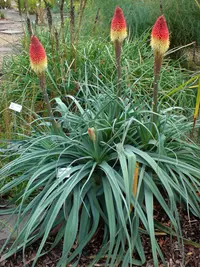
Lesotho redhot poker, Kniphofia caulescens, is a clump-forming perennial known for its upright, sword-like leaves and dramatic torch-shaped flower spikes in warm shades. It comes from high-altitude grasslands in Lesotho and nearby regions of South Africa, where conditions are cool, sunny, and often windy.
This species is valued in gardens for its strong vertical form, long flowering season, and good cold tolerance compared with many other Kniphofia. It is generally robust if given full sun, well-drained soil, and protection from waterlogged conditions. Once established, it copes well with short dry periods, which makes it relatively straightforward to care for Lesotho Redhot Poker in suitable climates.

Care Difficulty
Easy Care

Light Preference
Full Sun

Water Requirements
Moderate Water

Temperature Preference
Cool Climate

Hardiness Zone
5–9

Soil Texture
Sandy, Loamy, Rocky

Soil pH
Slightly acidic (6.5–7.0), Neutral (7.0)

Soil Drainage
Well-drained

Fertilization
Minimal (feed rarely)
Scan your plant to receive care tips personalized for your specific plant
Available on iOS and Android
This sun-loving perennial performs best in open, bright sites with minimal shade.
This species prefers evenly moist but free-draining soil, especially during active growth.
This hardy perennial tolerates a wide temperature range but flowers best in moderate conditions.
Humidity is rarely a concern for Kniphofia caulescens in typical outdoor conditions.
Kniphofia caulescens prefers sharply drained, mineral-rich soil that never stays waterlogged.
This species can be grown in containers if the potting setup prioritizes sharp drainage and stability for the tall flower stems.
Kniphofia caulescens is not a heavy feeder but responds well to modest, well-timed nutrition for stronger flowering.
Kniphofia caulescens benefits from simple, seasonal pruning to maintain neat clumps and encourage flowering.
This species is usually grown in the ground, so focus on careful transplanting rather than frequent repotting.
Kniphofia caulescens is most reliably propagated by division, with seed used mainly for breeding or larger batches.
This species is fairly cold hardy but benefits from simple winter care, especially in colder regions or containers.

Plant Health Check
Not sure what's wrong with your plant? Check your plant's health inside the app.
This species is naturally restricted to high-altitude basalt slopes and wet plateaus in Lesotho and adjacent parts of South Africa, where it forms dense stands in cold, open grassland rather than in lowland habitats.
Unlike many other redhot pokers, this taxon tolerates frequent frosts, snow cover, and strong mountain winds due to its compact rosette form and thick, glaucous (waxy blue-gray) leaves that reduce water loss and cold damage.
In the wild it often grows along stream margins and seeps where soils stay saturated, and its thick, fibrous root system is adapted to periodic waterlogging that would harm many other ornamental perennials.

This species is considered a Lesotho national plant symbol and was selected as the floral emblem of the Kingdom of Lesotho, reflecting its strong association with the country’s highland landscapes.
Lack of flowers usually comes from plants being too young, overcrowded, or stressed by poor drainage or excessive shade. Deadhead spent spikes, avoid heavy nitrogen fertiliser, and divide congested clumps every few years to restore flowering.
Keep your plants happy and healthy with plant identification, disease detection, and easy care guidance.