Western Amethyst Laccaria Care (Laccaria amethysteo-occidentalis)

Western Amethyst Laccaria

About Western Amethyst Laccaria

Western amethyst laccaria (Laccaria amethysteo-occidentalis) is a small, ectomycorrhizal mushroom that forms mutual partnerships with tree roots in forest ecosystems. It is not a houseplant but a woodland fungus important for soil health.

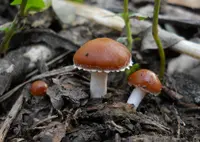
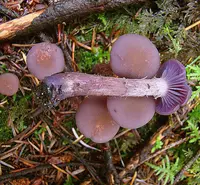
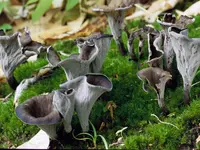
The fruiting bodies are slender, with lilac to purple caps and matching stems that often fade to tan as they age. It typically appears in groups on the forest floor among leaf litter or moss.

This species is found mainly in coniferous and mixed forests of western North America. It is considered a helpful indicator of healthy, undisturbed soil.

For those studying how to care for Western Amethyst Laccaria in managed landscapes, it requires suitable host trees, undisturbed soil, and consistent organic matter rather than conventional garden-style care.

Main Plant Requirements

Care Difficulty

Moderate Care

Light Preference

Partial Shade

Water Requirements

Regular Water

Temperature Preference

Cool Climate

Hardiness Zone

6–9

Soil Texture

Loamy, Silty, Organic-rich

Soil pH

Acidic (5.5–6.5)

Soil Drainage

Moist but well-drained

Fertilization

Minimal (feed rarely)

Get Personalized Care Plan

Scan your plant to receive care tips personalized for your specific plant

Available on iOS and Android

How to Care for the Western Amethyst Laccaria

This woodland mushroom species prefers cool, filtered light under trees rather than direct, open sun.

  • Aim for dappled light or light shade equivalent to 2–4 hours of soft morning sun filtered through canopy, avoiding direct midday exposure.
  • Western Amethyst Laccaria fruits best where taller vegetation or leaf litter protect it from harsh afternoon sun that dries out the forest floor.
  • In summer, choose north or east-facing woodland edges; in winter, slightly more open canopy is acceptable as the sun angle is lower and less intense.

This ectomycorrhizal mushroom relies on consistently moist, not waterlogged, forest soil to develop healthy mycelium and fruiting bodies.

  • Maintain soil that feels moist 2–5 cm down, never saturated; in dry spells, irrigate the surrounding leaf litter lightly when it becomes crisp and crumbly.
  • Ensure excellent drainage with loose, organic-rich soil; standing water, sour smell, or slimy surface indicate overwatering and risk of mycelial rot.
  • Sparse or aborted fruiting, very hard dry soil, and shrinking caps are signs the substrate is too dry; increase gentle, infrequent soakings rather than frequent light sprays.

This species is adapted to cool, temperate forests and fruits best in mild to cool conditions.

  • Optimal fruiting typically occurs around 50–65°F (10–18°C), often in autumn when days are cool and nights colder but soil moisture is high.
  • Mycelium usually tolerates down to about 32°F (0°C) in soil, but repeated hard frosts below 28°F (-2°C) can damage exposed pins and young mushrooms.
  • Sustained heat above 77–80°F (25–27°C) with dry conditions suppresses fruiting; provide shade, organic mulch, and moisture to buffer soil temperature swings.

Humidity is not a primary concern for this forest mushroom species in garden settings.

This ectomycorrhizal mushroom relies on suitable soil around its host trees rather than a conventional potting substrate.

  • Use a loose, well‑aerated, organic‑rich forest‑type soil with plenty of leaf litter and fine roots where Laccaria amethysteo-occidentalis naturally associates with trees.
  • Ensure the soil drains freely, mimicking woodland conditions; avoid compacted clay or spots where water stands for more than a few hours after rain.
  • Aim for slightly acidic to neutral pH, roughly 5.0–7.0, often found under conifers or mixed woodland in temperate regions.
  • Improve structure and aeration by incorporating well‑decomposed leaf mold and small wood chips, avoiding fresh bark, heavy manure, or high‑salt fertilizers.

This species is generally unsuitable for long‑term container growing because it depends on complex root and soil relationships in the ground.

This ectomycorrhizal fungus gains nutrients through its tree partners, so Western Amethyst Laccaria usually does not need direct fertilization.

Pruning is not applicable, as Laccaria amethysteo-occidentalis is a wild mushroom rather than a garden shrub or tree.

This species is not suited to conventional repotting because it depends on living tree roots in natural soil.

  • Avoid lifting or moving fruiting bodies; disturbing the soil can damage the underground mycelium network.
  • If grown in research or specialty setups, transplant only when mycelium has fully colonized a suitable substrate.
  • Time any necessary moves to cool, moist periods to limit stress and desiccation of the mycelium.
  • Maintain similar soil type, pH, and associated tree species to support continued mycorrhizal association.

Laccaria amethysteo-occidentalis care focuses on conserving its woodland habitat, as intentional propagation is technically complex and rarely attempted by home growers.

No special winter care is needed, since this woodland fungus persists as mycelium in the soil and is naturally cold hardy in its native range.

Care Tips

Habitat-style planting

Establish this fungus in semi-natural beds under conifers by mixing well-rotted conifer litter and a small amount of native forest soil from a healthy, legal source to introduce compatible mycorrhizal partners and microbes.

Promote host roots

Support the conifer host tree with correct watering and mulch depth so its fine feeder roots remain active near the soil surface, which increases chances of stable mycorrhizal association and reliable fruiting.

Minimal soil disturbance

Avoid deep digging, raking, or tilling in the fruiting area; only remove surface debris lightly so the underground mycelium network and delicate tree root tips are not damaged.

Targeted mushroom harvesting

Cut mushrooms at the base with a clean knife rather than pulling them up, leaving the underground mycelium intact and reducing compaction around the fruiting zone when caring for Western Amethyst Laccaria.

Seasonal moisture pacing

In dry late summer and early autumn, water the host tree root zone slowly over a longer period to moisten the top 5–10 cm of soil without waterlogging, which encourages more consistent flushes of fruiting bodies.

Common Pests and Diseases

Fungal mycoparasites

This disease involves other microscopic fungi colonizing the fruiting bodies, leading to faded color, deformed caps, or rapid collapse. Symptoms include a dull, patchy surface and loss of the typical purple tones.

Solution

Remove and discard affected mushrooms promptly to reduce spore spread, and avoid watering directly over fruiting bodies. Maintain good airflow around the substrate and avoid overly crowded cultures, which helps limit opportunistic fungi when trying to grow Laccaria amethysteo-occidentalis in controlled conditions.

Slugs and snails

These pests feed on the caps and stems, leaving irregular holes, slime trails, and sometimes consuming entire young mushrooms overnight. This pest is especially active in damp, shaded sites where the fungus fruits naturally.

Solution

Hand-pick slugs and snails in the evening or early morning and use physical barriers such as copper tape, collars, or coarse grit around the cultivation bed. Reduce dense ground cover and excess debris that provide hiding places, while keeping the soil evenly moist but not soggy to discourage heavy slug activity.

Fungus gnat larvae

This pest lives in moist organic substrates and may tunnel into developing mushroom tissue, causing distorted, water-soaked stems and caps that break down quickly. This pest is more common in indoor or greenhouse culture with consistently wet media.

Solution

Allow the top layer of the substrate to dry slightly between waterings and improve ventilation to make conditions less favorable for larval development. Use fine mesh over vents and openings to reduce adult entry and, if needed, apply a biological control such as Bacillus thuringiensis israelensis (BTI) to the substrate according to label directions.

Interesting Facts

Purple color fades

The fruiting bodies start a vivid violet color but often fade to pale lilac or almost tan as they age or dry, which can make older specimens hard to recognize in the field.

Western conifer associate

This species is strongly associated with conifer forests of western North America and forms ectomycorrhizal partnerships with trees such as Douglas-fir and various pines, exchanging mineral nutrients for plant-derived sugars.

Distinct from European relative

Although once grouped with the European Laccaria amethystina, molecular studies have shown that the western North American taxon is a separate species, now recognized as Laccaria amethysteo-occidentalis.

FAQs about Western Amethyst Laccaria

This species is generally regarded as edible but is not highly flavorful and can be confused with toxic purple mushrooms. Only experienced foragers should collect it, always confirming identification with multiple features and local expert or guide support.

Grow Healthy Plants with Botan Care

Keep your plants happy and healthy with plant identification, disease detection, and easy care guidance.

Botan plant care app — identify plants on mobile

Explore More Plants