Host tree selection
Establish the fungus only near compatible alder species (Alnus spp.), since this mushroom forms a mycorrhizal partnership with their roots and will not persist where suitable hosts are absent.

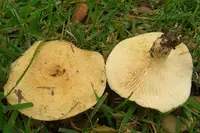
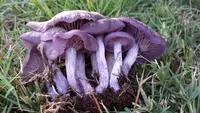
Golden milkcap, Lactarius alnicola, is a mycorrhizal mushroom that forms a symbiotic relationship with tree roots, especially conifers and alder. It is not a typical houseplant but a forest-dwelling fungus. The fruiting bodies are yellow to orange, with a convex to funnel-shaped cap and milky latex that exudes when the gills are damaged. This species usually appears in groups on the ground in montane and subalpine forests of North America. Because it depends on living host trees and complex soil fungi, it is considered difficult to cultivate intentionally. For anyone wishing to learn how to care for golden milkcap, the focus is usually on maintaining healthy forest-type conditions rather than growing it in containers.

Care Difficulty
Hard Care

Light Preference
Partial Shade

Water Requirements
Regular Water

Temperature Preference
Cool Climate

Hardiness Zone
Unknown

Soil Texture
Loamy, Sandy, Organic-rich

Soil pH
Acidic (5.5–6.5)

Soil Drainage
Moist but well-drained

Fertilization
Minimal (feed rarely)
Scan your plant to receive care tips personalized for your specific plant
Available on iOS and Android
This ectomycorrhizal fungus prefers light conditions similar to open conifer or alder woodland edges.
This mycorrhizal mushroom depends on steady soil moisture around its host tree roots rather than direct watering of the fungus itself.
This species fruits best in cool to mild conditions typical of montane and subalpine forests.
Humidity is not a significant factor for Lactarius alnicola, which grows naturally outdoors in variable conditions.
Lactarius alnicola relies on suitable soil around its host tree roots rather than a standalone substrate.
This species is not suitable for container growing, as it depends on forming mycorrhizal associations with tree roots that are difficult to sustain in pots.
Lactarius alnicola is a mycorrhizal fungus that generally does not need direct fertilization when associated with healthy host trees in suitable soil.
Pruning is not applied directly to Lactarius alnicola, but careful management of host trees can support stable fruiting conditions.
This species is not suited to traditional repotting; management focuses on transplanting young host trees already colonized by the fungus.
Propagation of Lactarius alnicola is specialized and usually managed indirectly through host tree inoculation rather than home methods.
Lactarius alnicola is naturally cold hardy within its native range and usually needs no special winter care when growing with hardy alder hosts.

Plant Health Check
Not sure what's wrong with your plant? Check your plant's health inside the app.
When the gills or flesh are damaged, this mushroom exudes a white latex that slowly stains yellow, a diagnostic feature used by mycologists to separate it from similar milkcap species.
It forms an ectomycorrhizal relationship, a nutrient-trading root symbiosis, primarily with alder (Alnus) species in montane conifer forests of western North America, making it strongly tied to sites where alder occurs.
Mature fruiting bodies often show a golden to orange-yellow cap with concentric zones and a paler margin, which, together with its latex and alder association, allows relatively confident field identification by experienced foragers and mycologists.

Molecular studies have placed this species within a distinct clade of North American milkcaps associated with alder, highlighting how host preference has played a major role in its evolutionary history and genetic separation from visually similar relatives that partner with different trees.
This mushroom is considered edible but quality is often rated as mediocre, with a strong taste and abundant latex. Identification must be certain, since many Lactarius species look similar and some can cause gastrointestinal upset if misidentified or undercooked.
Keep your plants happy and healthy with plant identification, disease detection, and easy care guidance.