Host tree selection
Establish this ectomycorrhizal fungus only near suitable host trees such as oak or chestnut, and avoid conifers or isolated lawns, since the mushroom depends on living root partnerships for fruiting.

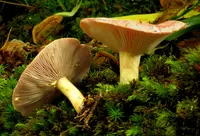
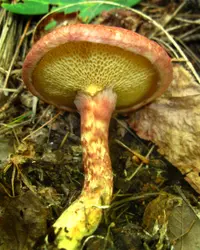
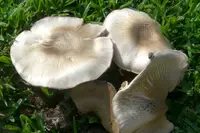
Yellowdrop milkcap (Lactarius chrysorrheus) is a small woodland mushroom, not a leafy houseplant. It is known for its pale cap and the distinctive yellow-staining milky fluid it releases when cut or damaged. Caps often show pinkish or buff tones with concentric zones, while gills are crowded and also exude yellowing latex. This species typically grows in mixed or coniferous forests, often forming mycorrhizal partnerships with oaks, meaning it relies on tree roots rather than pot culture. Because of this close ecological relationship, it is not practical to cultivate at home or in containers, and attempts to care for Yellowdrop Milkcap like a typical garden plant are usually unsuccessful.

Care Difficulty
Hard Care

Light Preference
Partial Shade

Water Requirements
Regular Water

Temperature Preference
Cool Climate

Hardiness Zone
Unknown

Soil Texture
Loamy, Sandy, Organic-rich

Soil pH
Acidic (5.5–6.5)

Soil Drainage
Moist but well-drained

Fertilization
Minimal (feed rarely)
Scan your plant to receive care tips personalized for your specific plant
Available on iOS and Android
This ectomycorrhizal fungus prefers dappled woodland light rather than open, exposed sun.
This fungus relies on consistently moist, but not waterlogged, soil around its tree partners.
This species fruits best in mild to cool conditions typical of temperate woodlands.
Humidity is not a significant factor for Lactarius chrysorrheus, which grows outdoors in natural forest conditions rather than controlled indoor environments.
Lactarius chrysorrheus is a mycorrhizal fungus that relies on suitable woodland soil around host trees rather than a conventional potting substrate.
This species is not suitable for container growing because it depends on a long-term mycorrhizal relationship with the roots of living trees in natural soil.
This mycorrhizal fungus associates with trees and generally does not need extra fertilizer when grown in suitable soil.
Lactarius chrysorrheus is not pruned, as it is a wild ectomycorrhizal mushroom rather than a landscaped plant or shrub.
This fungus is rarely grown in containers; focus instead on establishing and maintaining suitable host trees.
Reproducing Lactarius chrysorrheus in a garden or container is difficult and not commonly attempted by home growers.
This ectomycorrhizal mushroom is naturally cold hardy in its native range and does not need special winter care.

Plant Health Check
Not sure what's wrong with your plant? Check your plant's health inside the app.
When damaged, the gills ooze a white milk that quickly turns bright chrome yellow, a distinctive chemical reaction used by mycologists to separate this species from similar milkcaps.
This fungus forms ectomycorrhizal partnerships with oaks, especially pedunculate and sessile oak, exchanging mineral nutrients for sugars from the tree and playing a key role in temperate woodland nutrient cycles.
Although sometimes mistaken for edible milkcaps, it is a poisonous species that can cause gastrointestinal upset with symptoms that may only appear several hours after consumption, which complicates diagnosis of mushroom poisoning.

Molecular studies have shown that populations of this species across Europe are genetically cohesive despite its scattered, patchy occurrence, indicating that its spores disperse efficiently over long distances through air currents in oak-dominated landscapes.
This mushroom is considered inedible and potentially poisonous. It contains irritating compounds that can cause gastrointestinal upset such as nausea, vomiting, and diarrhea. It should not be eaten, even if cooked or mixed with other fungi.
Keep your plants happy and healthy with plant identification, disease detection, and easy care guidance.