Salmon milkcap Care (Lactarius salmonicolor)

Salmon milkcap

About Salmon milkcap

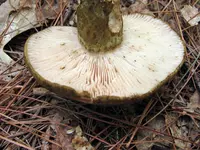
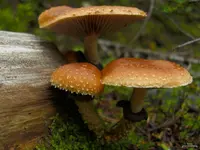
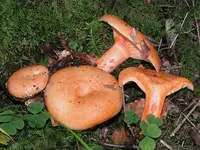
Salmon milkcap, Lactarius salmonicolor, is a wild mushroom-forming fungus rather than a typical houseplant. It grows in symbiosis with conifer tree roots, especially firs, forming mycorrhizae that help both partners exchange water and nutrients. Caps are usually salmon to orange, with crowded gills that exude orange milky latex when damaged.

This species occurs mainly in Europe and parts of North America in cool to mild forest habitats. It is considered edible in many regions, but correct identification is essential. For those interested in how to care for Salmon milkcap in cultivation, it is important to know it is challenging and usually requires suitable conifer hosts and undisturbed, moist, well-drained forest-type soil.

Main Plant Requirements

Care Difficulty

Hard Care

Light Preference

Partial Shade

Water Requirements

Keep Soil Moist

Temperature Preference

Cool Climate

Hardiness Zone

Unknown

Soil Texture

Loamy, Silty, Organic-rich

Soil pH

Acidic (5.5–6.5)

Soil Drainage

Moist but well-drained

Fertilization

Minimal (feed rarely)

Get Personalized Care Plan

Scan your plant to receive care tips personalized for your specific plant

Available on iOS and Android

How to Care for the Salmon milkcap

This mycorrhizal fungus prefers bright woodland conditions with filtered light rather than open field exposure.

  • Aim for dappled or filtered sun under conifer or mixed woodland, with 2–4 hours of gentle morning sun and shade or broken light for the rest of the day.
  • Tolerates light to moderate shade but fruiting of Salmon milkcap declines in deep shade where tree canopy blocks most direct light.
  • Avoid harsh, all-day summer sun, which can overheat the upper soil layer and dry out the host tree roots, reducing fungal vigor and mushroom production.

This ectomycorrhizal species depends on consistent soil moisture around its host trees rather than direct watering of the fungus itself.

  • Favor sites with evenly moist, well-drained, slightly acidic forest soil; avoid compacted clay or standing water that can suffocate fine roots.
  • In dry periods, irrigate host conifers so the top 5–8 cm of soil does not stay powder-dry for more than a few days, mimicking steady forest moisture.
  • Watch for sparse or aborted fruiting bodies as a sign of drought stress, while persistent puddling and root rot on host trees signal chronic overwatering issues.

This species performs best in cool to mild climates typical of montane or temperate conifer forests.

  • Optimal mycelial activity and fruiting occur around 50–68°F (10–20°C), with many flushes forming in cool, moist autumn conditions.
  • Tolerates short dips down to about 28–30°F (-2 to -1°C), but hard freezes below this, especially without insulating leaf litter, can damage developing fruiting bodies.
  • Handles mild summer warmth up to about 75–80°F (24–27°C), but prolonged hotter, dry periods reduce Lactarius salmonicolor fruiting and can stress host trees.

This mycorrhizal mushroom needs consistently moist, cool air around the forest floor rather than very dry conditions.

  • Aim for 70–90% humidity, similar to a shaded conifer forest, especially during active fruiting.
  • Dry air causes caps to crack, edges to curl, and gills to dry and discolor more quickly.
  • Increase humidity outdoors with thick leaf litter, light misting of the surrounding substrate, and wind protection using low barriers.

Lactarius salmonicolor requires a specific forest soil environment because it forms mycorrhizae with conifer roots.

  • Use loose, well-drained, humus-rich soil with plenty of decomposed needles and leaf litter to mimic conifer woodland conditions.
  • Maintain pH around 4.5–6.0, avoiding lime or ash additions that raise pH and suppress fungal development.
  • Blend native conifer forest soil with coarse sand and fine bark to improve both aeration and stable moisture retention.
  • Avoid compacted clay, waterlogged sites, or sterile potting mixes lacking organic debris, as they limit root-fungus contact and fruiting.

This species is generally not suitable for container growing because it depends on a stable mycorrhizal relationship with living conifer roots in the ground.

This mycorrhizal fungus depends mainly on its tree host, so fertilizing focuses on supporting the associated conifer rather than the Salmon milkcap itself.

  • Use a light top-dressing of mature compost around the host tree in early spring to support overall soil health.
  • Avoid high-nitrogen synthetic fertilizers; choose a balanced NPK product if the tree shows nutrient deficiency, following label rates carefully.
  • Apply any fertilizer only during the tree’s active growing season, then stop feeding by late summer to avoid soft, frost-prone growth.
  • If using liquid feed near young trees, dilute to 1/2 strength and water in well to limit salt stress on fine roots and fungal mycelium.

Direct pruning does not apply to Lactarius salmonicolor, but managing the host tree’s canopy can indirectly influence fungal fruiting conditions.

  • Carry out light structural pruning of the host conifer in late winter or very early spring, before active growth resumes.
  • Remove only dead, diseased, or crossing branches to maintain airflow and light without severely reducing root energy reserves.
  • Use clean, sharp bypass pruners or a saw, cutting just outside the branch collar to promote proper wound closure.
  • Avoid heavy thinning that drastically reduces shade, since sudden changes in soil moisture and temperature can disrupt mushroom production.

This fungus forms a stable mycorrhizal association with conifer roots, so care focuses on transplanting the host tree rather than moving Lactarius salmonicolor itself.

  • Transplant young pines or other suitable hosts in early spring or early fall, when air is cool and soil is still workable.
  • Look for signs such as slow tree growth or roots circling a container to decide when a potted, inoculated seedling needs a larger space.
  • Move the root ball gently, keeping as much native soil and fine roots intact as possible to preserve the fungal network.
  • Water deeply after transplanting and keep soil evenly moist, not waterlogged, for several weeks to reduce root stress and help the symbiosis reestablish.

Reproducing this mycorrhizal species relies on spore dispersal and compatible host roots, so routine home propagation is rarely practical.

This fungus is generally cold hardy in temperate climates and usually needs no special winter care when its host tree is suited to the local conditions.

Care Tips

Host tree selection

Establish this mycorrhizal fungus only with compatible conifers such as Abies or Picea species, and avoid mixing many unrelated tree species in the same inoculated area to keep the fungal–root partnership stable.

Targeted root inoculation

When planting young conifers, dip or drench the root system with a clean spore slurry or commercial inoculum so the fungus colonizes fine roots early rather than broadcasting spores randomly over the soil surface.

Low‑disturbance management

Limit digging, rototilling, or heavy machinery traffic in the inoculated zone around host trees, since compaction and root damage can break the fine fungal network that supports fruiting.

Mulch for mycelium

Apply a thin 2–3 cm layer of untreated softwood chips or conifer needles over the root zone to buffer temperature and moisture while still allowing good air exchange to the fungal mycelium.

Harvesting hygiene

When harvesting, cut mushrooms at the base with a clean knife instead of pulling, and replace the mulch layer gently to reduce disturbance of the underground mycelium, which supports long‑term success when growing Salmon milkcap.

Common Pests and Diseases

Mycophagous slugs

This pest feeds on the fruiting bodies, creating ragged holes and consuming gills and caps, especially in damp, shaded sites.

Solution

Hand-pick slugs at dusk or early morning, reduce dense ground vegetation, and use physical barriers like copper tape or coarse grit around productive areas; in heavily affected sites, iron phosphate slug baits can be used sparingly, following label directions and keeping them away from non-target wildlife.

Mycophagous snails

These insects are actually soft-bodied mollusks that rasp the surface of young caps and stems, leaving feeding scars and slime trails on and around the mushrooms.

Solution

Remove sheltering debris such as stacked boards or thick leaf mats near host fir trees, hand-collect snails during moist periods, and place simple traps like overturned pots or boards to concentrate and remove them; where allowed, iron phosphate baits provide additional control with relatively low impact on soil organisms.

Fungal parasitism (Hypomyces spp.)

This disease appears as a whitish, yellow, or pale pink crust or powder that overgrows caps and gills, deforming the mushrooms and stopping normal spore release.

Solution

Remove and discard parasitized fruiting bodies as soon as they are noticed to limit local spread, avoid injuring surrounding mushrooms which can provide entry points, and maintain good air movement around the fruiting area by avoiding dense ground cover directly around the host fir trunks.

Fruiting body desiccation

Symptoms include cracking, curling, and toughening of caps and stems when fruiting bodies develop during unusually dry or windy periods.

Solution

In managed plantations or truffle-style orchards, maintain an even soil moisture level around host fir roots with gentle irrigation during dry spells and retain a light, loose mulch layer that allows gas exchange but reduces rapid surface drying; avoid direct overhead watering on mature caps to limit physical damage.

Interesting Facts

Host-specific mycorrhiza

This species forms highly specialized ectomycorrhizal associations almost exclusively with firs in the genus Abies, exchanging mineral nutrients for sugars from the tree roots.

Distinct salmon latex

When cut or damaged, its gills exude a salmon-pink to orange latex that slowly turns green on exposure to air, a reaction linked to pigment oxidation in the milk.

Commercially harvested mushroom

In parts of Europe, this mushroom is collected and sold as an edible species, especially from fir plantations, although it is less widely known in markets than other milkcaps.

Botan icon

Did you know?

Lactarius salmonicolor was long confused with closely related orange milkcap species until microscopic characters and host preference studies in the 20th century clarified its status as a distinct fir-associated taxon.

FAQs about Salmon milkcap

This mushroom is generally considered edible when correctly identified, but quality is often rated as mediocre. Only experienced foragers should collect it, since confusion with toxic look-alikes is possible. Always cook thoroughly and avoid raw consumption.

Grow Healthy Plants with Botan Care

Keep your plants happy and healthy with plant identification, disease detection, and easy care guidance.

Botan plant care app — identify plants on mobile

Explore More Plants