Host tree selection
Establish this mycorrhizal fungus only near suitable host trees such as beech, oak, or other broadleaf hardwoods, since the mycelium relies on root association to form mushrooms.

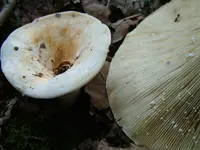
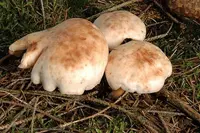
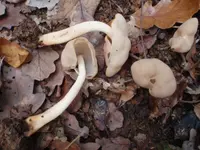
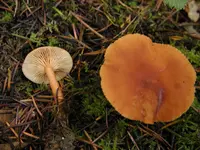
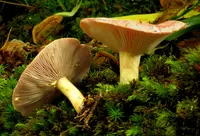
The fleecy milk-cap, Lactarius vellereus, is a large, mycorrhizal mushroom that partners with tree roots rather than growing as a typical houseplant or garden perennial. Its cap is thick, white, and felted, with crowded pale gills that exude a white, milky latex when damaged.
This species occurs mainly in temperate woodlands, especially with beech and other broadleaf trees, across parts of Europe and some other cool regions. It is often considered inedible or poor quality because of its very acrid taste.
For those studying how to care for fleecy milk-cap in managed woodlands, success depends mostly on maintaining suitable host trees, undisturbed leaf litter, and consistently moist but not waterlogged soil.

Care Difficulty
Moderate Care

Light Preference
Partial Shade

Water Requirements
Regular Water

Temperature Preference
Cool Climate

Hardiness Zone
4–9

Soil Texture
Loamy, Silty, Organic-rich

Soil pH
Acidic (5.5–6.5), Slightly acidic (6.5–7.0)

Soil Drainage
Moist but well-drained

Fertilization
Minimal (feed rarely)
Scan your plant to receive care tips personalized for your specific plant
Available on iOS and Android
This ectomycorrhizal fungus prefers woodland light conditions rather than open-field sun exposure.
This woodland fungus depends on consistently moist, not saturated, soil around its host tree roots.
This species performs best in temperate conditions typical of cool, moist woodlands.
This ectomycorrhizal mushroom forms best fruiting bodies in consistently moist, cool air rather than dry conditions.
This fungus needs suitable soil mainly to support its tree hosts and stable underground moisture, not as a standalone potting substrate.
This species is not well suited to true container growing, as it relies on long-term association with living tree roots in open soil.
Lactarius vellereus is a mycorrhizal fungus that relies on its tree host, so it does not need direct fertilization.
Lactarius vellereus is not pruned like a garden plant, but fruiting bodies can be managed during foraging.
This fungus forms a permanent mycorrhizal association with tree roots, so it is not suited to normal repotting or transplanting.
Propagation of Lactarius vellereus is specialized and usually left to natural spore dispersal and mycorrhizal spread.
This hardy woodland fungus overwinters naturally in the soil and usually needs no targeted winter care.

Plant Health Check
Not sure what's wrong with your plant? Check your plant's health inside the app.
This species exudes a very hot, acrid white latex when the gills are damaged, which is so pungent that it makes the raw mushroom inedible to most people without special processing.
It forms ectomycorrhizal associations with beech (Fagus sylvatica) and is most often found in calcareous or neutral soils in beech-dominated woodlands across Europe.
The initially white milk slowly turns cream to yellowish when exposed to air, a color change that helps field mycologists separate it from some similar white Lactarius species.
This mushroom is technically edible but strongly acrid and considered poor quality. In some regions it is eaten only after thorough soaking, parboiling, and salting. Beginners should avoid it and choose milder, reliably identified species instead.
Keep your plants happy and healthy with plant identification, disease detection, and easy care guidance.