Staggered Succession Sowing
Sow small batches every 10–14 days in cool seasons so plants stay in the tender, usable stage instead of all racing to flower at once.


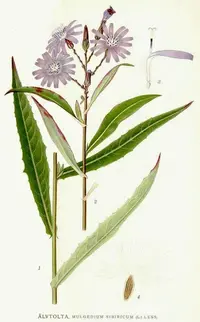
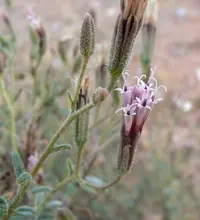
Willowleaf lettuce, Lactuca saligna, is an annual wild lettuce species in the daisy family. It has narrow, grass-like leaves and a tall, slender, branching stem. Small pale yellow flowers appear along the stems, giving the plant a delicate, airy look. It often self-seeds and can form loose colonies. In nature, willowleaf lettuce grows in dry, open habitats such as fields, roadsides, and disturbed ground across parts of Europe and western Asia, and it is naturalized in North America. It is generally easy to grow, as it tolerates poor, well-drained soils and dry conditions. Full sun, moderate moisture, and low competition from other plants support healthy growth and make it simpler to care for willowleaf lettuce.

Care Difficulty
Moderate Care

Light Preference
Full Sun

Water Requirements
Regular Water

Temperature Preference
Cool Climate

Hardiness Zone
4–9

Soil Texture
Sandy, Loamy, Organic-rich

Soil pH
Acidic (5.5–6.5), Slightly acidic (6.5–7.0)

Soil Drainage
Moist but well-drained

Fertilization
Light (every 4–6 weeks)
Scan your plant to receive care tips personalized for your specific plant
Available on iOS and Android
Lactuca saligna prefers bright, direct sun in cool seasons for compact growth and tender leaves.
Watering should keep soil consistently moist but never saturated to support steady Lactuca saligna growth.
This cool-season lettuce performs best in mild conditions and declines in sustained heat or hard frost.
This species tolerates a wide humidity range and usually does not need special humidity management outdoors or in bright, airy spaces.
Lactuca saligna prefers light, well-structured soil that drains freely yet holds moderate, even moisture.
This species is suitable for container growing when the pot supports its fibrous root system and steady moisture needs.
Lactuca saligna is a light feeder, so aim for modest nutrition rather than heavy fertilization.
Lactuca saligna benefits more from regular harvesting than from structural pruning.
This species is usually grown as a short-lived annual and is more often transplanted than repotted.
Lactuca saligna is most commonly propagated by seed, which suits its annual growth cycle.
Lactuca saligna is usually grown as a cool-season annual and generally does not need extensive winter care.

Plant Health Check
Not sure what's wrong with your plant? Check your plant's health inside the app.
This wild lettuce has extremely slender, almost grass-like leaves, which is why it is commonly called willowleaf lettuce. The narrow blades greatly reduce leaf surface area compared with typical garden lettuces.
Lactuca saligna often grows on sandy seashores, riverbanks, roadsides, and disturbed, nutrient-poor soils across parts of Europe and western Asia. Its deep root system and tolerance of drought and salinity help it colonize these open, exposed habitats.
The plant produces a white, milky latex rich in bitter sesquiterpene lactones, a group of defensive chemicals that discourage many herbivores. This latex is most evident when stems or leaves are broken.

Although closely related to cultivated lettuce (Lactuca sativa), Lactuca saligna has remained a wild species and serves mainly as a genetic resource in breeding, where its tolerance of drought, salinity, and poor soils is studied for possible use in improving crop lettuce resilience.
The species is generally considered edible and related to cultivated lettuce, but it is bitter and not widely used as food. Only consume plants that are correctly identified and have not been exposed to herbicides or roadside pollution.
Keep your plants happy and healthy with plant identification, disease detection, and easy care guidance.