Maximize Flowering Flushes
To extend blooming, lightly shear off spent flower heads and the top 1–2 cm of stems after the main flush, which redirects energy into new buds rather than seed production.

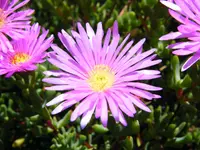
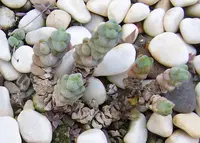
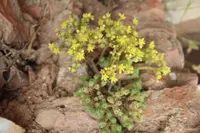
Sickleleaf dewplant, Lampranthus falciformis, is a compact, evergreen succulent from South Africa’s coastal regions. It forms low, spreading mats with narrow, sickle-shaped, blue-green leaves. In warm, bright conditions it produces many daisy-like flowers in vivid shades of pink or purple, creating a striking carpet of color. This species is typically grown outdoors in mild climates, often as a groundcover on slopes, rock gardens, or in containers. It prefers full sun, very well-drained, gritty soil, and infrequent watering, which makes it suitable for low-water gardens. Once established, it is relatively easy to care for Sickleleaf Dewplant, provided it is kept dry in cool weather and protected from prolonged frost.

Care Difficulty
Easy Care

Light Preference
Full Sun

Water Requirements
Low Water

Temperature Preference
Warm Climate

Hardiness Zone
9–11

Soil Texture
Sandy, Loamy, Rocky

Soil pH
Slightly acidic (6.5–7.0), Neutral (7.0)

Soil Drainage
Well-drained

Fertilization
Minimal (feed rarely)
Scan your plant to receive care tips personalized for your specific plant
Available on iOS and Android
Lampranthus falciformis thrives in bright, direct sun typical of open, dry landscapes.
Lampranthus falciformis prefers infrequent, deep watering and very fast-draining soil.
This species prefers warm, dry conditions and does poorly in prolonged cold or dampness.
Humidity is rarely a limiting factor for this drought-adapted succulent.
This species needs very fast-draining, sandy soil to prevent root rot.
This plant is well suited to container growing, especially in sunny, dry locations.
This drought-adapted succulent needs only light feeding to maintain compact, floriferous growth in most soils.
Pruning Lampranthus falciformis keeps the mat dense, controls spread, and supports heavy flowering.
This species suits rock gardens and shallow containers, needing only infrequent disturbance once established.
Lampranthus falciformis is commonly propagated from stem cuttings, which root quickly in warm, dry conditions.
Cold sensitivity means this succulent needs thoughtful winter management in regions with frost or prolonged freezes.

Plant Health Check
Not sure what's wrong with your plant? Check your plant's health inside the app.
This species is naturally restricted to sandstone slopes and rocky outcrops in the Western Cape of South Africa, where its roots anchor in very shallow, nutrient-poor soils that many other plants cannot tolerate.
Its narrow, falcate (sickle-shaped) leaves act as small water reservoirs, storing moisture in succulent tissues and reducing the surface exposed to intense coastal sun and wind.
In habitat, it flowers mainly in late winter to spring, creating brief but striking flushes of pink to magenta daisy-like blooms that attract pollinating insects in a seasonally dry landscape.
Poor flowering usually comes from insufficient light, excess nitrogen fertilizer, or lack of cool, bright conditions before the main blooming season. Ensure strong sun, avoid high-nitrogen feeds, and lightly trim after flowering to encourage new, flower-bearing shoots.
Keep your plants happy and healthy with plant identification, disease detection, and easy care guidance.