Encourage Compact Shape
Pinch back the soft tips of overly long shoots in late spring to keep the plant low, dense, and better able to support its own flowering stems when growing Purple Brightfig.

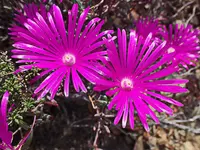
Purple brightfig, Lampranthus haworthii, is a compact, clump-forming succulent from the dry coastal regions of South Africa. It stores water in short, cylindrical, bluish-green leaves that look almost triangular in cross-section.
In warm, bright conditions it produces many daisy-like purple flowers that open in strong light and close again in low light. The plant stays low and spreading, which makes it suitable for sunny windowsills, rock gardens, and containers.
This species prefers high light, low to moderate watering, and very well-drained, sandy soil. Its drought tolerance and small size make it relatively simple to care for Purple Brightfig if overwatering is avoided.

Care Difficulty
Moderate Care

Light Preference
Full Sun

Water Requirements
Low Water

Temperature Preference
Warm Climate

Hardiness Zone
9–11

Soil Texture
Sandy, Loamy, Rocky

Soil pH
Slightly acidic (6.5–7.0), Neutral (7.0)

Soil Drainage
Well-drained

Fertilization
Minimal (feed rarely)
Scan your plant to receive care tips personalized for your specific plant
Available on iOS and Android
This sun-loving South African succulent flowers best in bright, open conditions.
This species prefers deep, infrequent watering that mimics brief desert rains.
This succulent thrives in warm, dry climates with mild winters.
This succulent prefers dry air and does not require elevated humidity.
This plant needs very fast-draining, mineral-rich soil to prevent root rot.
This species is well suited to container growing, especially in bright, outdoor settings.
Lampranthus haworthii needs only light feeding to flower well in containers or poor soils.
Pruning Lampranthus haworthii keeps the plant compact and supports heavy flowering.
This succulent dislikes disturbance, so repot or transplant only when clear signs appear.
Lampranthus haworthii is commonly propagated from stem cuttings for consistent plants.
This succulent is frost-sensitive and needs protection in regions colder than mild coastal climates.

Plant Health Check
Not sure what's wrong with your plant? Check your plant's health inside the app.
The leaves form small, rounded cylinders packed with water-storing tissue, an adaptation that helps the plant survive long dry periods in its native arid parts of South Africa.
The daisy-like flowers tend to open fully in bright afternoon sun and begin to close again as light levels fall, which reduces water loss and protects reproductive parts overnight.
In the wild, this species often grows in shallow, stony soils and rock crevices, where fast drainage and reflected heat from stones match its strong preference for dry, bright conditions.
Lack of flowers usually comes from insufficient light, too much nitrogen fertilizer, or pruning at the wrong time. Ensure strong sun exposure, use balanced or low-nitrogen feed, and avoid heavy pruning just before the main flowering season.
Keep your plants happy and healthy with plant identification, disease detection, and easy care guidance.