Root-zone protection
In areas with occasional heavy rain, plant on a slight mound or raised edge of a rock bed so excess water runs off and the root zone stays aerated and less prone to rot.

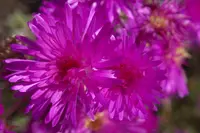
Creeping redflush, Lampranthus multiradiatus, is a low-growing succulent from arid regions of South Africa. It forms dense mats of fleshy, cylindrical leaves and bright, daisy-like flowers. Flower colors range from vivid red to pink tones, creating a strong contrast against the blue-green foliage. The plant is often used as a groundcover in rock gardens and coastal landscapes where drainage is excellent. This species prefers full sun, very well-drained, sandy or gravelly soil, and minimal watering. Its drought tolerance and compact growth habit make it relatively simple to care for creeping redflush in warm, dry climates or bright indoor spots with careful watering.

Care Difficulty
Easy Care

Light Preference
Full Sun

Water Requirements
Low Water

Temperature Preference
Tropical / Frost Sensitive

Hardiness Zone
10–11

Soil Texture
Sandy, Loamy, Rocky

Soil pH
Slightly acidic (6.5–7.0), Neutral (7.0)

Soil Drainage
Well-drained

Fertilization
Minimal (feed rarely)
Scan your plant to receive care tips personalized for your specific plant
Available on iOS and Android
This sun-loving succulent thrives in open, bright positions with many hours of direct light each day.
This drought-tolerant succulent prefers thorough but infrequent watering in sharply drained soil.
This species prefers warm, dry conditions and is sensitive to prolonged cold and frost.
This succulent tolerates a wide humidity range and usually does not need special humidity management indoors or outdoors.
Lampranthus multiradiatus prefers very fast-draining, mineral-rich soil that mimics dry, rocky habitats.
This species is well suited to container growing, especially in sunny, dry locations.
Lampranthus multiradiatus is a low-feeding succulent that benefits from light nutrition in active growth.
Pruning Lampranthus multiradiatus helps maintain a compact, floriferous mat.
This succulent is short-rooted and prefers infrequent disturbance when grown in containers or rock gardens.
Lampranthus multiradiatus is commonly propagated from stem cuttings and sometimes from seed.
This plant prefers mild, dry winters and suffers in prolonged freezing conditions.

Plant Health Check
Not sure what's wrong with your plant? Check your plant's health inside the app.
Individual flowers open a vivid red in the morning and gradually shift toward orange or pinkish tones as the day progresses, due to changes in light angle and pigment perception. This daily color change can make a single plant look multi-colored over the course of a sunny day.
This species is naturally adapted to very bright, open habitats in South Africa and shows strongest flowering only under intense, direct sun. In habitat it often grows on rocky, well-drained slopes where many less sun-tolerant succulents cannot compete.
Its narrow, cylindrical leaves store water efficiently and minimize surface area, which reduces moisture loss in hot, dry air. The plant also has a shallow, wide root system that can rapidly absorb brief rainfall events typical of its native climate.
This species spreads as a low mat, but is not usually aggressive. It enlarges slowly through branching stems rather than invasive runners. Regular edging or light trimming keeps it neatly within rock gardens, borders, or between paving.
Keep your plants happy and healthy with plant identification, disease detection, and easy care guidance.