Encourage Dense Mats
Pinch back or lightly trim the longest runners after flowering to encourage branching, which creates a thicker, more even carpet over rock walls or slopes.

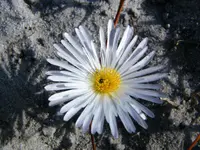
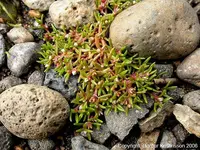
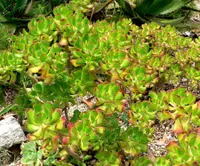
Creeping brightfig, Lampranthus reptans, is a low, mat-forming succulent from dry coastal areas of South Africa. It spreads along the ground with fleshy, cylindrical leaves and a dense, trailing habit.
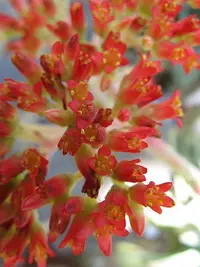
In warm, bright conditions it produces many daisy-like flowers in vivid shades of pink, magenta, or orange. The plant is adapted to full sun, sandy or rocky soils, and brief dry periods.
Its drought tolerance and compact growth make it suitable for rock gardens, containers, and hanging baskets. Once established, it is relatively low-maintenance, and learning how to care for Creeping Brightfig mainly involves avoiding overwatering and heavy, poorly drained soils.

Care Difficulty
Easy Care

Light Preference
Full Sun

Water Requirements
Low Water

Temperature Preference
Tropical / Frost Sensitive

Hardiness Zone
9–11

Soil Texture
Sandy, Loamy, Rocky

Soil pH
Slightly acidic (6.5–7.0), Neutral (7.0)

Soil Drainage
Well-drained

Fertilization
Minimal (feed rarely)
Scan your plant to receive care tips personalized for your specific plant
Available on iOS and Android
This sun-loving succulent thrives in open, bright conditions similar to its native South African range.
This drought-tolerant succulent prefers infrequent, deep watering and fast-drying soil.
This species favors warm, dry conditions with mild winters and good air movement.
Humidity is rarely a concern for Lampranthus reptans, which is adapted to dry air.
Lampranthus reptans needs very fast-draining, mineral-rich soil to prevent root and stem rot.
This species is well suited to container growing, especially for sunny patios and balconies.
This drought-tolerant succulent needs modest feeding to support flowering and dense mats of growth.
Pruning helps Lampranthus reptans stay compact, flower well, and avoid woody, sparse patches.
Container-grown plants benefit from occasional transplanting to maintain drainage and healthy roots.
Lampranthus reptans is commonly propagated from stem cuttings for fast, uniform new plants.
This succulent dislikes prolonged freezing and benefits from simple winter precautions in cold regions.

Plant Health Check
Not sure what's wrong with your plant? Check your plant's health inside the app.
In its native South African range, this creeping succulent often grows on sandy coastal slopes, where its dense mat of stems and roots helps bind loose soil and stabilize dunes against erosion.
The daisy-like flowers typically open only in bright sunlight and close again in dull light or at night, an adaptation that protects pollen from moisture and maximizes visibility to daytime pollinators.
Its small, bluish-green, slightly waxy leaves have a glaucous surface that reflects excess sunlight and reduces water loss, helping the plant tolerate intense sun and arid coastal winds.
Lack of flowers usually comes from insufficient light, overly rich or high-nitrogen fertilizer, or pruning at the wrong time. Slightly lean soil, strong sun, and light trimming only after flowering will support reliable bud formation.
Keep your plants happy and healthy with plant identification, disease detection, and easy care guidance.