Spectacular Brightfig Care (Lampranthus spectabilis)

Spectacular Brightfig

About Spectacular Brightfig

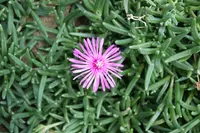
Spectacular brightfig, Lampranthus spectabilis, is a fast-growing succulent shrublet known for its vivid daisy-like flowers and fine, finger-like leaves. It forms low, spreading mounds that create a dense, colorful groundcover when in bloom.

This species comes from the coastal regions of South Africa, where it grows in rocky, well-drained soils with plenty of sun. Its drought tolerance and modest nutrient needs make it relatively easy to manage in suitable conditions.

Good drainage, bright light, and light, sandy soil are the main factors that influence how to care for Spectacular Brightfig successfully indoors or outdoors in mild climates.

Main Plant Requirements

Care Difficulty

Easy Care

Light Preference

Full Sun

Water Requirements

Low Water

Temperature Preference

Tropical / Frost Sensitive

Hardiness Zone

9–11

Soil Texture

Sandy, Loamy, Rocky

Soil pH

Slightly acidic (6.5–7.0), Neutral (7.0)

Soil Drainage

Well-drained

Fertilization

Minimal (feed rarely)

Get Personalized Care Plan

Scan your plant to receive care tips personalized for your specific plant

Available on iOS and Android

How to Care for the Spectacular Brightfig

This sun-loving succulent thrives in bright, open exposures with plenty of direct light.

  • Provide 6–8 hours of direct sun daily; full sun all day suits Lampranthus spectabilis in mild, coastal or dry climates.
  • In very hot inland areas, give strong morning sun with light afternoon shade to reduce leaf scorch and flower fade above about 95°F (35°C).
  • In winter, ensure the site stays unshaded by trees or buildings, since low-angle sun and short days can reduce flowering and cause leggy growth.

This drought-adapted succulent needs infrequent, light watering and very fast-draining soil.

  • Water only when the top 3–5 cm of soil are completely dry; in most warm seasons this means waiting until foliage looks slightly less plump, not on a fixed schedule.
  • Use sharply draining sandy or gravelly soil and sloped or raised beds so water never pools around Lampranthus spectabilis roots.
  • In cool or wet seasons, reduce or stop watering; soft, yellowing stems indicate overwatering, while wrinkled, shriveling leaves indicate prolonged drought.

This species prefers mild, dry conditions and does best where winters are only lightly cold.

  • Ideal growing temperatures are 60–80°F (16–27°C), supporting steady growth and abundant flowering in spring and early summer.
  • Tolerates brief dips to about 25°F (−4°C) if soil is dry, but foliage may be damaged; sustained frost below 28°F (−2°C) can kill stems and roots.
  • Handles dry heat up to 95–100°F (35–38°C) if soil drains quickly; avoid humid, hot sites and protect from cold, wet conditions during winter.

Lampranthus spectabilis handles dry household air well, so humidity is rarely a concern indoors.

This species needs very fast-draining, mineral, low-organic substrate to prevent root and stem rot.

  • Use a gritty, sandy mix such as 50–60% coarse sand or horticultural grit with 40–50% cactus/succulent potting mix.
  • Ensure water runs through in seconds and the pot never remains waterlogged or soggy after watering.
  • Aim for slightly acidic to neutral pH around 6.0–7.0, avoiding dense clay or peat-heavy mixes that compact.
  • Mix in extra perlite or pumice (10–20%) if drainage is slow or the surface stays dark and wet for many hours.

This succulent is well suited to container growing, especially in sunny outdoor spots.

  • Choose a wide, shallow pot that matches its spreading, fibrous root system and dries out between waterings.
  • Use a heavy terracotta or ceramic container in windy sites to keep the low, mat-forming plant from tipping.
  • Elevate the pot on feet or bricks so drainage holes stay clear and runoff escapes quickly after rain or watering.

This drought-tolerant succulent needs only light feeding to maintain flowering and compact growth.

  • Use a low-dose balanced succulent fertilizer or diluted 10-10-10 at 1/4–1/2 strength in well-watered soil.
  • Feed Spectacular Brightfig once in spring and again in early summer during active growth, then stop by late summer.
  • Avoid high-nitrogen products, which encourage weak, lush growth instead of flowers.
  • Do not fertilize in winter or any dormant period to prevent soft, frost-sensitive tissue.

Pruning helps Lampranthus spectabilis stay compact, tidy, and floriferous.

  • Best time is after the main flowering flush in late spring or early summer.
  • Use clean, sharp scissors or pruning snips to remove dead, damaged, or leggy stems.
  • Lightly shorten sprawling shoots to maintain a low mound and encourage branching.
  • Avoid cutting into old, woody bases; leave green segments on each stem for reliable regrowth.

This succulent groundcover is usually grown in the ground but can be transplanted or potted with care.

  • Transplant or repot in spring when nights warm and growth resumes; aim for every 2–3 years in containers.
  • Look for roots circling the pot, rapid drying of soil, or slowed growth as signals to move up one pot size.
  • Use a shallow container with drainage holes and a gritty cactus mix to limit root rot and waterlogging stress.
  • Handle brittle stems gently, keep roots slightly dry before moving, then water lightly and shade for 2–3 days afterward.

New Lampranthus spectabilis plants are most often produced from stem cuttings for quick establishment.

  • Take 5–8 cm non-flowering tip cuttings in late spring or summer and let the cut ends callus for 1–2 days.
  • Insert cuttings into a very free-draining mix of sand and cactus soil, keeping it just barely moist.
  • Provide bright, indirect light, warm temperatures around 70–75°F, and good air movement for rooting.
  • Seeds can be sown in spring on sandy soil, kept lightly moist and warm, though flowering takes longer.

This succulent is only moderately frost tolerant and benefits from basic winter protection in colder regions.

  • In mild climates (approx. USDA 9–10), keep soil sharply drained and avoid winter waterlogging.
  • Apply a thin layer of gravel mulch around the crown to limit freeze–thaw damage at the root zone.
  • In colder areas or in pots, move plants under cover or indoors to a bright, cool, frost-free spot.

Care Tips

Prevent Winter Rot

In regions with wet winters, grow Lampranthus spectabilis in raised mounds or rock pockets with sharp drainage and consider using a simple cold frame or rain cover from late fall to early spring to reduce root rot risk.

Refresh Woody Clumps

Every 3–4 years, take short, healthy tip cuttings in late spring, root them in a gritty mix, and replant to replace old, woody centers and keep the display dense and floriferous.

Use Reflective Surfaces

Plant near light-colored gravel, rocks, or paving so reflected heat and light increase flowering and help foliage dry faster after rain, which lowers fungal disease pressure when caring for Spectacular Brightfig.

Control Sprawl Edges

Allow the plant to spill over walls or edging but trim back only the outermost 5–10 cm after main flowering to keep pathways clear while preserving the heaviest blooming zones.

Salt and Wind Tolerance

In coastal gardens, site plants in exposed, windy spots with sandy substrate where many species struggle, but always combine with excellent drainage to prevent salt-splash plus waterlogging stress.

Common Pests and Diseases

Aphids

This pest feeds on tender new growth and flower stalks, causing distortion, sticky honeydew, and sometimes sooty mold on Lampranthus spectabilis. Infestations are usually heaviest in lush spring growth or when plants are overfertilized.

Solution

Dislodge colonies by spraying the foliage and stems with a strong stream of water, then spot-treat remaining clusters with insecticidal soap or a light horticultural oil, applied in the early morning and repeated as needed. Reduce excess nitrogen fertilizer and avoid overhead watering in the evening to make plants less attractive and keep foliage drier.

Mealybugs

These insects hide between fleshy leaves and along stems, sucking sap and leaving white cottony deposits that weaken plants and reduce flowering. Symptoms include stunted growth, yellowing, and occasional black sooty mold growing on their honeydew.

Solution

Remove visible clusters with a cotton swab dipped in isopropyl alcohol and prune heavily infested stems. For broader infestations, use insecticidal soap or a low-rate horticultural oil, ensuring thorough coverage into leaf joints, and repeat at 7–10 day intervals until new growth appears clean.

Red spider mites

This pest is favored by hot, dry conditions that Lampranthus spectabilis also enjoys, leading to fine webbing, stippled or silvery foliage, and gradual leaf drop. Symptoms include dull, speckled leaves that may take on a bronzed appearance.

Solution

Increase humidity around the plant slightly with occasional overhead rinsing, then wash the foliage with a firm but gentle spray of water to knock mites off. Follow with repeated applications of insecticidal soap or a miticide labeled for ornamentals, focusing on the undersides of leaves and inner stems, and avoid long periods of heat combined with extreme dryness in pots.

Botrytis blight

This disease develops in cool, damp conditions, causing soft, water-soaked patches on leaves and stems that quickly turn brown and may show gray fuzzy mold. Symptoms include collapsed flower stalks and rotting tissue where water sits on the plant.

Solution

Remove and discard all affected plant parts and any fallen debris around the base, then improve airflow by thinning crowded stems and spacing plants further apart. Water at the soil level in the morning, keep foliage dry, and in persistent damp conditions consider a preventative fungicide labeled for Botrytis on ornamentals, following label directions closely.

Stem and crown rot

This disease occurs mainly in poorly drained soils or containers, causing the base of stems to turn brown, mushy, and collapse, often killing entire clumps. Symptoms include sudden wilt in hot weather despite moist soil and a foul smell at the crown.

Solution

Remove and discard affected plants and improve drainage by amending soil with coarse sand or grit, planting on slight mounds, and never allowing water to pool around the crown. For container plants, use a fast-draining cactus or succulent mix, ensure pots have large drainage holes, and water only when the soil has dried well through the root zone to support long-term Lampranthus spectabilis care instructions.

Interesting Facts

Spring-blooming ice plant

This South African succulent produces its main flush of violet to magenta, daisy-like flowers in late winter to spring, timed to cooler, wetter months in its native winter-rainfall climate.

Adapted to coastal dryness

In its native range, this species often grows on rocky coastal slopes and sandy soils, tolerating drought, high light, and salt-laden winds better than many other ornamentals.

Leaf structure for storage

Its short, cylindrical leaves are highly succulent, storing water in specialized tissues that let the plant survive extended dry periods with minimal rainfall.

Botan icon

Did you know?

Lampranthus spectabilis is part of a group of South African succulents historically called ice plants because their glistening, bladder-like epidermal cells can make leaves and stems look as if they are covered with tiny ice crystals in bright sunlight.

FAQs about Spectacular Brightfig

Poor flowering is usually caused by insufficient light, heavy or waterlogged soil, or excessive nitrogen fertilizer. Ensure very bright conditions, sharply drained soil, and a balanced, low-nitrogen feed. Light post-bloom pruning also stimulates new, flower-bearing shoots.

Grow Healthy Plants with Botan Care

Keep your plants happy and healthy with plant identification, disease detection, and easy care guidance.

Botan plant care app — identify plants on mobile

Explore More Plants