

Root-zone gravel
When planting in the ground or in containers, add a 2–3 cm layer of coarse gravel or pumice under and around the root ball to keep the crown dry and reduce the risk of rot in heavy rain.

Renoster brightfig, Lampranthus spiniformis, is a compact, mat-forming succulent from the dry, rocky slopes of South Africa’s Western Cape renosterveld habitat. It forms low cushions of small, cylindrical, spiny-looking leaves that store water, giving the plant a dense, textural appearance.
In the right conditions it produces bright, daisy-like flowers that open in sun, adding strong seasonal color. Growth is relatively fast for a succulent but remains low and spreading rather than tall.
This species is adapted to intense light, lean, very free-draining soils, and dry periods, which makes it drought-tolerant but sensitive to poor drainage or prolonged cold, wet weather. These traits mean it is easy to grow in sunny, dry positions once you understand how to care for Renoster Brightfig.

Care Difficulty
Moderate Care

Light Preference
Full Sun

Water Requirements
Low Water

Temperature Preference
Warm Climate

Hardiness Zone
9–11

Soil Texture
Sandy, Loamy, Rocky

Soil pH
Slightly acidic (6.5–7.0), Neutral (7.0)

Soil Drainage
Well-drained

Fertilization
Minimal (feed rarely)
Scan your plant to receive care tips personalized for your specific plant
Available on iOS and Android
Lampranthus spiniformis needs strong, direct light to maintain compact growth and abundant flowering.
This succulent prefers infrequent, deep watering and fast-drying soil.
This species thrives in warm, dry climates and does poorly in prolonged cold or frost.
This succulent tolerates a wide humidity range and usually needs no special humidity management indoors.
This plant needs very fast-draining, mineral-rich soil to avoid root rot.
This species is well suited to container growing, especially in sunny, dry locations.
This drought-adapted succulent needs only light feeding to maintain compact, floriferous growth.
Thoughtful pruning helps Lampranthus spiniformis stay dense, tidy, and free flowering.
Container-grown plants benefit from infrequent but careful repotting or outdoor transplanting once established.
This species is commonly propagated from stem cuttings, with seeds used less often for home growing.
This succulent tolerates only light frost and benefits from simple winter protection in colder regions.

Plant Health Check
Not sure what's wrong with your plant? Check your plant's health inside the app.
This species is native to the Renosterveld shrublands of South Africa’s Western Cape, where it grows in rocky, low-nutrient soils that experience a strong winter-rainfall climate.
It develops dense, low mats of highly branched, spiny shoots, which help protect the plant from grazing and reduce water loss by shading the soil surface.
Flowering typically occurs in the cool, wetter season, when the plant produces small, daisy-like blooms that open in bright light and attract a range of insect pollinators.
Lack of flowers is usually linked to insufficient light, excessive shade from nearby plants, or heavy feeding with high-nitrogen fertilizer. Old, woody stems also bloom poorly; light post-flowering pruning encourages new, more floriferous growth.
Keep your plants happy and healthy with plant identification, disease detection, and easy care guidance.

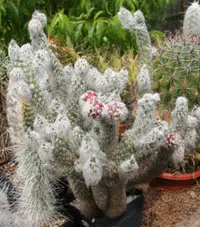
Austrocylindropuntia vestita
Austrocylindropuntia vestita
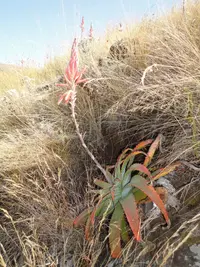
Aloe suprafoliata
Aloe suprafoliata
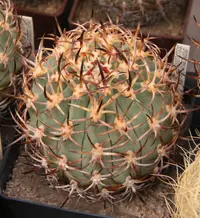
Eriosyce aurata
Eriosyce aurata
Fringe Stonecrop
Crassula undulata
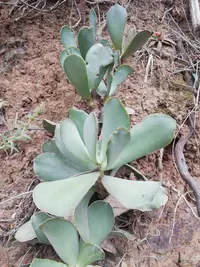
Adromischus sphenophyllus
Adromischus sphenophyllus
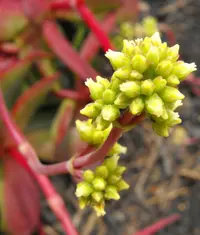
Jersey Pigmyweed
Crassula pubescens
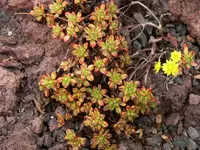
Aeonium sedifolium
Aeonium sedifolium
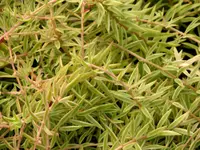 POPULAR
Needle Stonecrop
Sedum lineare